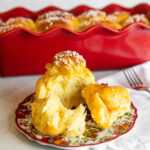
Brioche Recipe
Italian brioche is sweet pastry treat that is as common in Italy as croissants are in France. This classic brioche is made of sweet dough, and has the most amazing buttery flavor with a flaky crust and a fluffy inside. It is easy to make and is sure to be a family favorite!
Servings: 16 slices (from 2 standard loaves)
Ingredients
- ½ cup warm water at 110-115°F
- ½ cup warm milk at 110-115°F
- 4½ teaspoons active dry yeast 2 packages
- 3¼ cups bread flour
- 7 tablespoons granulated sugar
- 1¼ teaspoon salt
- 1 teaspoon pure vanilla extract
- 1 teaspoon lemon zest
- 1 teaspoon orange zest
- 1 whole egg + 1 egg yolk
- ½ cup unsalted butter at room temperature, cut into 8 pieces
For the Topping and Decoration
- ½ cup apricot jam for glaze; optional
- pearl sugar for decoration; optional
Instructions
Preparing the Dough and First Rise
- Stir the warm water and yeast together and allow the yeast mixture to sit for 2 minutes.
- Add the flour to the bowl of a stand mixer fitted with a dough hook. In a separate bowl, combine all of the ingredients except for the salt and butter. Mix wet ingredients well, then add to the flour. Mix the ingredients on low speed for 3 to 4 minutes, until the dough has come together.
- Stop the mixer and scrape down the sides as needed, pushing the dry ingredients into wet patches. Once the dough has come together, beat on low speed for 3-4 additional minutes. The dough will be stretchy and sticky. Mix in the salt.
- On low speed, add the butter a little at a time, mixing after each addition until it disappears into the dough. Continue mixing on low speed for about 10 minutes, stopping the mixer occasionally to scrape down the bottom and sides of the bowl. It is important for all of the butter to be mixed thoroughly into the dough. If necessary, stop the mixer to break up the dough with your hands to help mix in the butter.
- Once the butter is completely incorporated, turn the mixer to medium speed and beat for another 8-10 minutes, or until the dough becomes sticky, soft, and somewhat shiny. Continue beating until the dough turns smooth and silky.
- Turn the mixer up to medium-high and beat for 1-2 minutes. You should hear the dough making slapping sounds against the sides of the mixer bowl. Test the dough by pulling it and stretching it thin. You want the dough to stretch, but also give a bit. If it feels too loose, easily breaks off into pieces, or looks shaggy, continue to mix on medium speed for 2-3 additional minutes. It is ready when it's smooth and stretchy and can be picked up in one piece. The dough will remain sticky.
- Place the dough in a large oiled bowl and cover it with plastic wrap. Allow the dough to rise for 60 minutes in a warm place. (Optional: place dough in fridge overnight to allow the dough to proof and develop flavor. At this point, the dough may also be frozen or stored in an airtight container in the fridge for up to 1 week.)
Shaping and Second Rise
- To make two brioche loaves, grease two standard loaf pans liberally with butter. (You could also use a springform pan, cast iron skillet, or flat baking sheet.) Divide the dough into two halves, and shape the dough into loaf shapes by stretching the edges under creating a rounded surface. Place the shaped dough into the loaf pans.
- Cover the loaves lightly with plastic wrap and place them in a warm spot (75-85°F is ideal) for 45-60 minutes, or until the loaves have nearly doubled in size. They should have risen to the edge of the pan and have rounded tops. The dough should feel soft, pillowy, and delicate.
- While the bread is rising, position a rack in the center of the oven and preheat to 350°F.
Baking and Decorating
- In a small bowl, microwave the apricot jam for 15 seconds. With a pastry brush brush the top of the bread with a thin layer of the jam. Add a sprinkle of the pearl sugar.
- Bake for 35-45 minutes, until the tops and sides of the loaves are completely golden brown and the internal temperature reads 210°F.
- Cool the loaves in the pans for 30 minutes, then turn out onto a cooling rack and let them finish cooling completely. The bread may be stored for up to three days wrapped tightly in plastic, and makes great French toast when stale.
Notes
- Use room temperature eggs and butter (soft, not melted) to make the dough easier to work with, as the ingredients will bind together better. Simply leave them out for an hour or so before making the dough.
- Check the date on your yeast. If your yeast is old and not active, you will do a lot of work for nothing.
- Don't be afraid of buttery, slimy, sticky dough! When you are incorporating the butter, it will be this way, but just keep mixing--it will all come together.
- Gluten develops well in water, but fat hinders gluten development, especially in an enriched dough like brioche. However, it also keeps the dough super soft and rich in flavor, giving it an almost cake-like texture! That is why brioche dough needs to be kneaded for much longer, and preferably with a stand mixer, as it will be sticky and slack.
Nutrition
Serving: 1slice | Calories: 193kcal | Carbohydrates: 28g | Protein: 4g | Fat: 7g | Saturated Fat: 4g | Polyunsaturated Fat: 1g | Monounsaturated Fat: 2g | Trans Fat: 0.2g | Cholesterol: 37mg | Sodium: 197mg | Potassium: 61mg | Fiber: 1g | Sugar: 8g | Vitamin A: 236IU | Vitamin C: 1mg | Calcium: 20mg | Iron: 0.4mg
