Pinsa Romana Recipe (Roman Style Pizza Dough)

This post may contain affiliate links. Please read our disclosure policy.


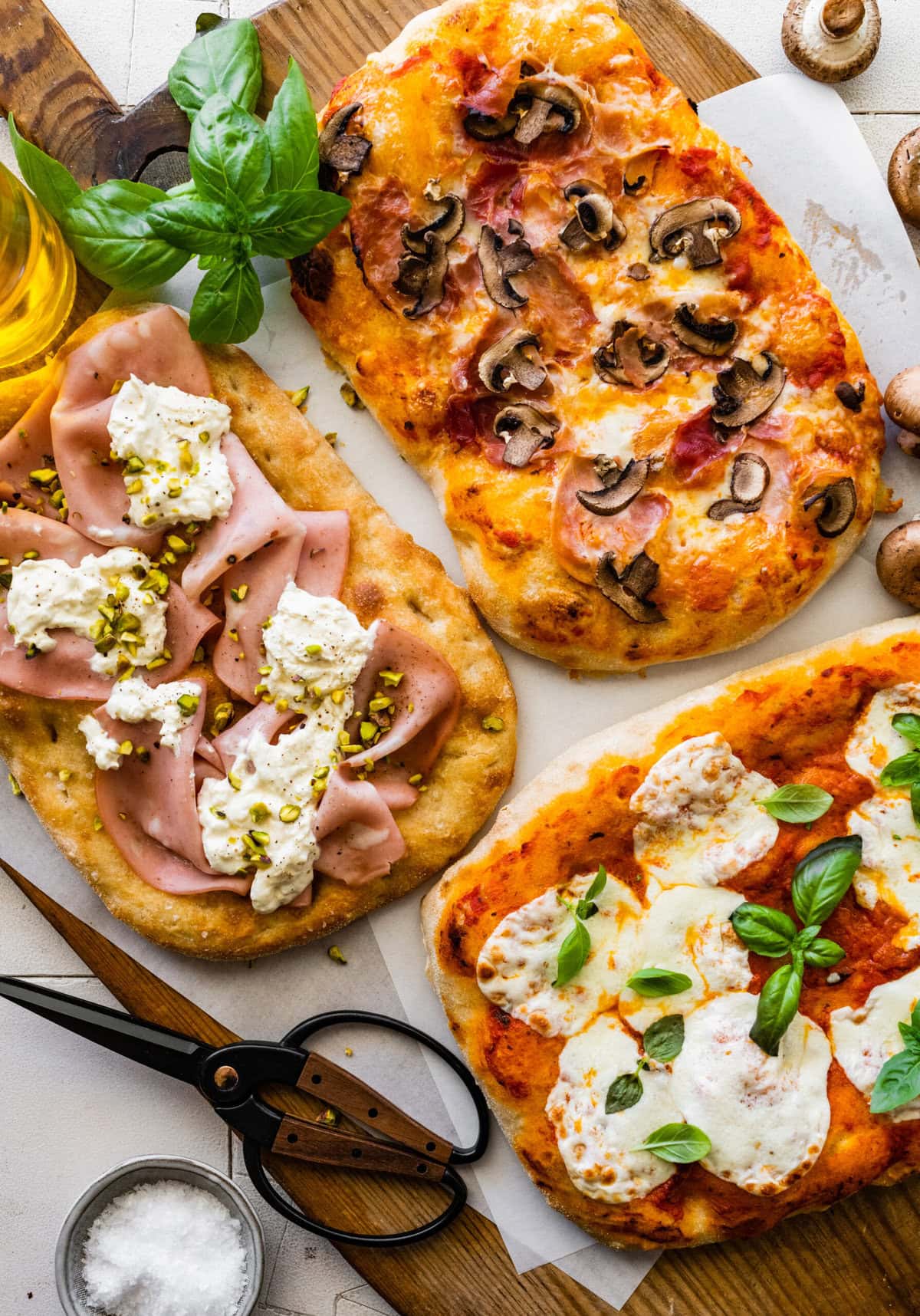
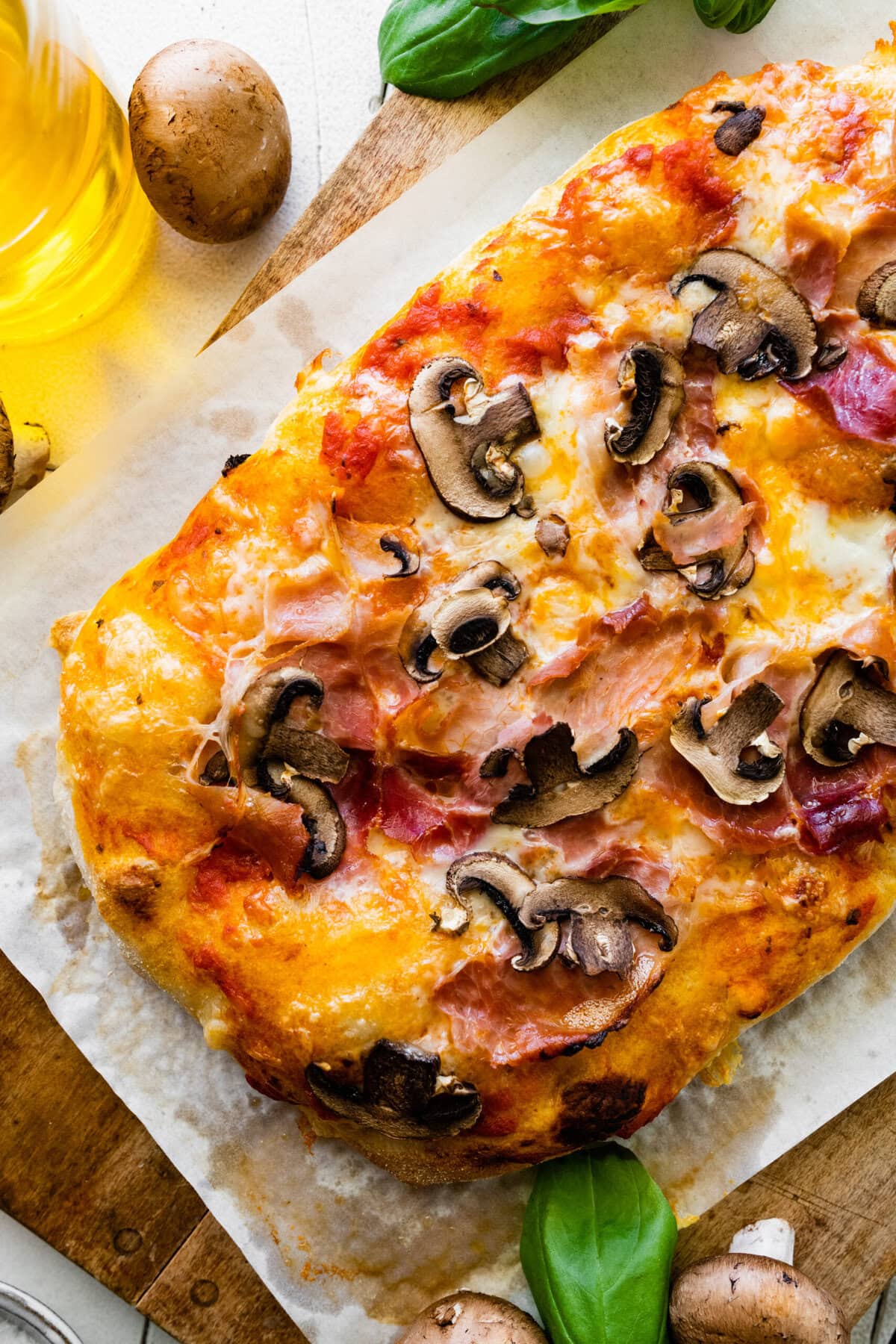
This Pinsa Romana Recipe (Roman Style Pizza Dough) has a distinctive oval shape and a light, airy texture. It bakes up with a crisp exterior and a soft center. Unlike traditional pizza dough, it uses a higher hydration and a blend of flours, then is slowly fermented to develop flavor and structure. You don’t need a wood-fired oven, just a hot home oven and a pizza stone, steel, or baking sheet to achieve a crisp, airy crust.
Make sure to take a look at my Neapolitan Pizza Dough Recipe next!

Quick Look: Pinsa Romana Recipe (Roman Style Pizza Dough)
- Prep Time: 30 minutes
- Fermentation Time: 24-48 hours
- Cook Time: 20 minutes
- Servings: 3 pinsa
- Dietary Info: Vegetarian as written (toppings may vary)
- Method: Fermented dough shaped and baked at high heat
- Technique: Cold-fermented dough (24–48 hours), gentle stretching to preserve air pockets, baked on a preheated surface for a crisp exterior and airy interior
- Flavor/Texture: Light, airy, crisp-edged crust with a soft, open crumb
Why You’ll Love This Pinsa Recipe

Pinsa is a little different from the pizza many of us know. The dough feels wetter, the fermentation takes more time, and the finished crust has that wonderful combination of crisp edges and a light, airy center.
- Light And Airy: The higher-hydration dough helps create the open, airy texture that makes pinsa different from many traditional pizzas.
- Long Fermentation: The dough rests in the refrigerator for 24–48 hours, allowing the flavor and texture to develop gradually.
- Roman-Style Dough: A combination of 00 flour, rice flour, and spelt or soy flour gives this dough its distinctive pinsa-style character.
- Crisp Crust: Proper shaping and a hot oven help create a crisp exterior while keeping the center light and tender.
- Home Oven Friendly: You can make this Roman-style pizza at home without a commercial pizza oven.
Use this dough recipe with the toppings used in my Gorgonzola Pizza recipe!
Made With Amore,

“Tried this for the first time just with olive oil and sea salt. Excellent. Tomorrow I will try with toppings.”
– Carol
Table of Contents
Simple Ingredients
Pinsa Romana is a light, crispy, and highly digestible pizza thanks to its unique dough and baking technique. It only takes a few natural ingredients to make it!
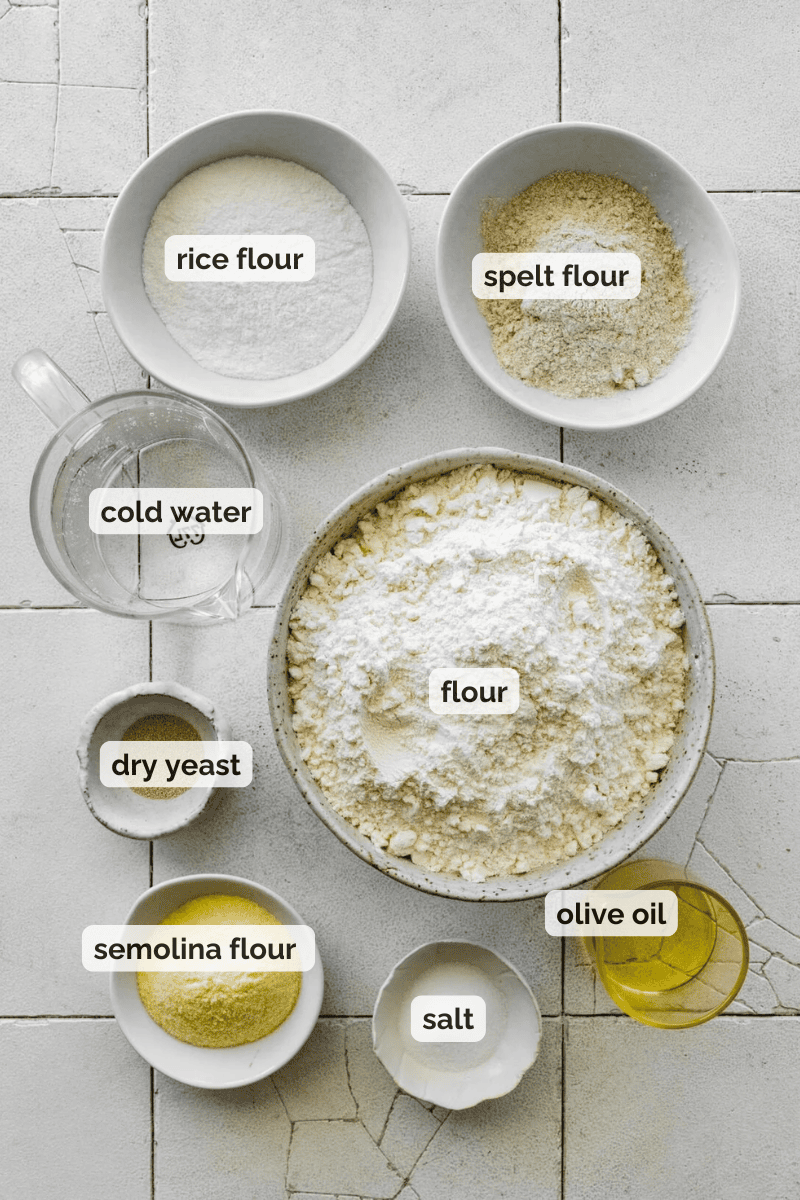
- Italian 00 Flour: A finely milled flour that creates a soft, smooth dough structure.
- Rice Flour: Lightens the dough and helps create a crisp, airy texture.
- Spelt Flour or Soy Flour: Adds depth of flavor and a slightly nutty note to the dough.
- Cold Water: Hydrates the dough and helps control fermentation for better texture.
- Active Dry Yeast, Salt, and Olive Oil: Yeast helps the dough rise, salt enhances flavor and controls fermentation, and olive oil adds richness and helps create a crisp crust.
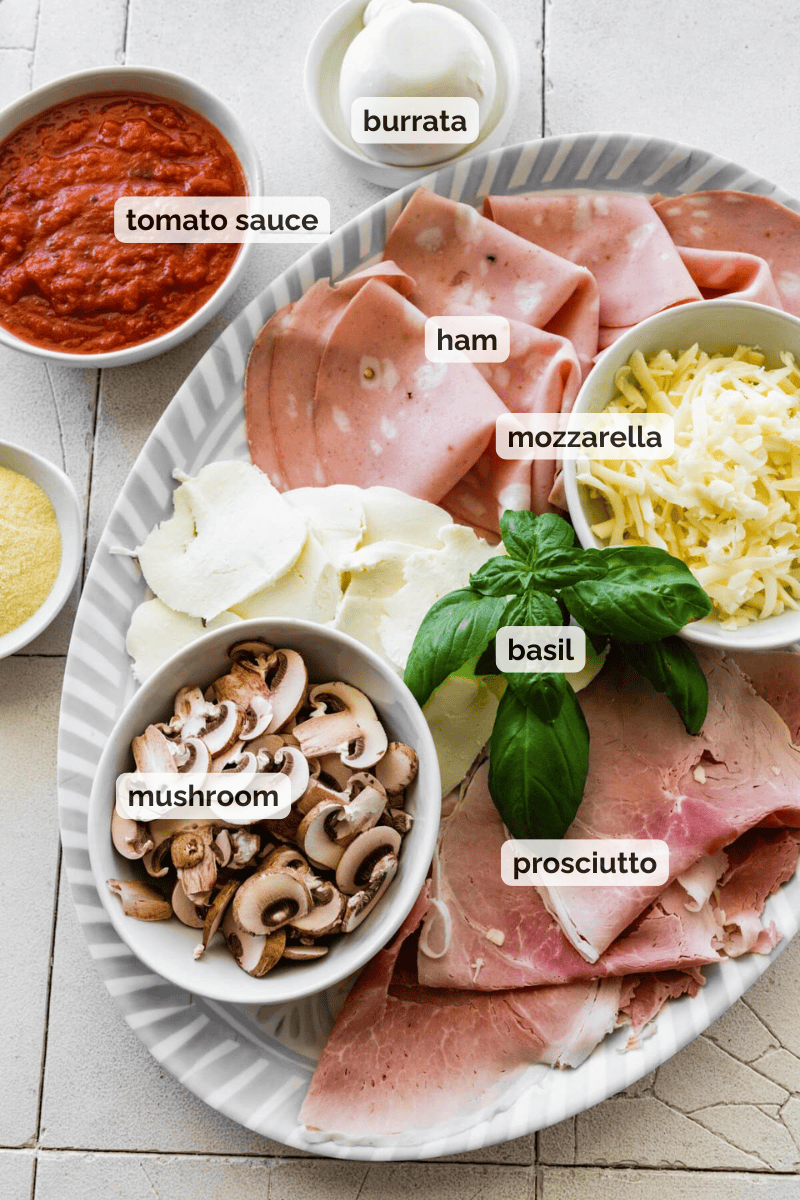
- Toppings: Experiment with different toppings! I love proscuitto, mushrooms, ham, and a variety of cheese.
See recipe card for full information on ingredients and quantities.
Variations & Substitutions
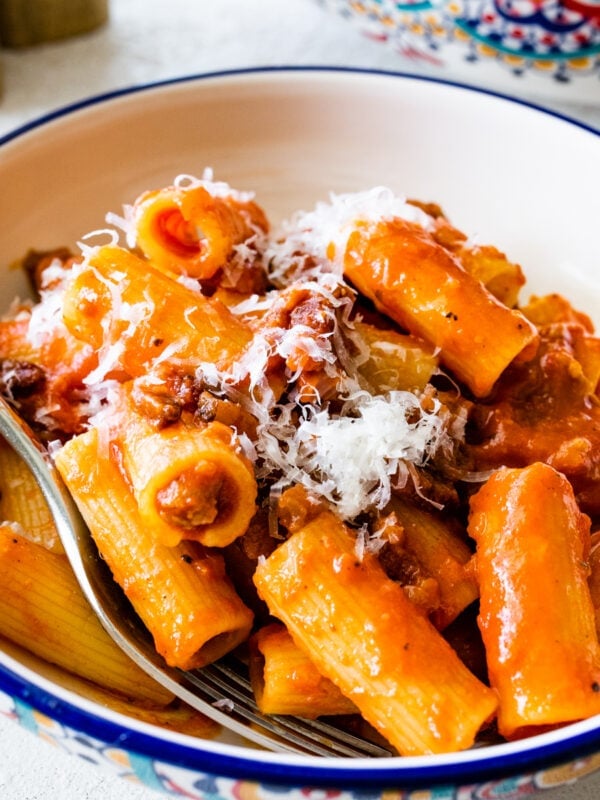
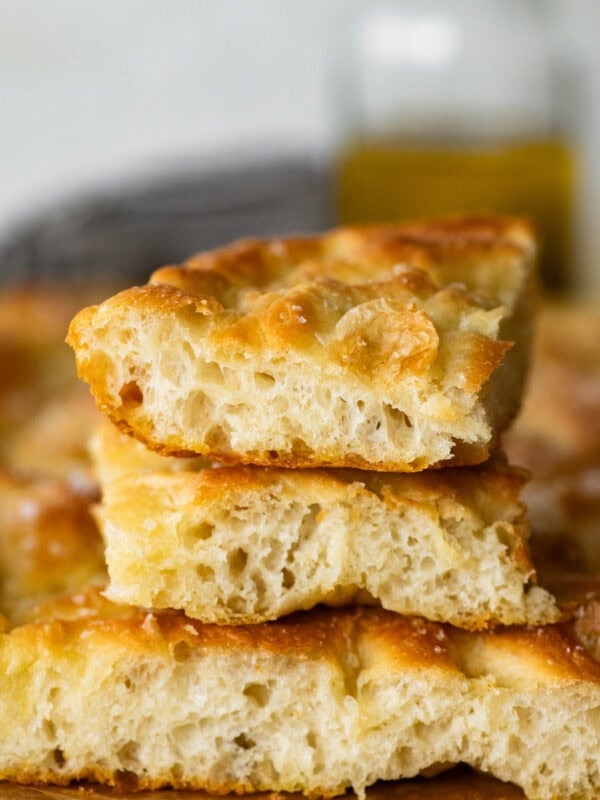
- Italian “00” Flour or All-Purpose Flour Substitute: Substitute with bread flour for a chewier texture or whole wheat flour for a more rustic flavor and added nutritional value. Note that whole wheat flour will make the dough denser. Make sure to check out my Focaccia Bread and Italian Ciabatta Bread next!
- Rice Flour Substitute: Substitute with cornstarch or tapioca flour to achieve a similar lightness and crispy texture. Cornstarch may result in a slightly different flavor, but it will still be light and airy.
- Soy Flour Substitute: Substitute with chickpea flour or almond flour for a nutty flavor and added protein. Chickpea flour is slightly more dense, while almond flour adds a subtle sweetness.
- Active Dry Yeast Substitute: Substitute with instant yeast in the same quantity. If using fresh yeast, use about three times the amount called for in the recipe.
How to Make Pinsa Recipe
Once baked, the crust on the pinsa should be crisp on the outside while remaining light and airy inside. Follow the step-by step photos and see the recipe card at the bottom for a printable version.
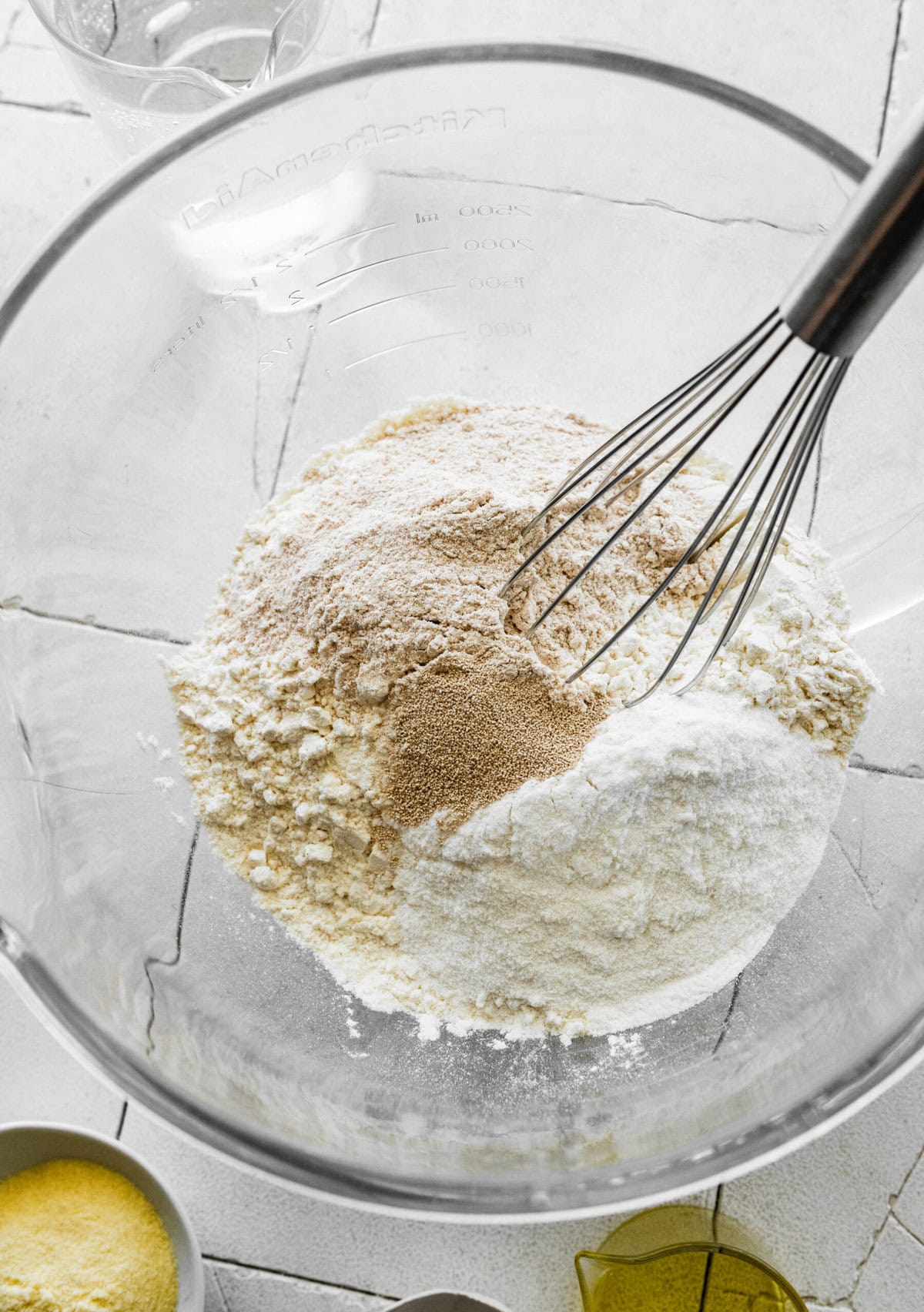
- In a large mixing bowl or the bowl of a stand mixer, whisk together the 00 flour, rice flour, spelt or soy flour, and active dry yeast.
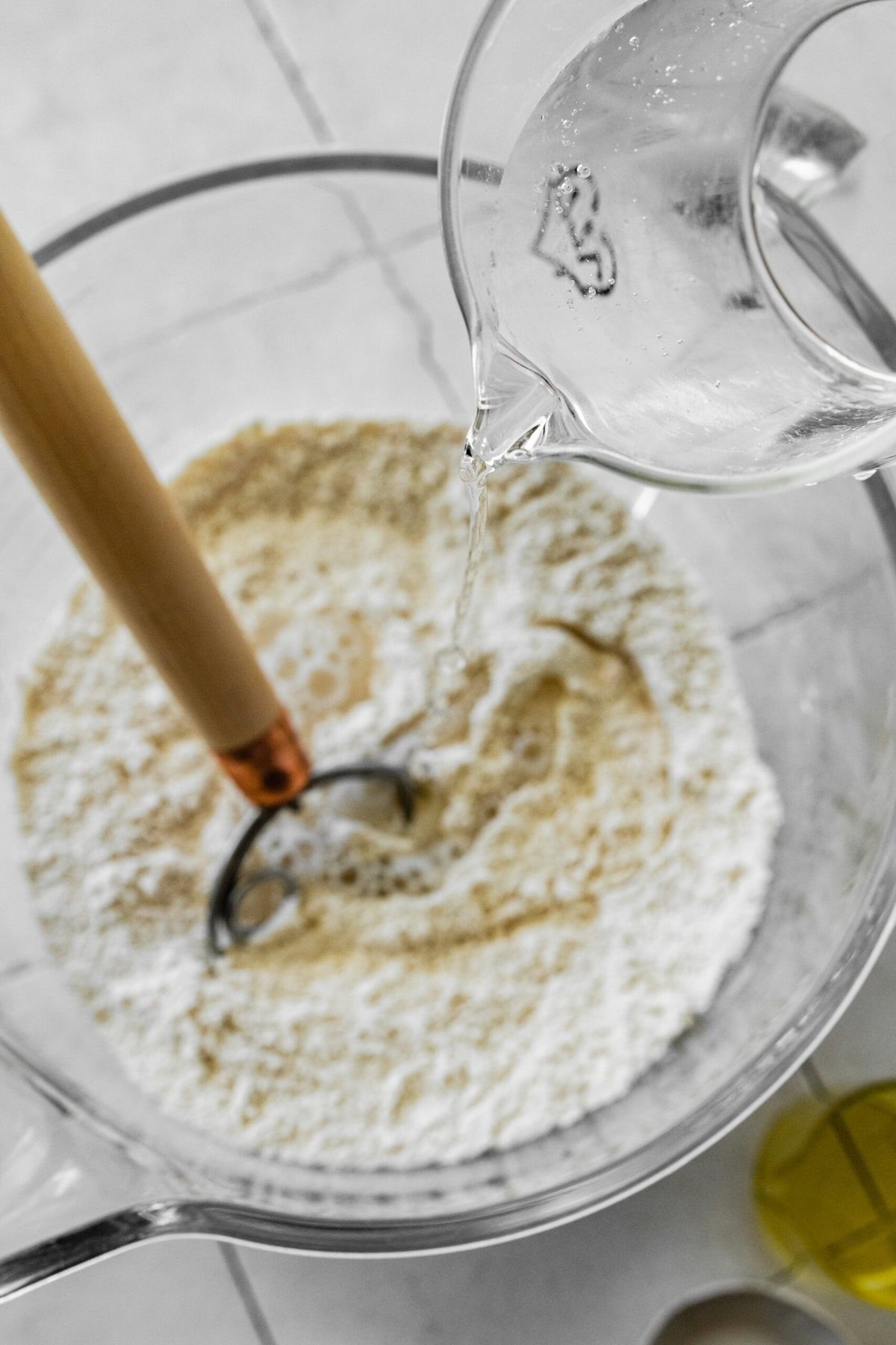
- Gradually add the ice-cold water in 3-4 additions, mixing after each addition. The dough may look shaggy and slightly dry at first as it absorbs the water.
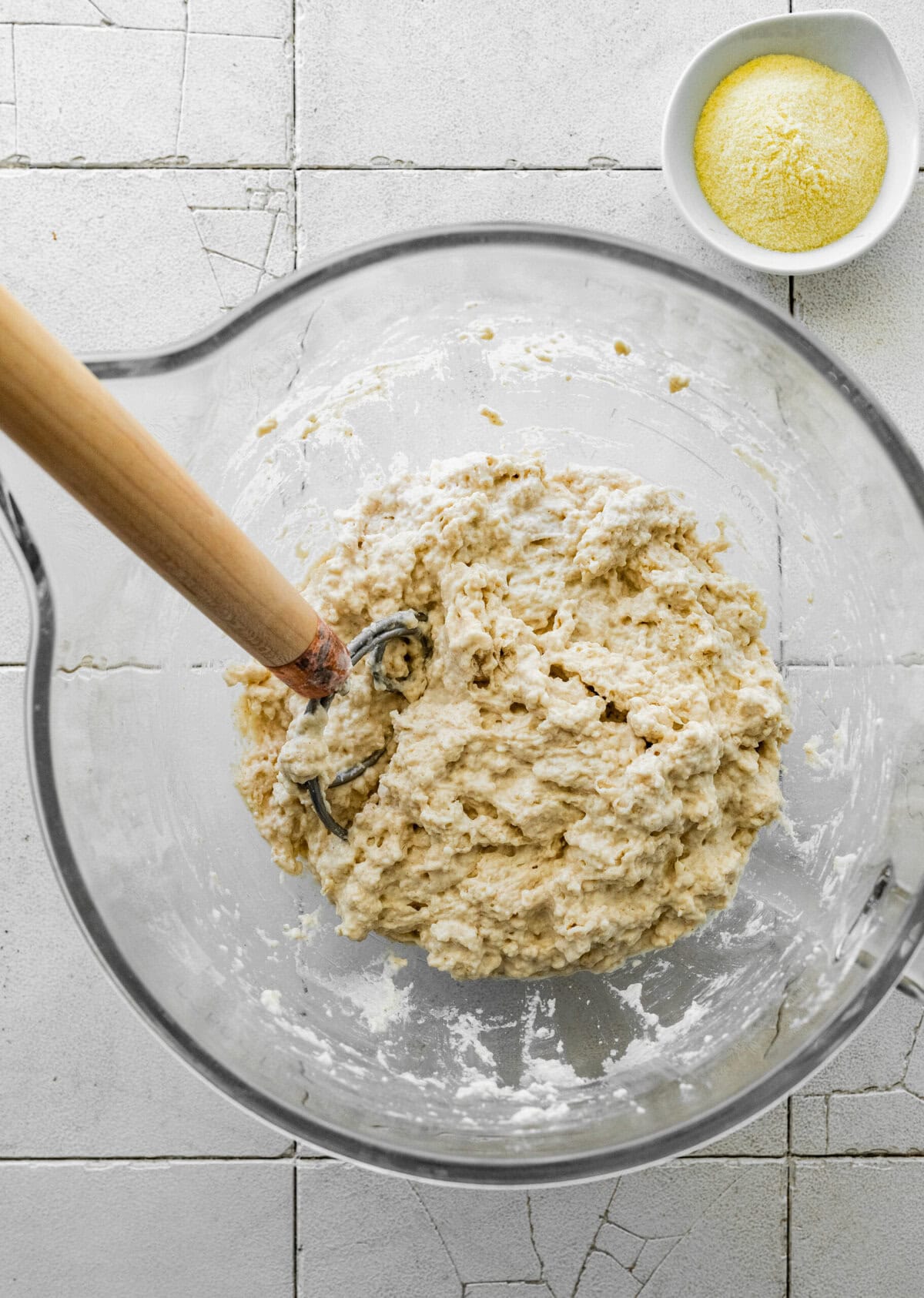
- Add the salt and olive oil, then continue kneading until the dough becomes smooth and elastic.
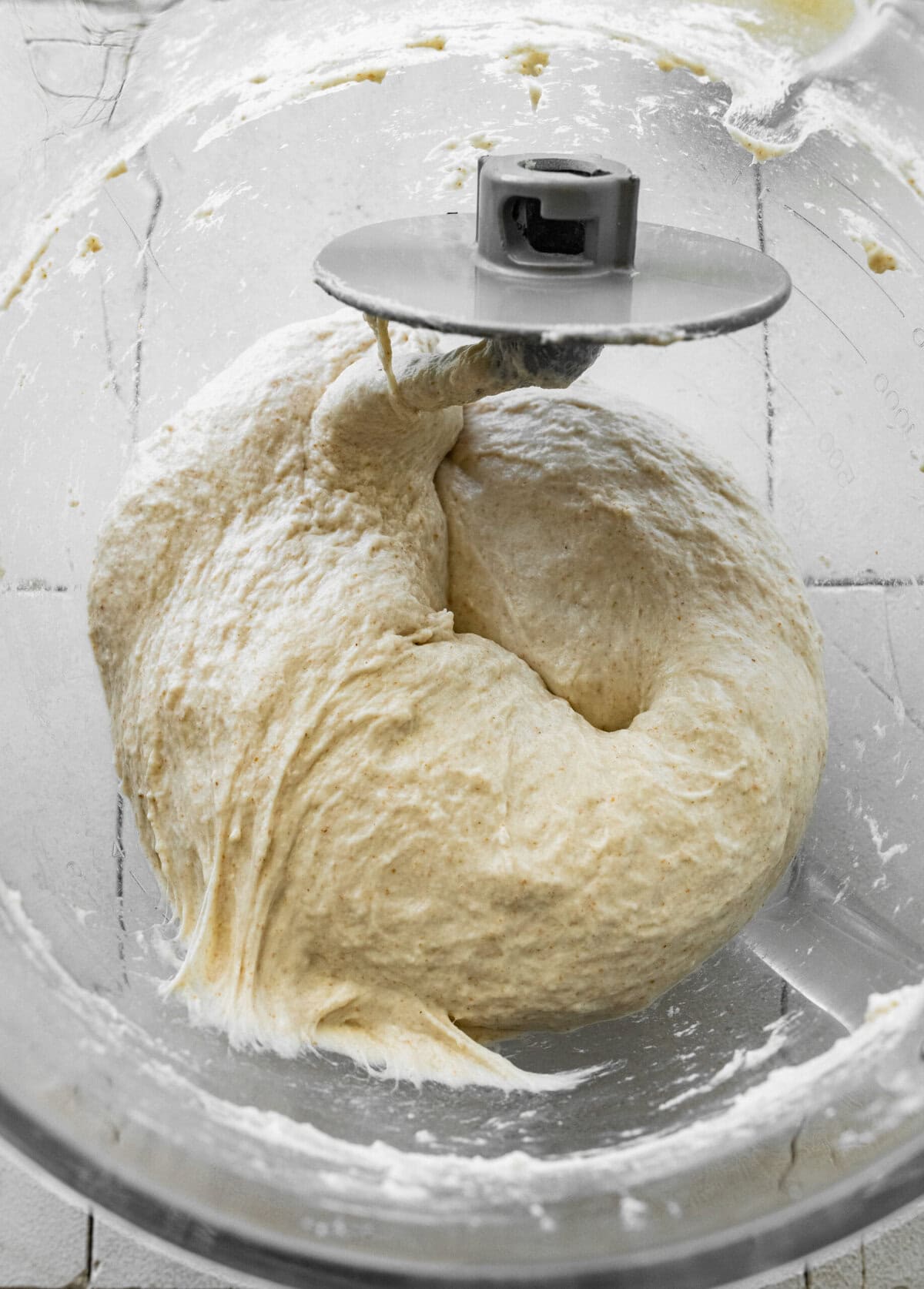
- The dough will be very sticky because of its high hydration. Do not add extra flour simply to make it easier to handle. Knead the dough for about 12 minutes, either by hand or with a stand mixer fitted with a dough hook. The finished dough should be smooth, elastic, and very sticky.
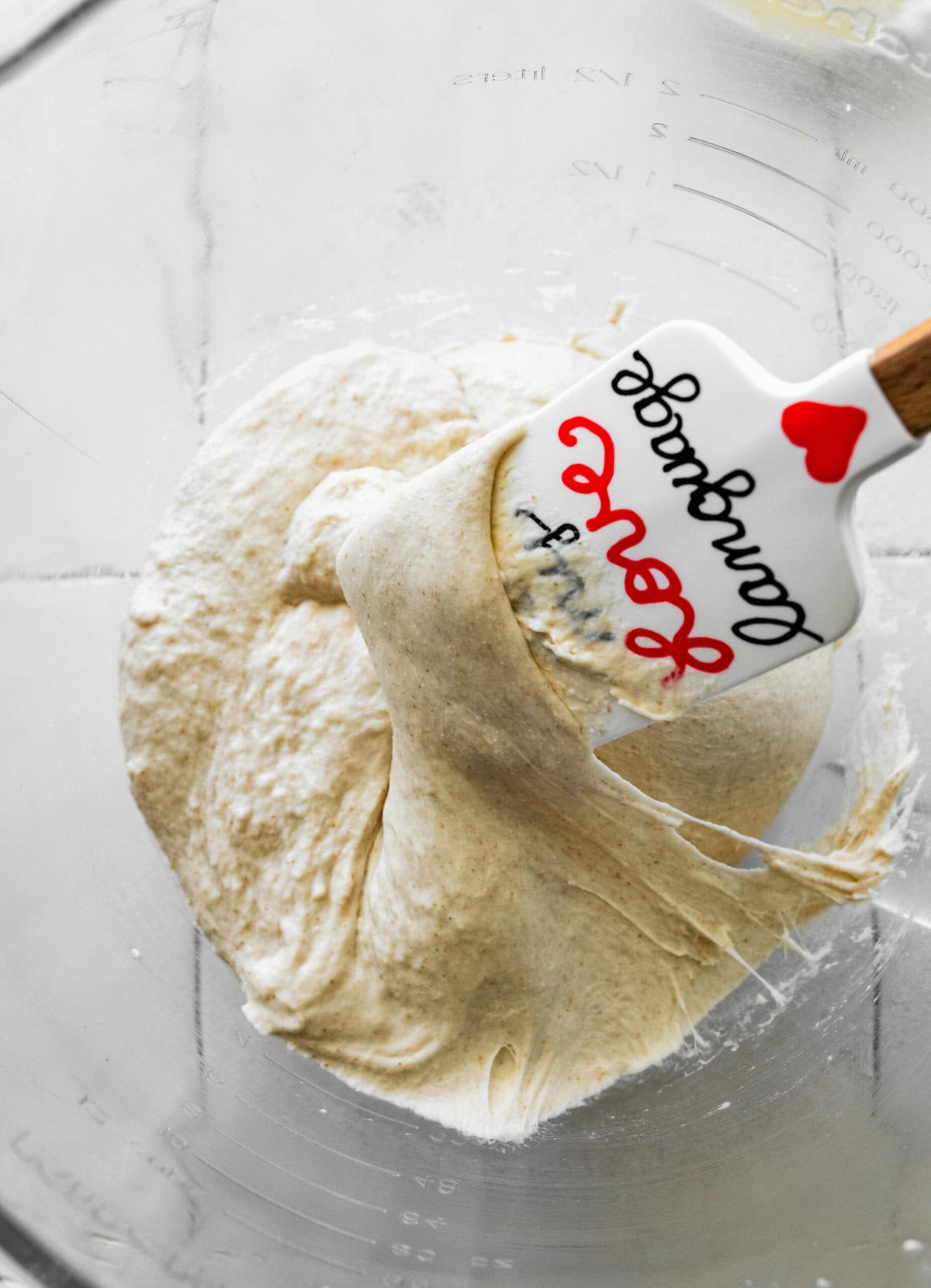
- Transfer the dough to a lightly oiled container. Using wet hands or a rubber spatula, gently lift one side of the dough and fold it over itself toward the center. Turn the container and repeat on all sides.
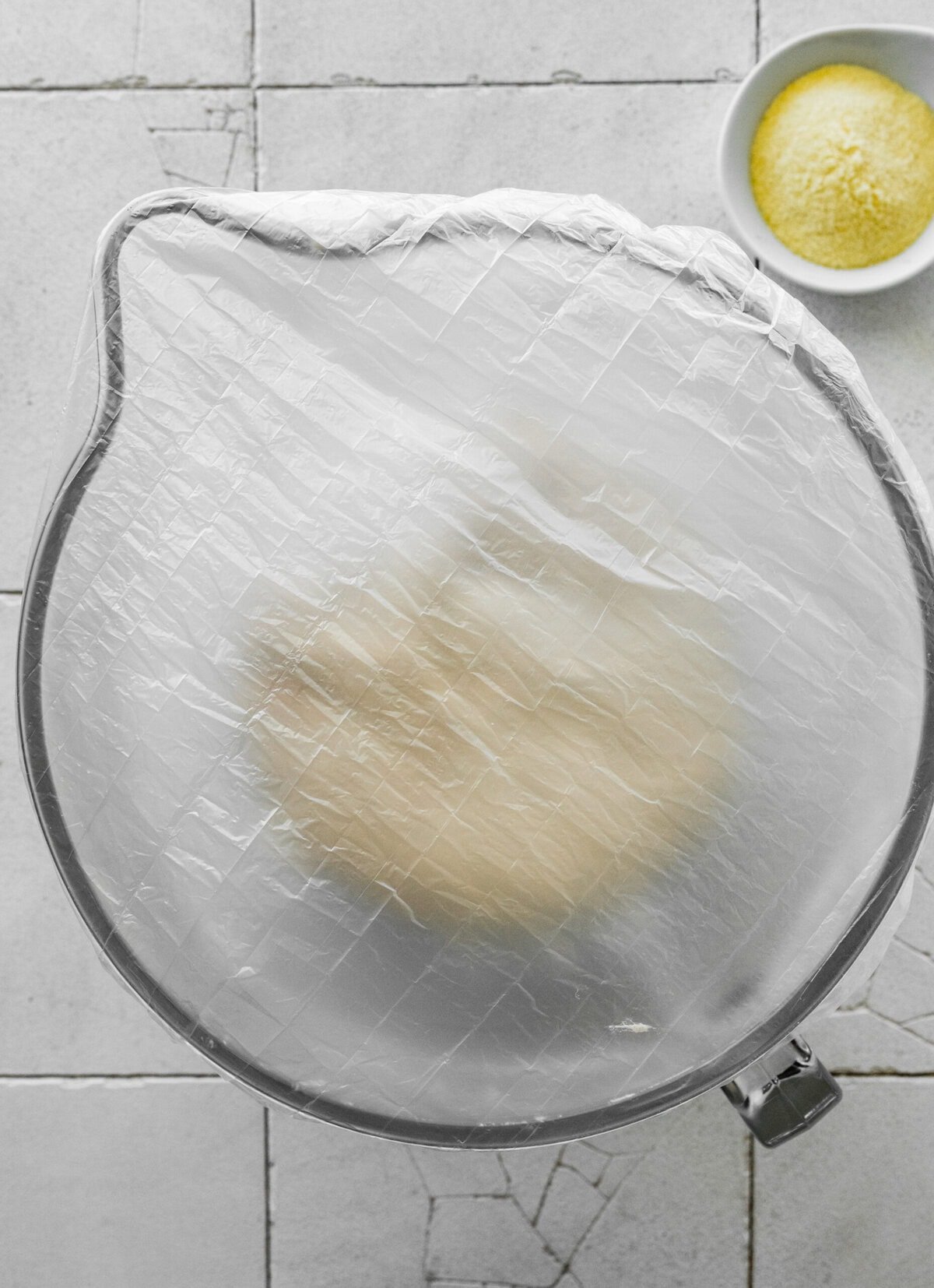
- Let the dough rest, covered, for about 1 hour until it doubles in size, then repeat the stretch-and-fold process.
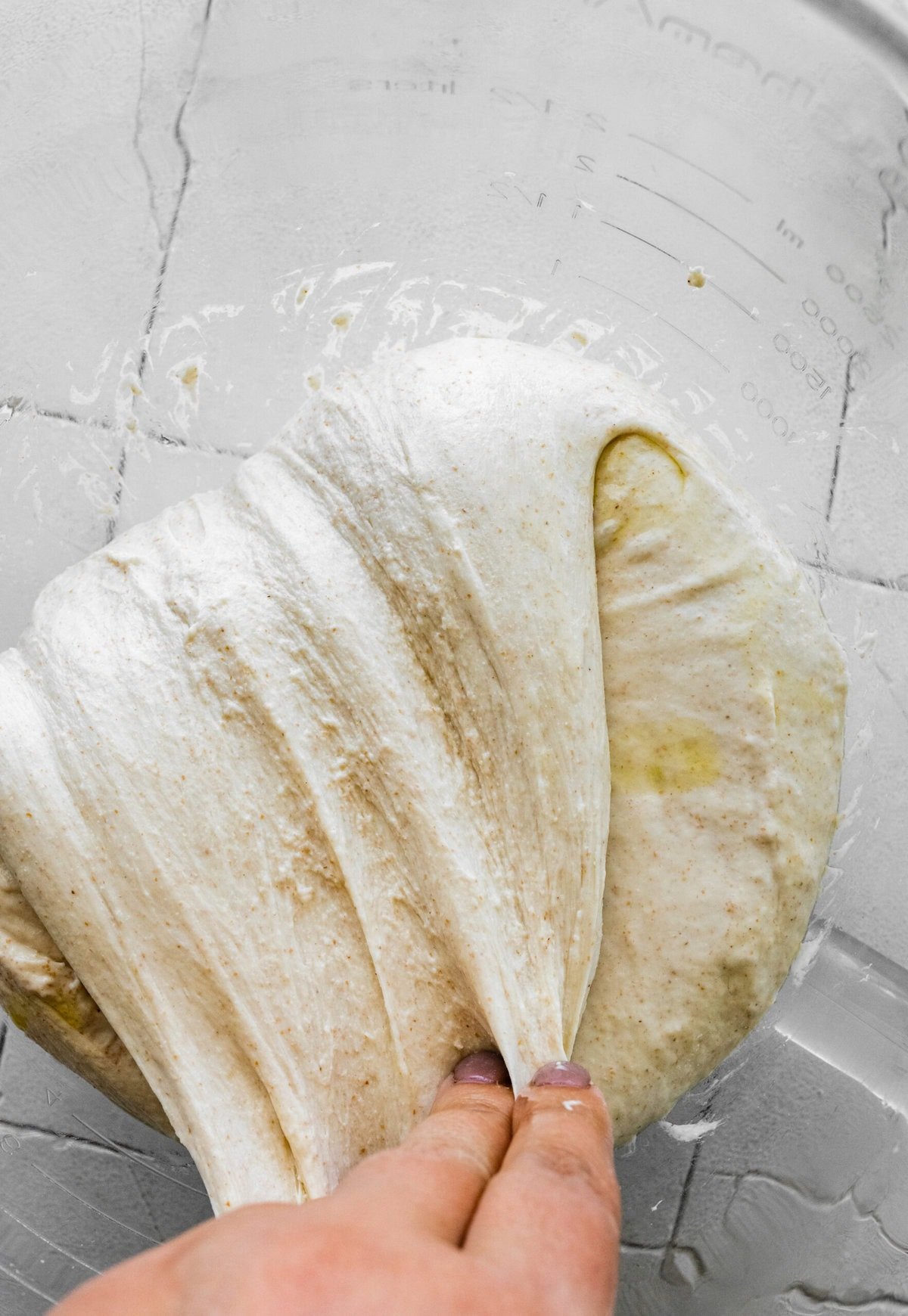
- The dough should become smoother, stronger, and easier to handle with each fold. Place the dough in a clean, lightly oiled bowl.
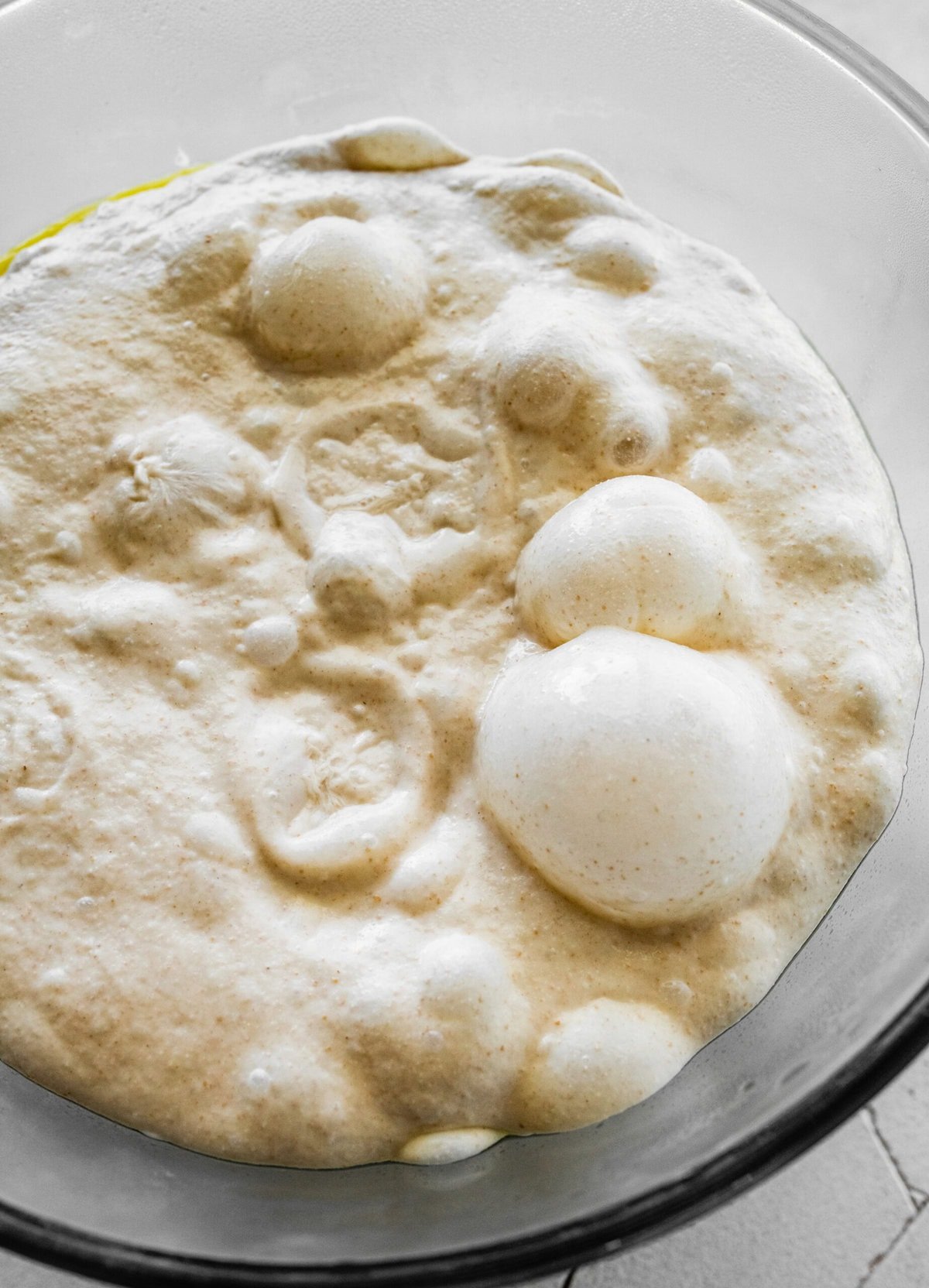
- Cover with plastic wrap and refrigerate for 24–48 hours for the cold fermentation.
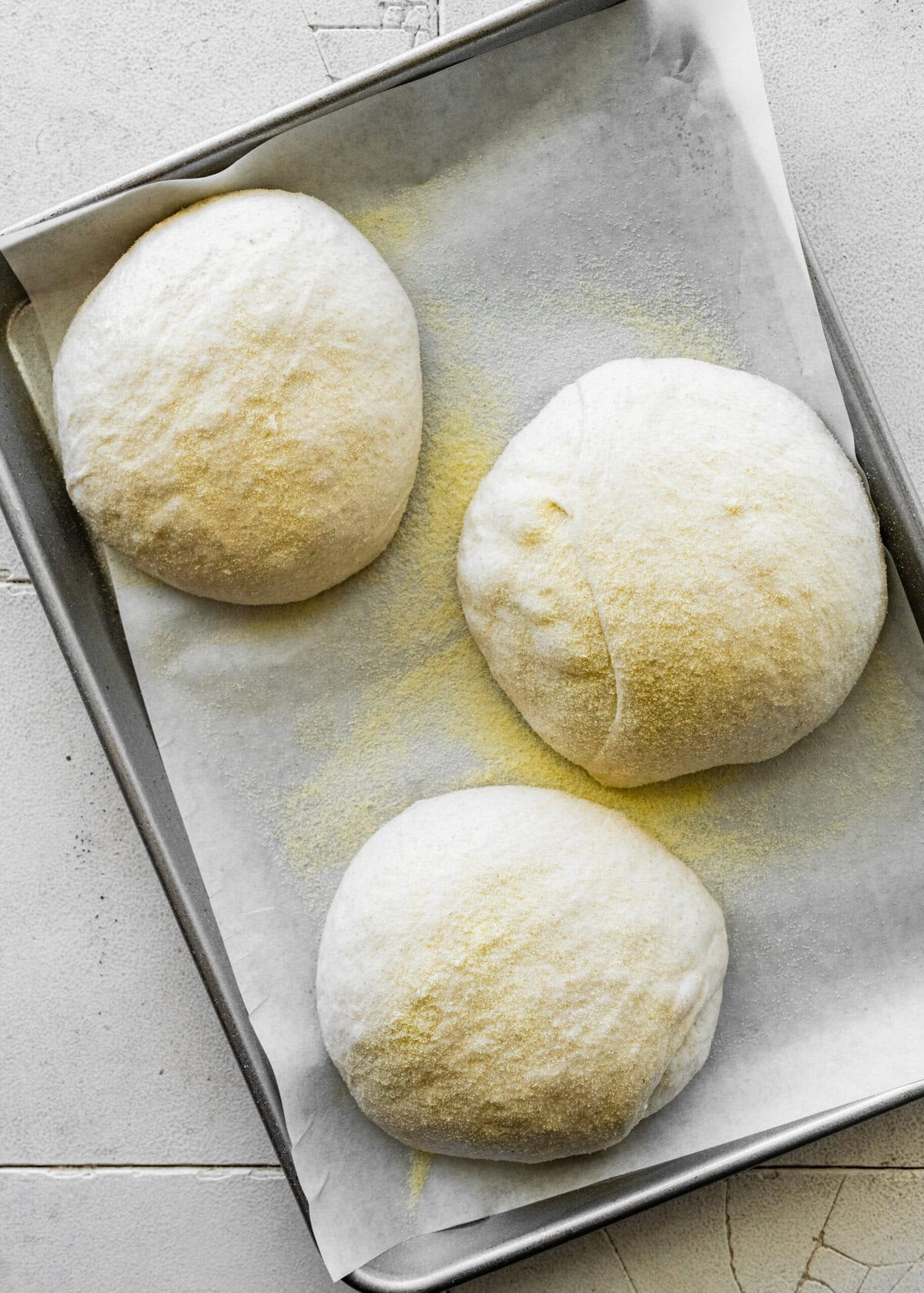
- When ready to bake, preheat the oven to its highest setting, around 480–550°F. Place your pizza stone or baking sheet in the oven while it’s preheating. Divide the dough into 2–3 portions, depending on your preferred pizza size. Coil each portion a few times, then shape it into a dough ball. Sprinkle each dough ball lightly with semolina flour. Cover loosely with plastic wrap or a clean cloth and let rest on a baking sheet for 15–30 minutes.
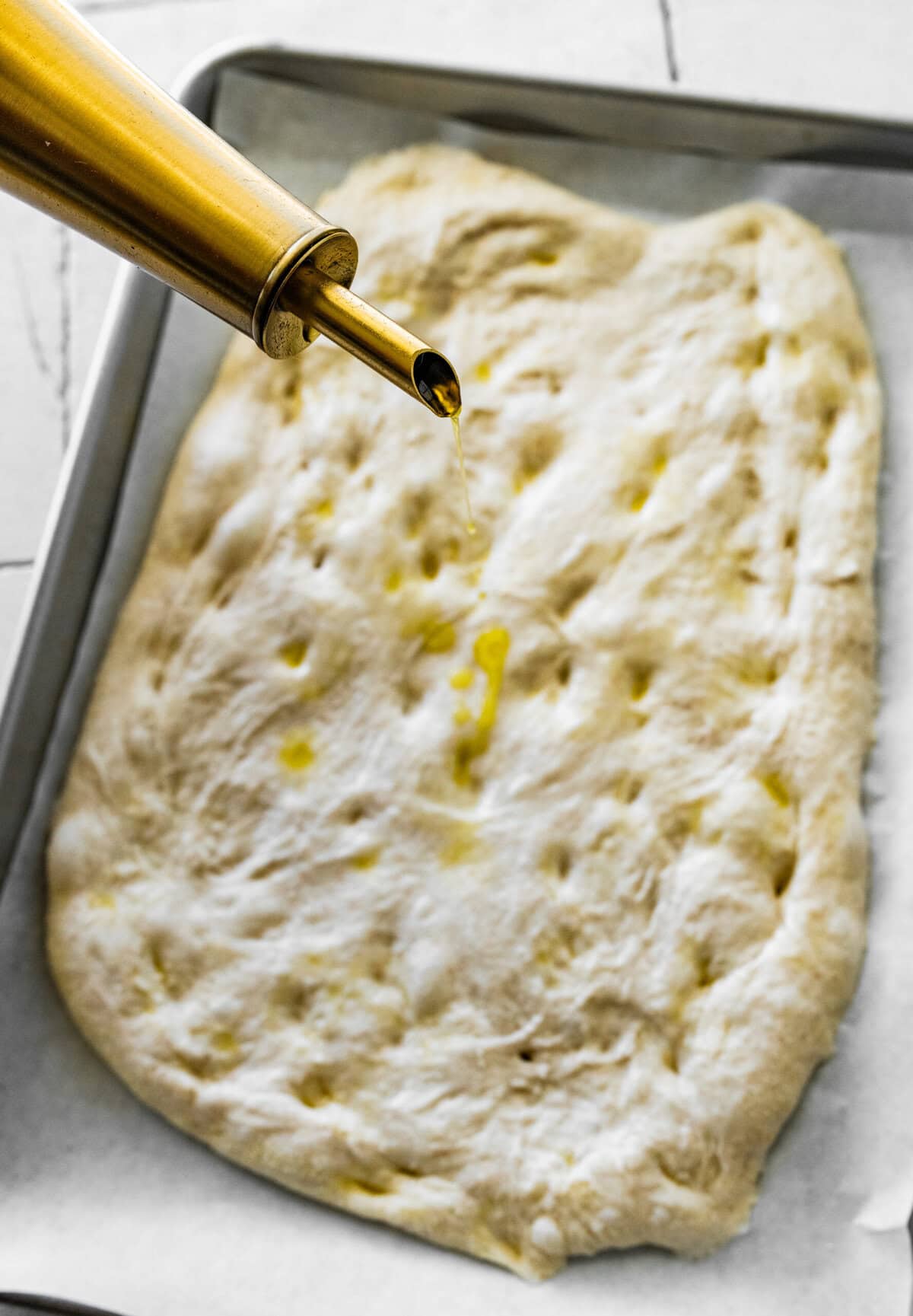
- Sprinkle semolina flour over a clean work surface. Gently stretch each dough ball into an oval, letting gravity help stretch the dough as you hold it in your hands. Transfer it to your work surface and gently dimple the dough with your fingertips. Transfer the shaped dough to an oiled baking sheet or a pizza peel lightly sprinkled with semolina so it can slide easily into the oven.
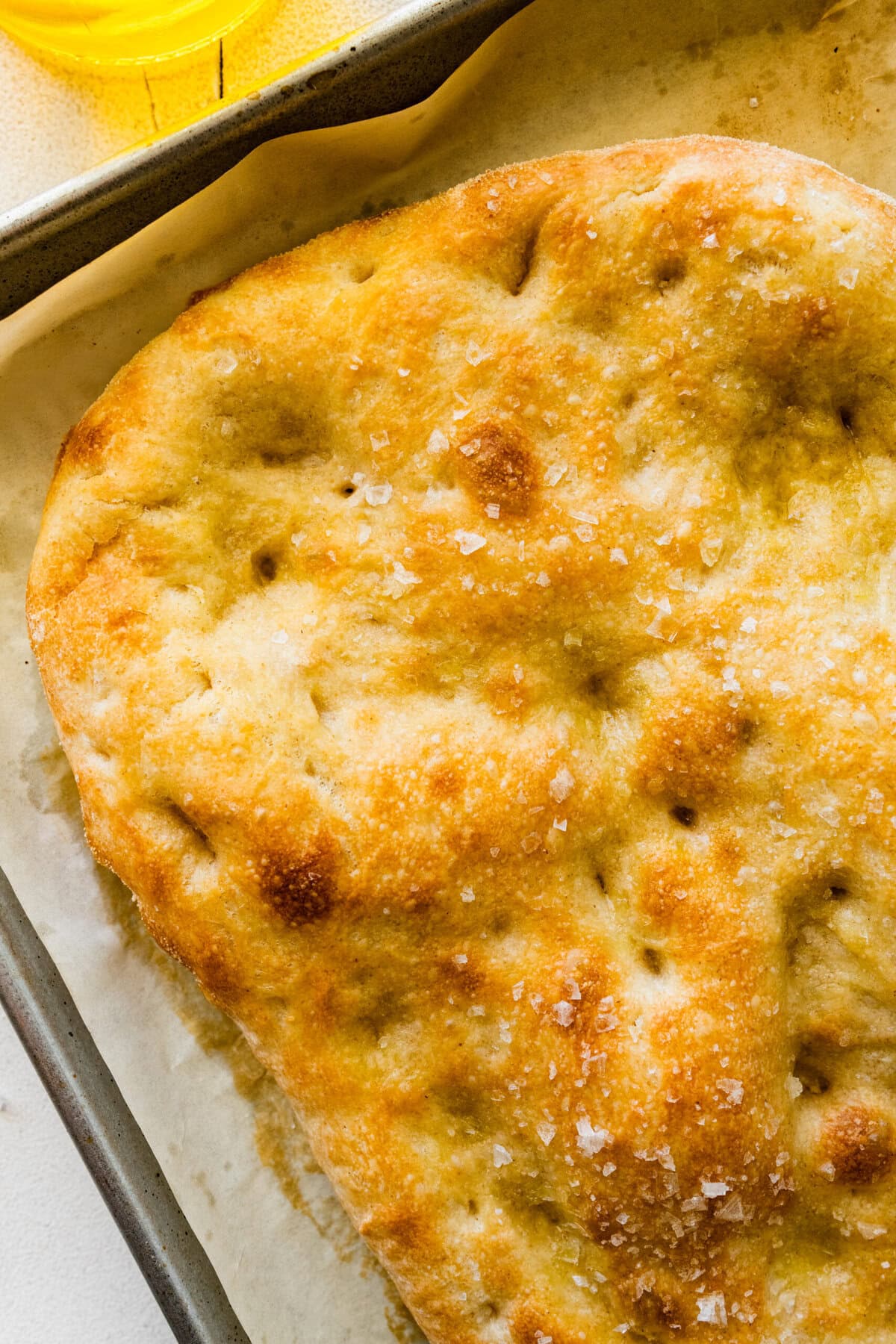
- Bake for 10–12 minutes if you’re not using toppings.
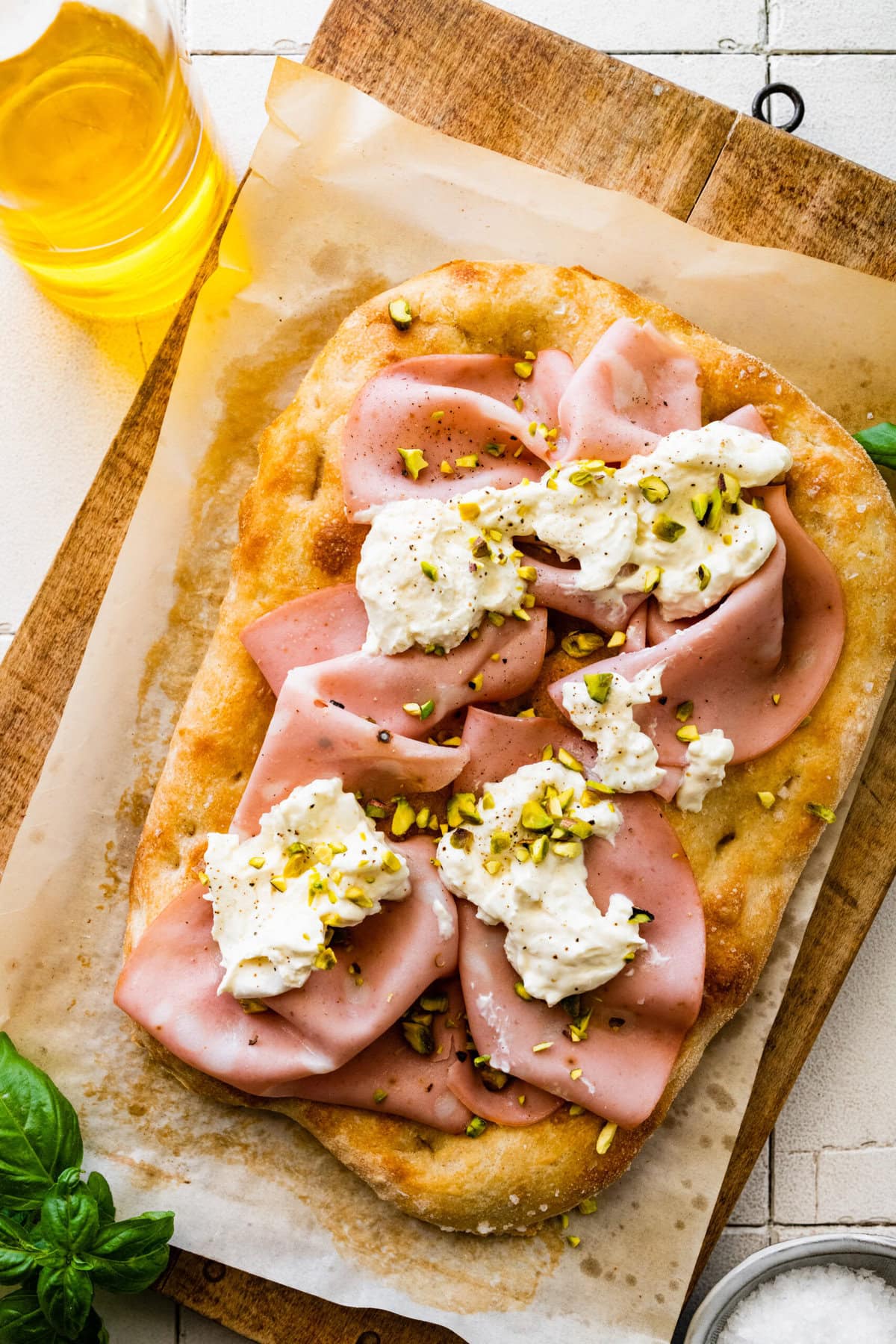
- Bake for up to 20 minutes if baking with toppings.
Pinsa Romana Recipe FAQs
This is a high-hydration dough, so it will feel wetter and stickier than a traditional pizza dough. The recipe uses 460 ml of water with 590 grams of total flour, which is roughly 78% hydration. Don’t add extra flour simply because the dough feels sticky. The higher water content is an important part of the dough’s texture and helps create the light, airy interior associated with pinsa. As you mix and fold the dough, it will gradually become more cohesive and elastic.
Pinsa dough is supposed to be sticky because it has a high level of hydration. Avoid adding large amounts of extra flour. Instead, use lightly oiled or wet hands when handling the dough.
Cold or under-relaxed dough can resist stretching. Give the dough time to relax before trying again. Stretch gently rather than forcing it into shape.
Avoid aggressively pressing or rolling the dough after fermentation. The goal is to preserve the air that developed during the rise. Also make sure the dough has had enough time to ferment according to the recipe.
Let leftover pinsa cool completely, then wrap it well or place it in an airtight container. Refrigerate for up to 3 days. For the best texture, reheat pinsa in a hot oven or toaster oven until the crust is warmed through and crisp again. An air fryer also works well for reheating individual pieces. Avoid microwaving when possible, as it can make the crust soft.
Serving Suggestions
Pinsa Romana is delicious with a variety of toppings. Try it Margherita-style with tomato sauce, mozzarella, Parmesan, and fresh basil, or top it with prosciutto and arugula for a fresh, savory combination. For something extra creamy, add mortadella, burrata, and pistachios after baking. You can also try mushrooms and cheese, or keep it simple with olive oil, flaky sea salt, and fresh herbs.
For a complete Italian-inspired meal, pair pinsa with a Classic Italian Chopped Salad or a simple antipasto platter featuring everything from Marinated Mozzarella Balls to Eggplant Caponata . It also goes well with a bowl of Tortellini en Brodo Soup or a light vegetable side, such as Italian Flat Green Beans
My Pro Tips
Recipe Tips
- Use Cold Water: Use ice-cold water as called for in the recipe to help keep the dough cool while mixing.
- Plan Ahead: The dough needs 24–48 hours of cold fermentation, so prepare it at least one day before you plan to bake the pinsa.
- Handle The Dough Gently: When dividing and shaping, use a light touch to help preserve the air developed during fermentation. Gently stretch the dough rather than rolling it flat.
- Preheat Your Baking Surface: If using a pizza stone, allow it to heat fully in the oven before baking. A hot baking surface helps create a crisp bottom crust.
- Don’t Overload With Toppings: Use a light layer of sauce and toppings so the crust stays crisp and the center bakes properly. Fresh toppings such as burrata, arugula, or herbs can be added after baking.
More Authentic Italian Recipes
💙 MADE THIS RECIPE AND LOVED IT? 💙 Please leave a ⭐️STAR rating and COMMENT below- I love connecting with you! Tag me with your creations on Instagram and find me on Pinterest.
Pinsa Romana Recipe (Roman Style Pizza Dough)

Ingredients
For the Dough:
- 500 g Italian 00 flour
- 50 g rice flour
- 40 g spelt flour or soy flour
- 460 ml ice cold water
- 2.5 g active dry yeast
- 10 g salt
- 5 ml extra virgin olive oil
- Semolina flour for rolling out dough
Instructions
Mixing the Dough:
- In a large mixing bowl or the bowl of a stand mixer, whisk together the 00 flour, rice flour, spelt or soy flour, and active dry yeast.
- Gradually add the ice-cold water in 3-4 additions, mixing after each addition. The dough may look shaggy and slightly dry at first as it absorbs the water.
- Add the salt and olive oil, then continue kneading until the dough becomes smooth and elastic. The dough will be very sticky because of its high hydration. Do not add extra flour simply to make it easier to handle.
- Knead the dough for about 12 minutes, either by hand or with a stand mixer fitted with a dough hook. The finished dough should be smooth, elastic, and very sticky.
Stretching and Folding:
- Transfer the dough to a lightly oiled container. Using wet hands or a rubber spatula, gently lift one side of the dough and fold it over itself toward the center. Turn the container and repeat on all sides.
- Let the dough rest, covered, for about 1 hour until it doubles in size, then repeat the stretch-and-fold process. The dough should become smoother, stronger, and easier to handle with each fold.
- Place the dough in a clean, lightly oiled bowl. Cover with plastic wrap and refrigerate for 24–48 hours for the cold fermentation.
Shaping and Baking:
- When ready to bake, preheat the oven to its highest setting, around 480–550°F. If using a pizza stone, place it in the oven while it preheats. If you don't have a pizza stone, use a baking sheet.
- Divide the dough into 2–3 portions, depending on your preferred pizza size. Coil each portion a few times, then shape it into a dough ball. Sprinkle each dough ball lightly with semolina flour. Cover loosely with plastic wrap or a clean cloth and let rest on a baking sheet for 15–30 minutes.
- Sprinkle semolina flour over a clean work surface. Gently stretch each dough ball into an oval, letting gravity help stretch the dough as you hold it in your hands. Transfer it to your work surface and gently dimple the dough with your fingertips, similar to shaping focaccia.
- Transfer the shaped dough to an oiled baking sheet or a pizza peel lightly sprinkled with semolina so it can slide easily into the oven.
- Add your desired toppings, being careful not to overload the dough. Too many toppings can make the pinsa heavy and difficult to transfer from the peel.
- Bake for 10–12 minutes, or up to 20 minutes if baking with toppings, until the crust is golden brown and crispy. If using a tomato-based sauce, bake the dough with just the tomato sauce for about 8 minutes. Then add the remaining toppings and continue baking. This helps the crust become crisp and tender without overcooking the cheese.
Notes
- Use Cold Water: Use ice-cold water as called for in the recipe to help keep the dough cool while mixing.
- Plan Ahead: The dough needs 24–48 hours of cold fermentation, so prepare it at least one day before you plan to bake the pinsa.
- Handle The Dough Gently: When dividing and shaping, use a light touch to help preserve the air developed during fermentation. Gently stretch the dough rather than rolling it flat.
- Preheat Your Baking Surface: If using a pizza stone, allow it to heat fully in the oven before baking. A hot baking surface helps create a crisp bottom crust.
- Don’t Overload With Toppings: Use a light layer of sauce and toppings so the crust stays crisp and the center bakes properly. Fresh toppings such as burrata, arugula, or herbs can be added after baking.
Nutrition
Nutrition information is automatically calculated, so should only be used as an approximation.





Can this recipe be used to make a thinner crust, is that an option?
Yes! Absolutely. I think you might like this one as is, if you want to try it that way first?
I have a question. The recipe says 460ml of cold water, but the instructions say add the water in 3 additions, about 100 gr (grams?) each time. Should the recipe be 460 grams of water?
Sorry about the confusion! The total should be ml of water! Enjoy the recipe.