No Knead Italian Ciabatta Bread

This post may contain affiliate links. Please read our disclosure policy.

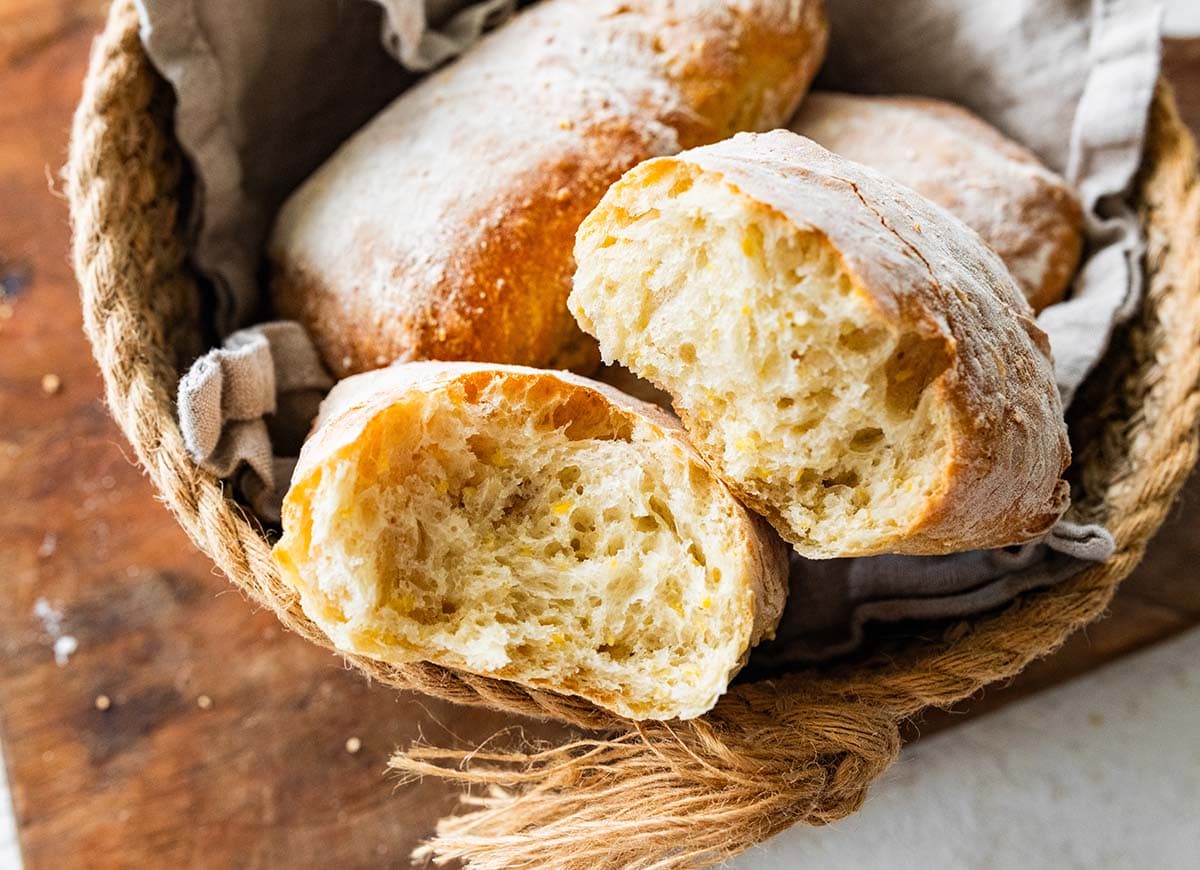
You can have this bakery-style, no knead Italian ciabatta bread ready in 4 hours from start to finish! Yes, it’s that fast. You don’t need special tools or bread-baking pans; it only requires three main ingredients, and is perfect for beginner bread bakers!
Serve with shrimp asparagus pasta and Italian grilled eggplant for a light meal.

Quick Look: No Knead Italian Ciabatta Bread
- Prep Time: 10 minutes
- Cook Time: 25 minutes
- Total Time: 3 hours 30 minutes (including rising time)
- Servings: 12 people
- Dietary Info: Vegan, Dairy Free
- Method: Oven Baked
- Technique: Stretching and folding the dough eliminates the need to knead while building the great gluten structure you need for perfect ciabatta.
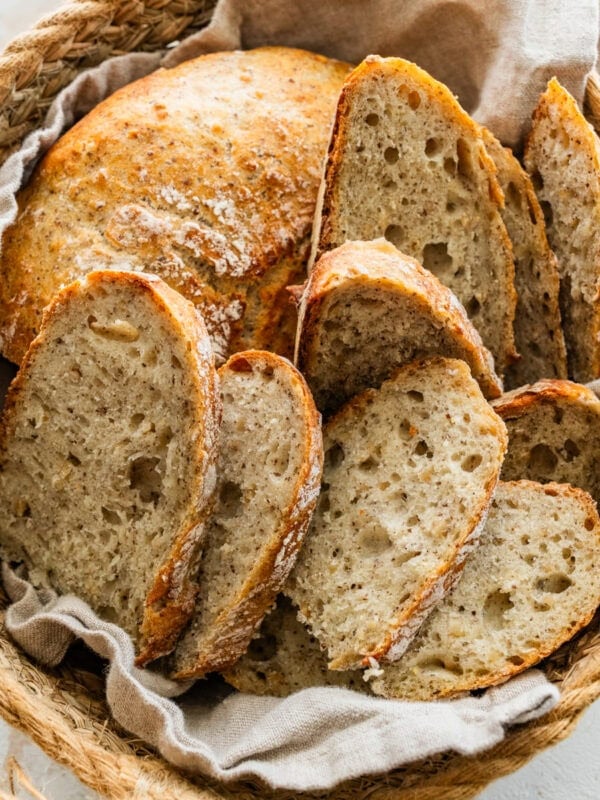
- Flavor & Texture: This homemade Italian ciabatta has a thin, crispy crust and soft, open texture, making it perfect for enjoying with Italian bread dipping oil, with soups, or in sandwiches.
Why You’ll Love This Recipe

There is nothing like a bread bakery in Italy or pacifico. The smell of warm bread fills the air, and I instantly feel at home. One of Italy’s most common and popular everyday breads is the ciabatta loaf. With this easy and reader-favorite recipe, you can taste Italy right in your home!
All you need is five simple ingredients: flour, water, yeast, semolina, and salt. No fancy equipment is required! All you need is one large bowl, a mixing spoon, and a flat baking sheet. That is IT! Pluls, I share my ciabatta secret: the “stretch and fold” method that I tell you about in this post. It’s really the key to a crunchy crust and an irresistibly soft interior.
If you love making bread, don’t miss my favorite recipes for easy homemade dinner rolls, schiacciata and Italian Brioche Bread.
Made With Amore,

“Coming from a non-baker who has never made bread before… this was the easiest MOST delicious bread recipe to follow. The bread box is a game changer, I highly suggest it! I’ve made 4 loafs this week!”
– Amber
Table of Contents
Simple Ingredients
It doesn’t take much to make this authentic Italian ciabatta bread! Start with these 5 simple ingredients, and you’ll be ready to make this special bread from scratch.
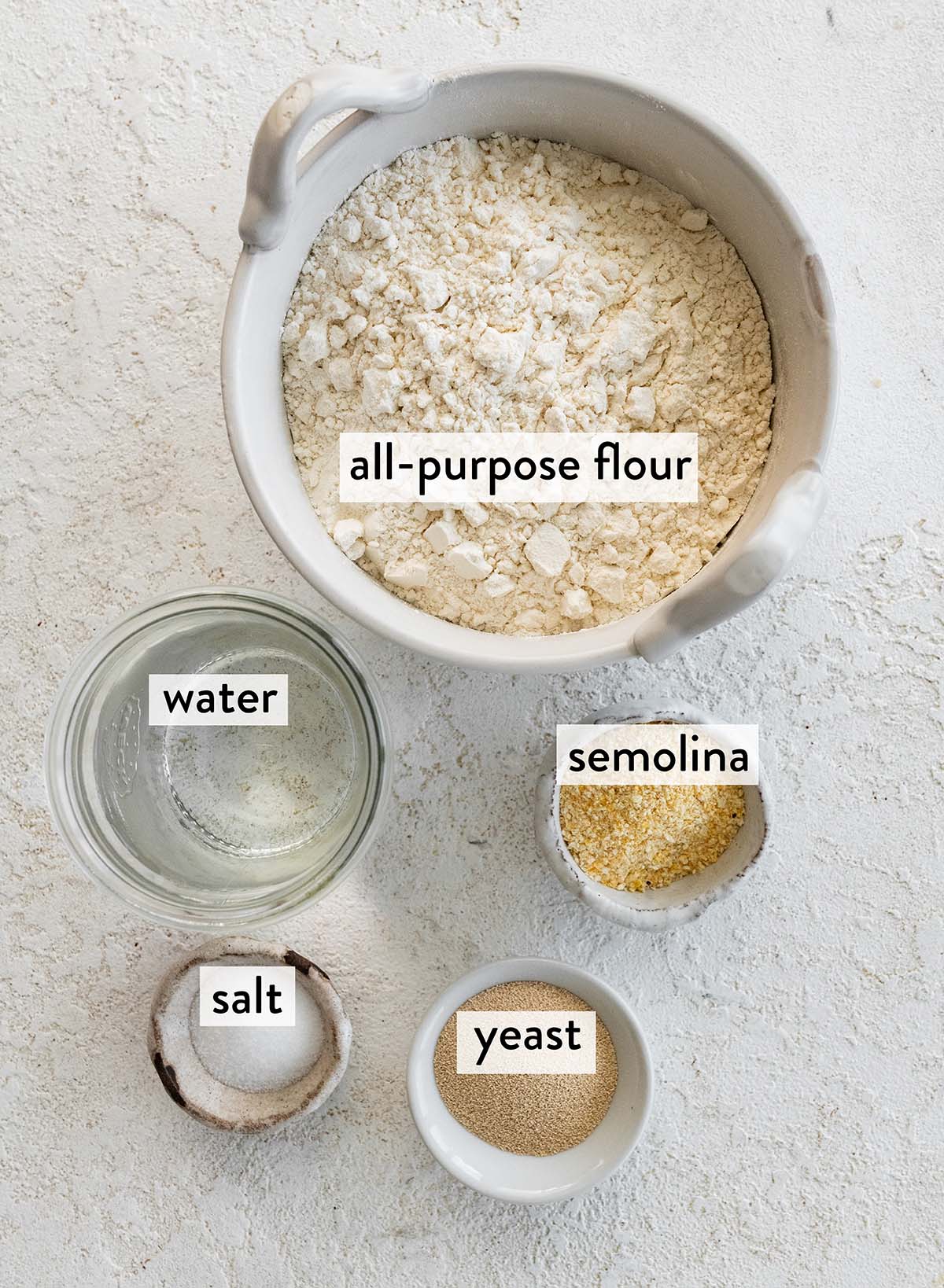
- Flours: A mix of all-purpose flour and semolina flour gives the dough structure and a slightly rustic texture.
- Yeast: I love using instant yeast for a quick and reliable rise!
- Water: Warm water helps activate the yeast and hydrate the dough. Microwave it until it reaches 110-115°F, which is the perfect temperature for yeast.
- Salt: This enhances the flavor and keeps the dough from rising too quickly.
See recipe card for full information on ingredients and quantities.
Variations & Substitutions
- Don’t have semolina? Replace the semolina flour called for in the recipe with an equal amount of bread flour, fine cornmeal, or whole-wheat flour. Bread flour or whole-wheat flour will work best; they have a higher gluten content than all-purpose flour and will change the taste slightly, but you will still achieve delicious bread. In the future, buy semolina and try it! You will love the taste.
- Want to have an even better rise and texture? Try making this with bread flour in place of the all-purpose flour. The higher protein content in the flour creates more gluten, resulting in a chewier texture and better rise.
How to Make No Knead Italian Ciabatta Bread
Making fast, no-knead Italian ciabatta bread is simpler than you might think! Let me walk you through the process. See the printable recipe card for more!
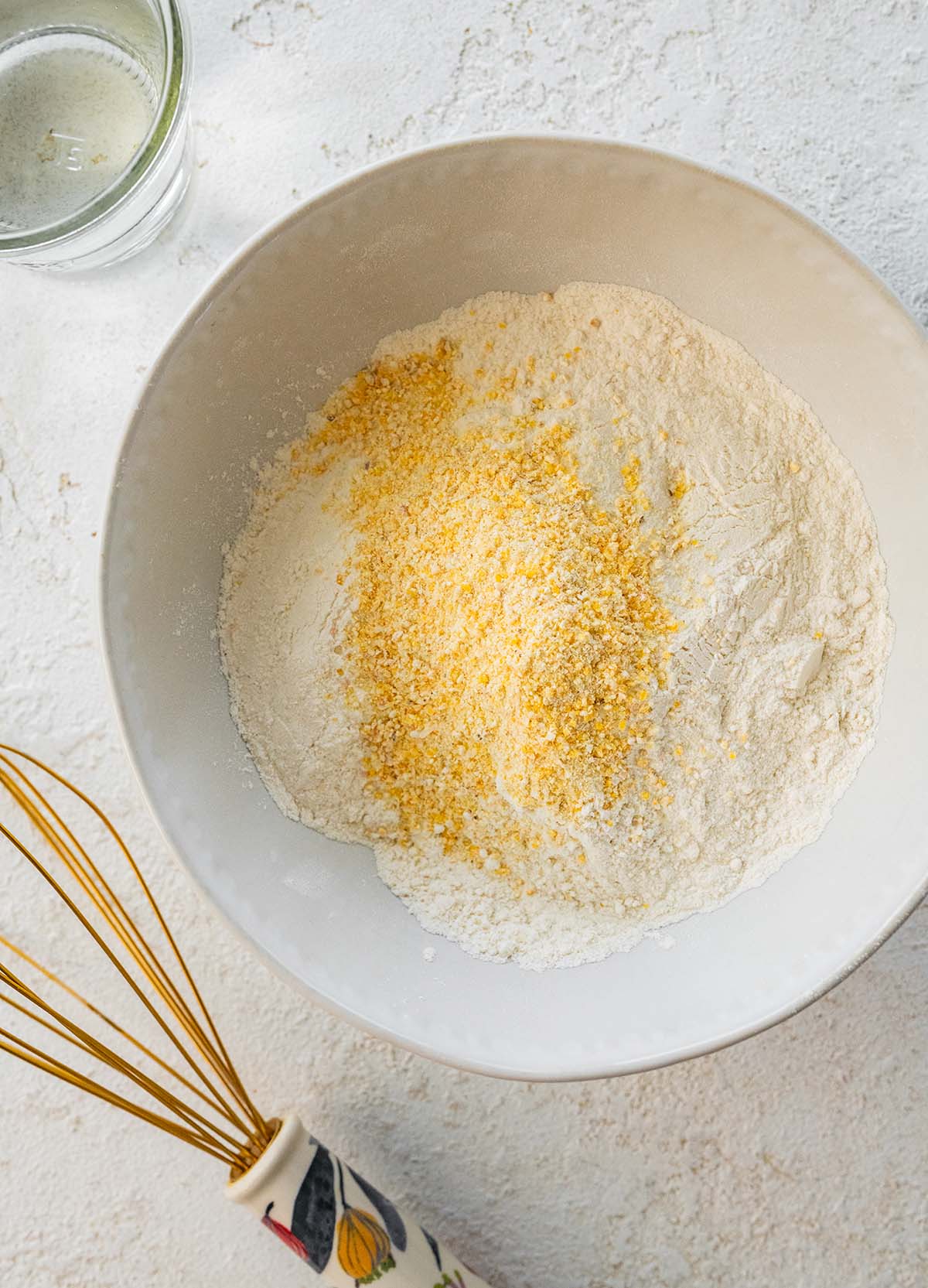
- Combine the flour and semolina in a large bowl. Dissolve the salt in the water.
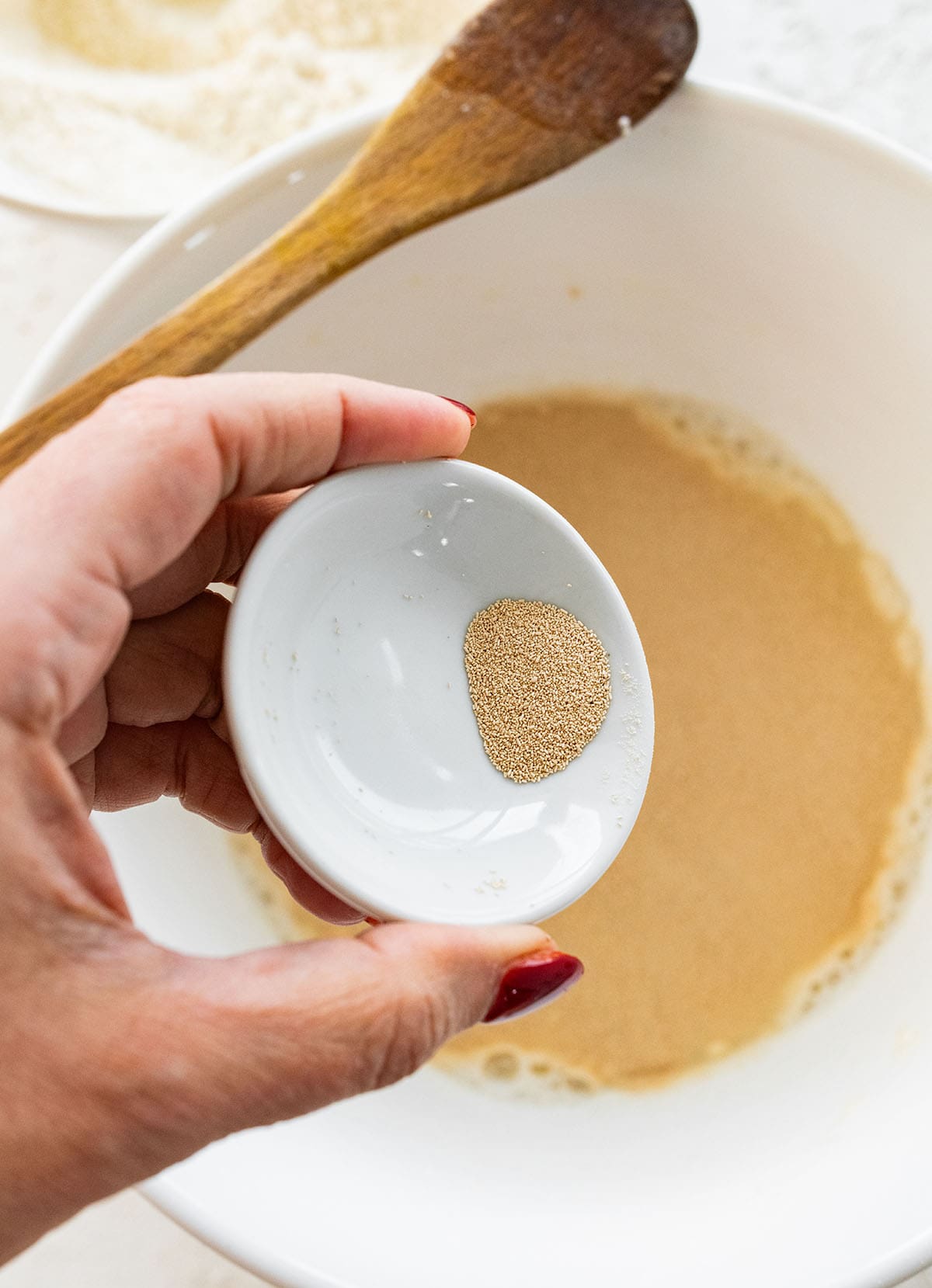
- Add 4 tablespoons of the semolina-flour mixture to the water and salt and stir until it has a crepe-batter consistency. Mix in the yeast.
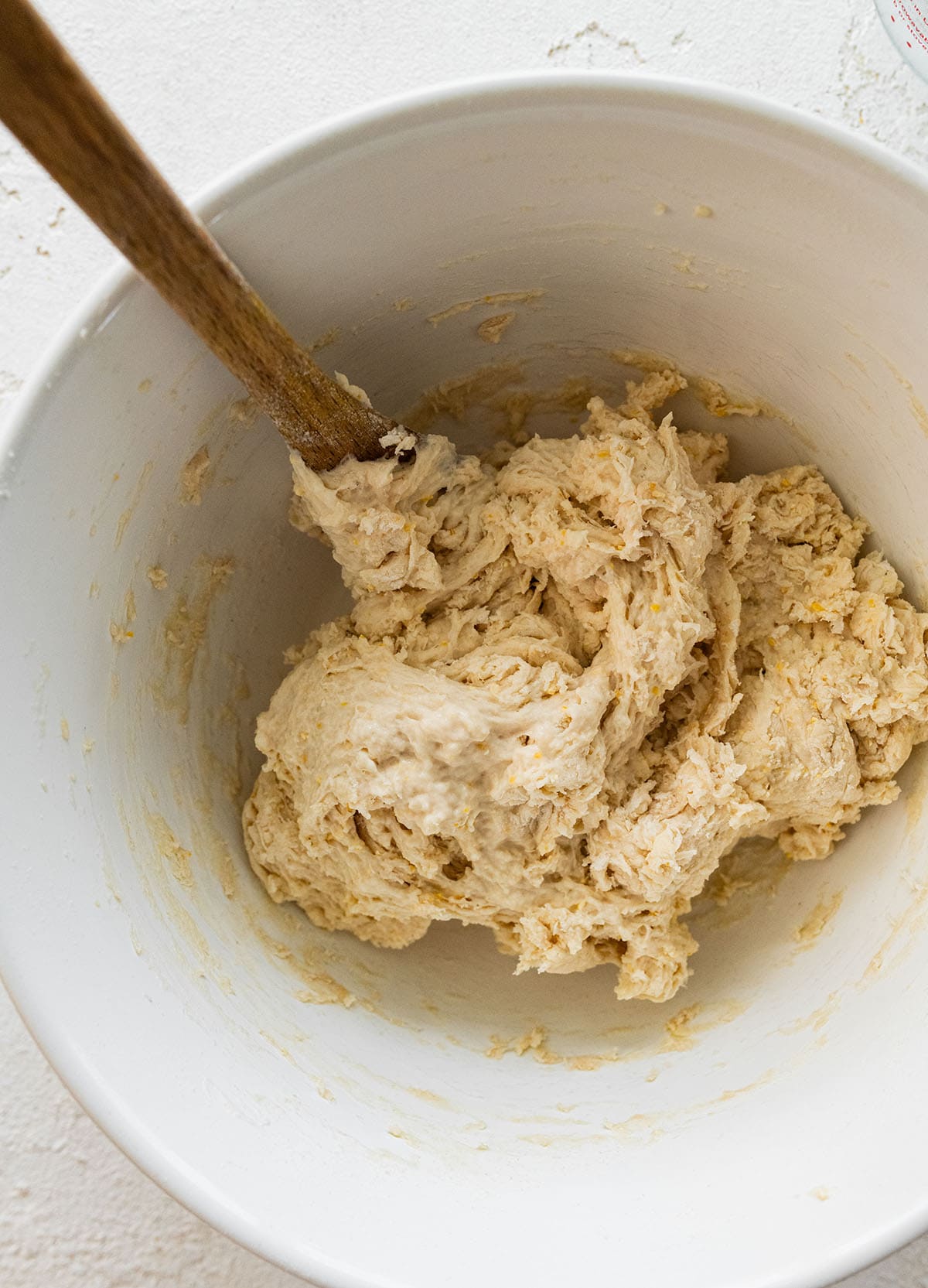
- Add the rest of the flour mixture and stir to form a shaggy mixture. Ensure that all the flour is picked up from the bowl.
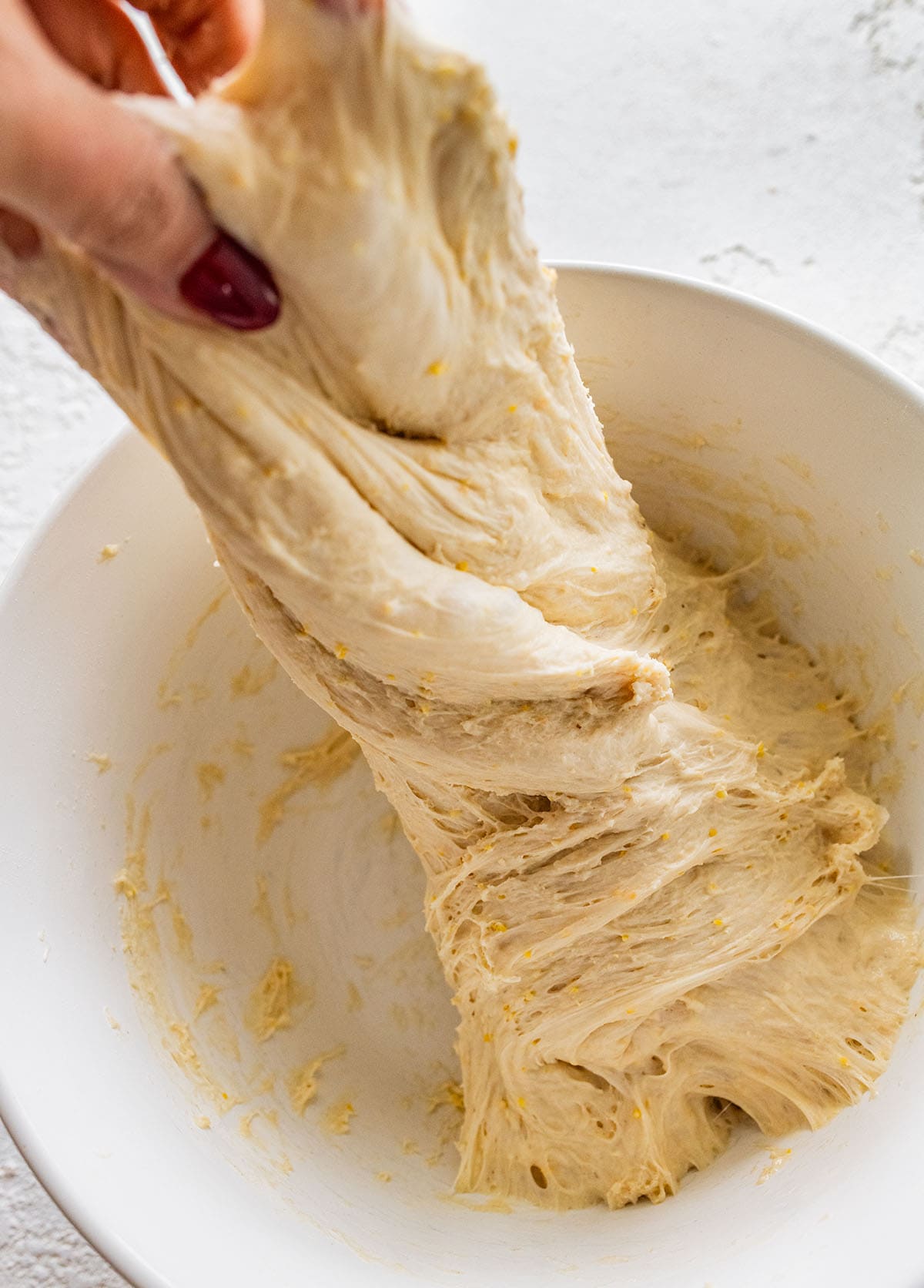
- Cover the bowl and let it rise for 2 hours. Three times during the rise (every 30 minutes), wet your hand and stretch the dough up, then fold it over on itself. Repeat this motion three times, turning the bowl after each fold; this counts as 1 stretch and fold.
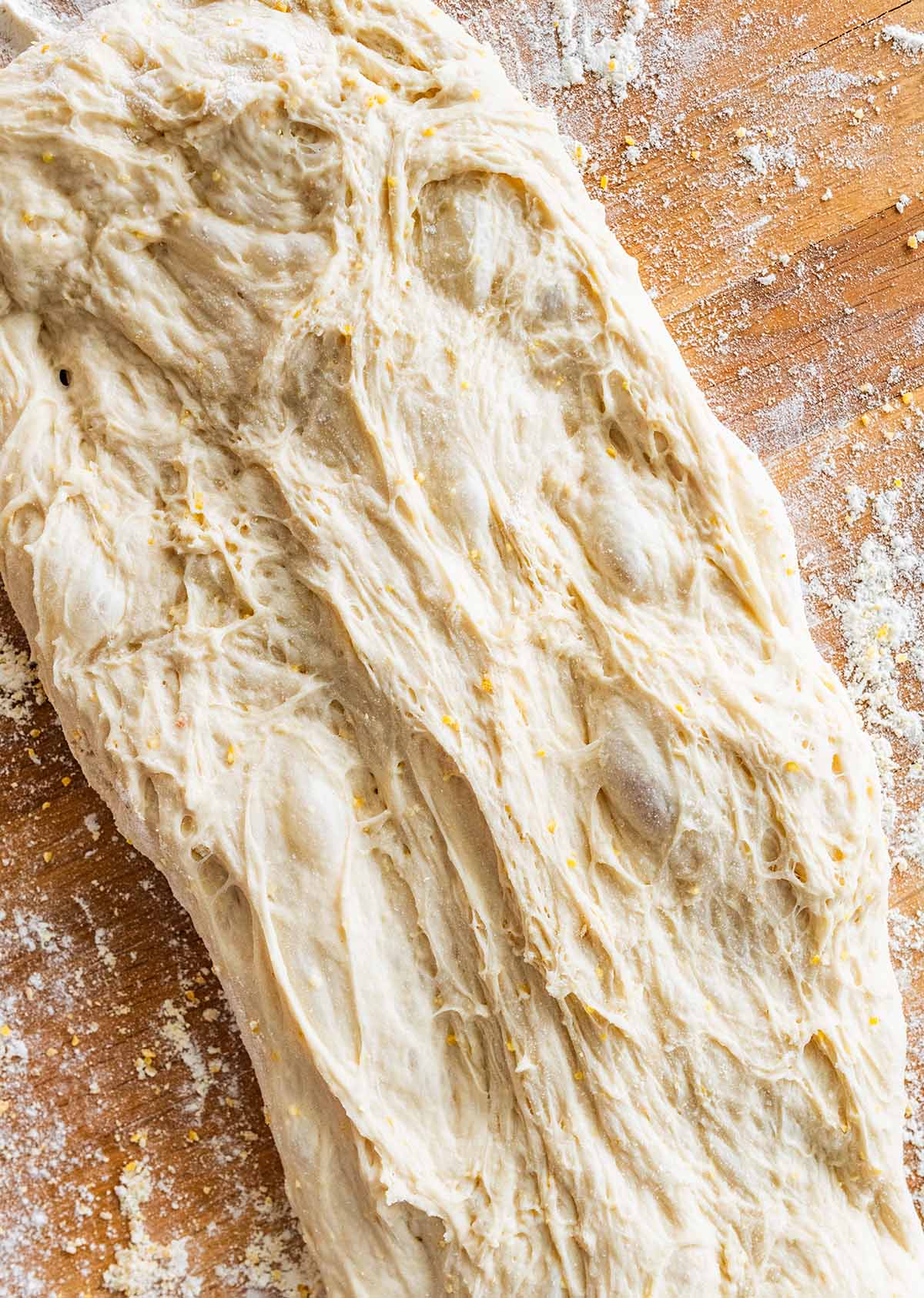
- After 2 hours total of rising, turn the dough out onto a floured surface. Gently shape it into a long rectangle with floured hands; try to keep as much air in the dough as possible.
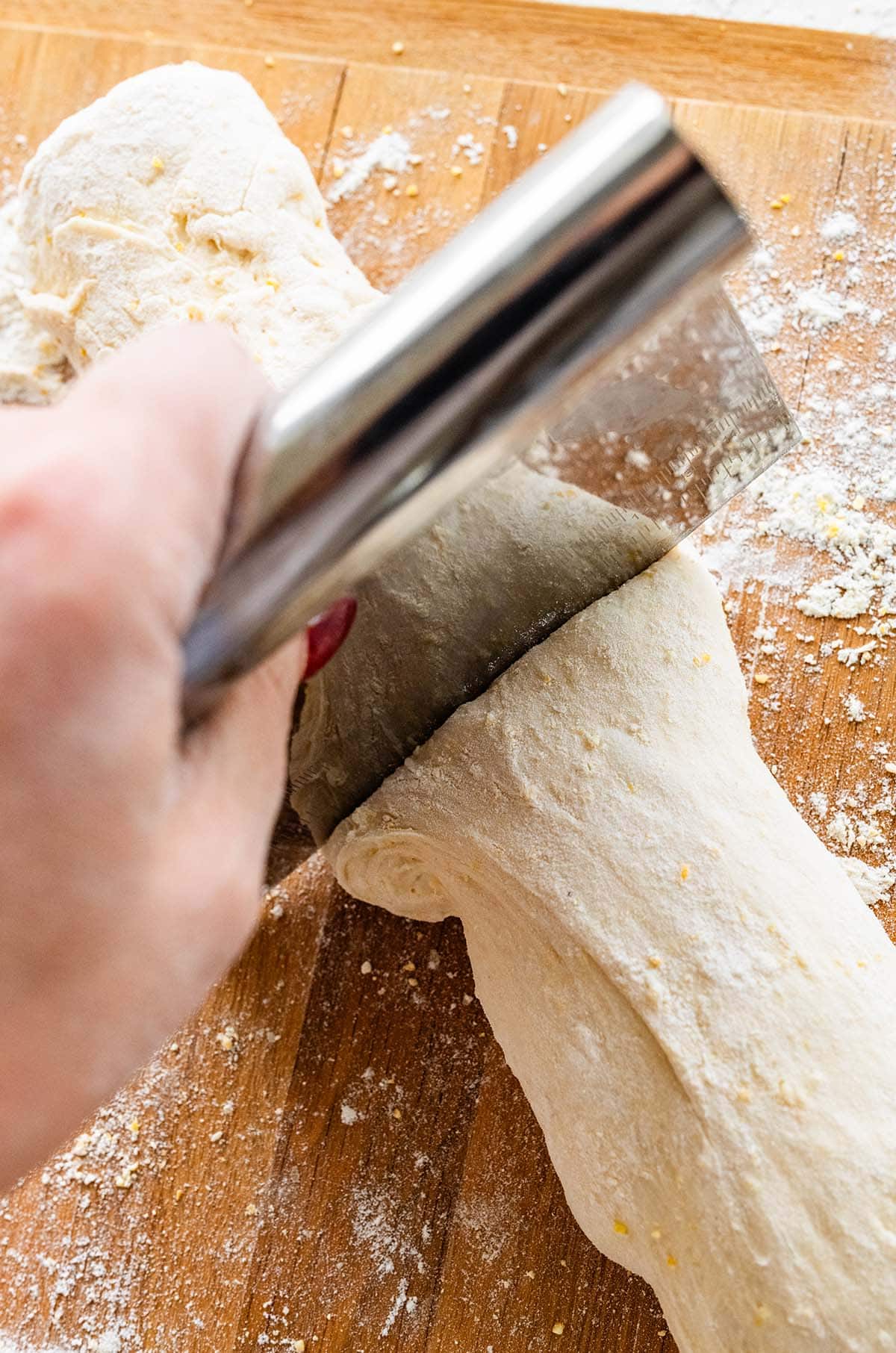
- Cut the dough into three equal pieces using a bench scraper or sharp knife. Gently shape each piece into a rectangular loaf.
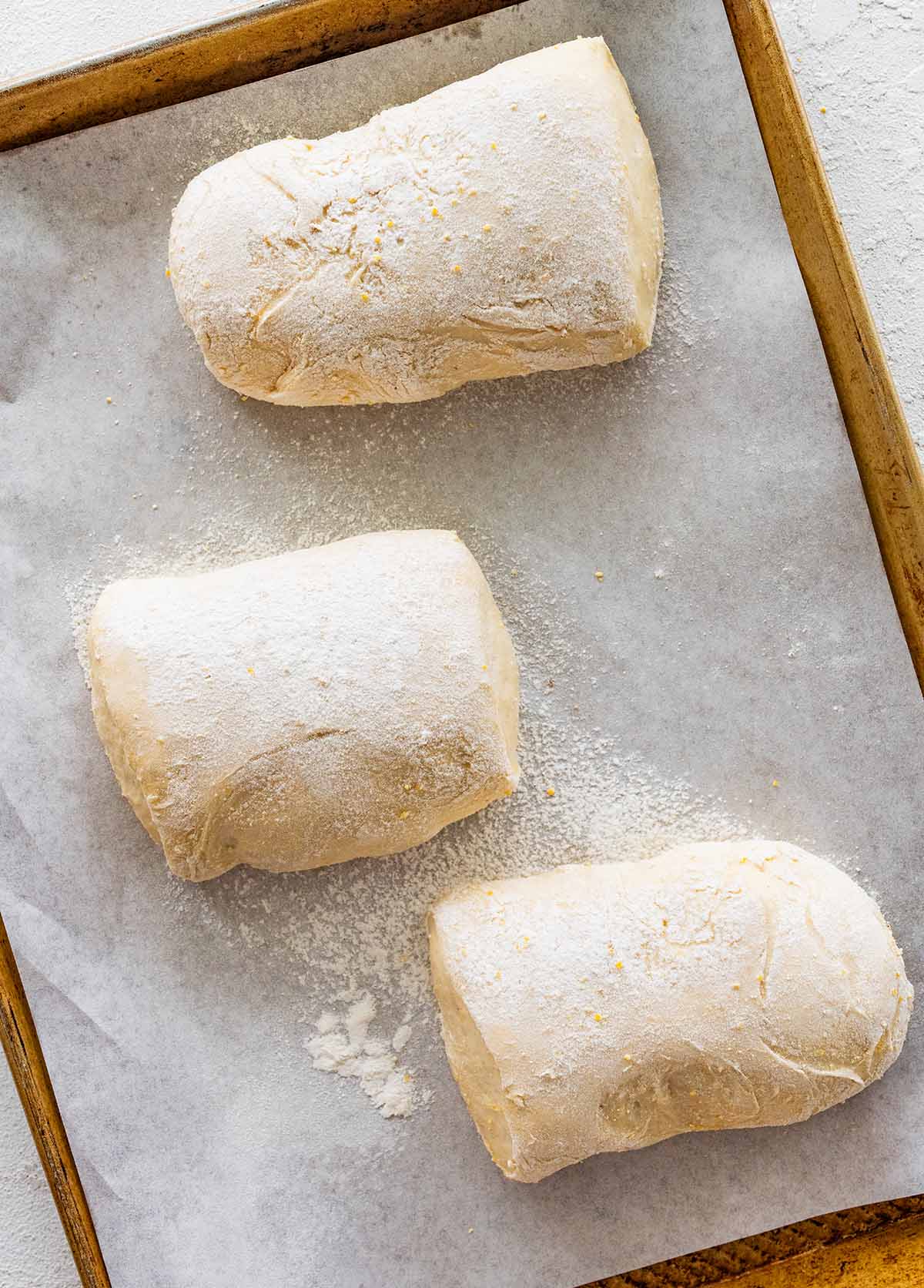
- Carefully place the ciabatta loaves on a parchment-lined baking tray and cover with plastic. Rise for 45 minutes, or until the ciabattas have noticeably increased in size.
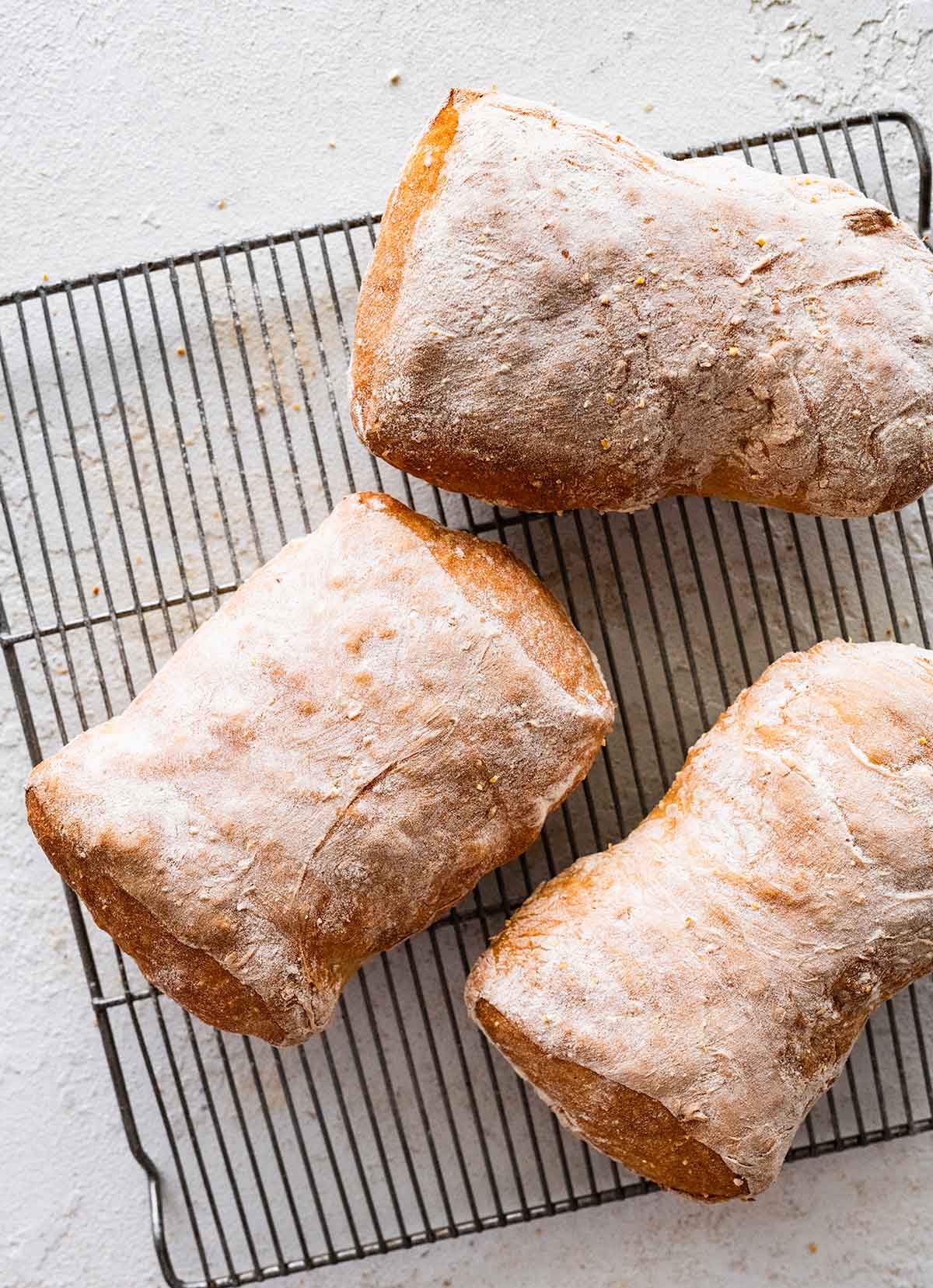
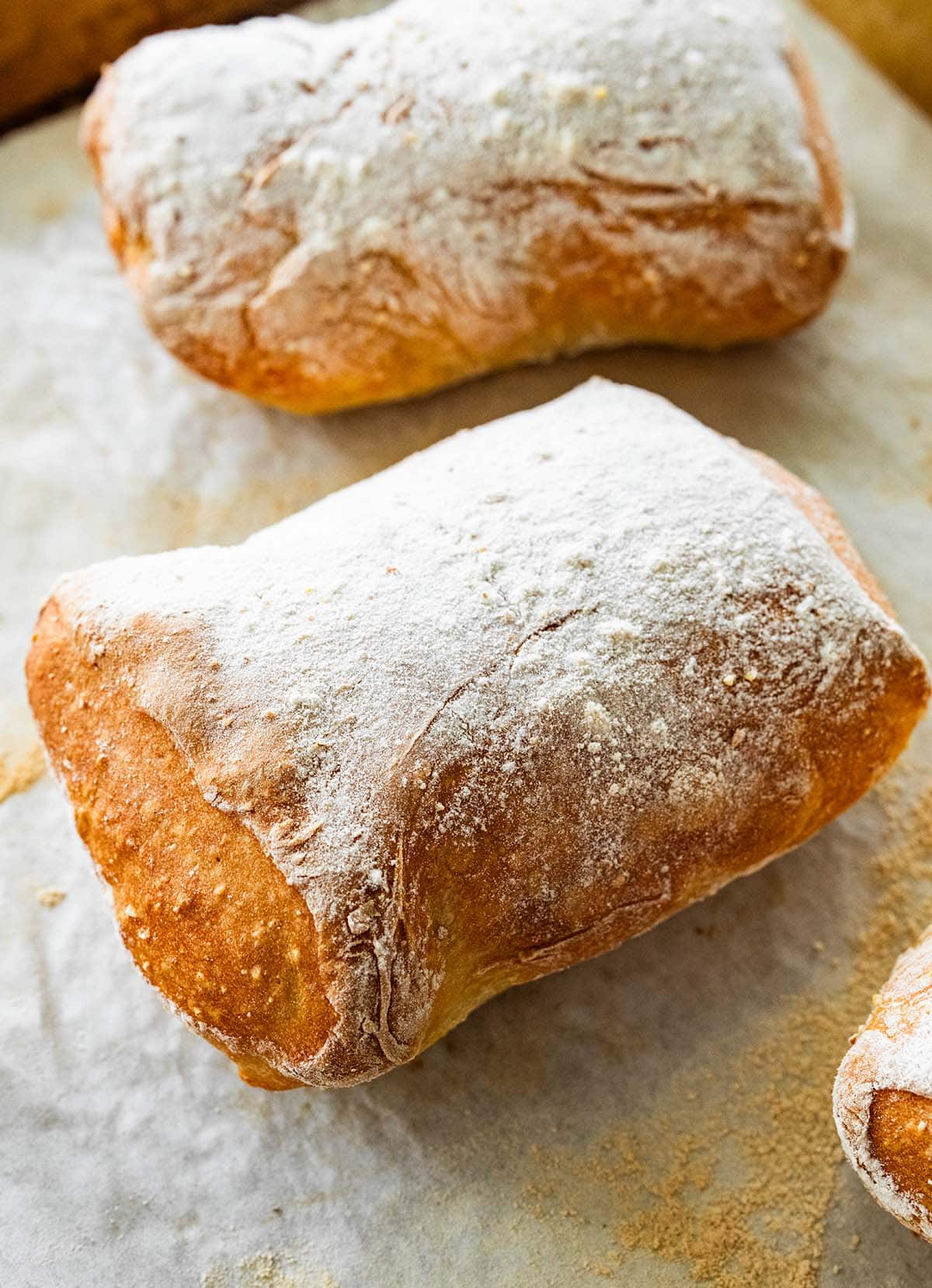
- Bake at 425°F (220°C) for 20-25 minutes, or until golden brown. Let the ciabatta loaves cool completely on a wire rack before enjoying. This ciabatta has a crunchy crust and an irresistibly soft interior. Try my tomato focaccia and sourdough rye bread for more delicious bread!
No Knead Italian Ciabatta Bread FAQs
This bread is originally from the North of Italy: the Province of Rovigo in the Veneto Region. It is a flat, elongated bread with a light texture, also considered peasant bread, with the simplicity of the ingredients and process. Ciabatta produces a substantial crumb, and is soft on the inside and crusty on the outside. It is considered a typical old-fashioned Italian bread.
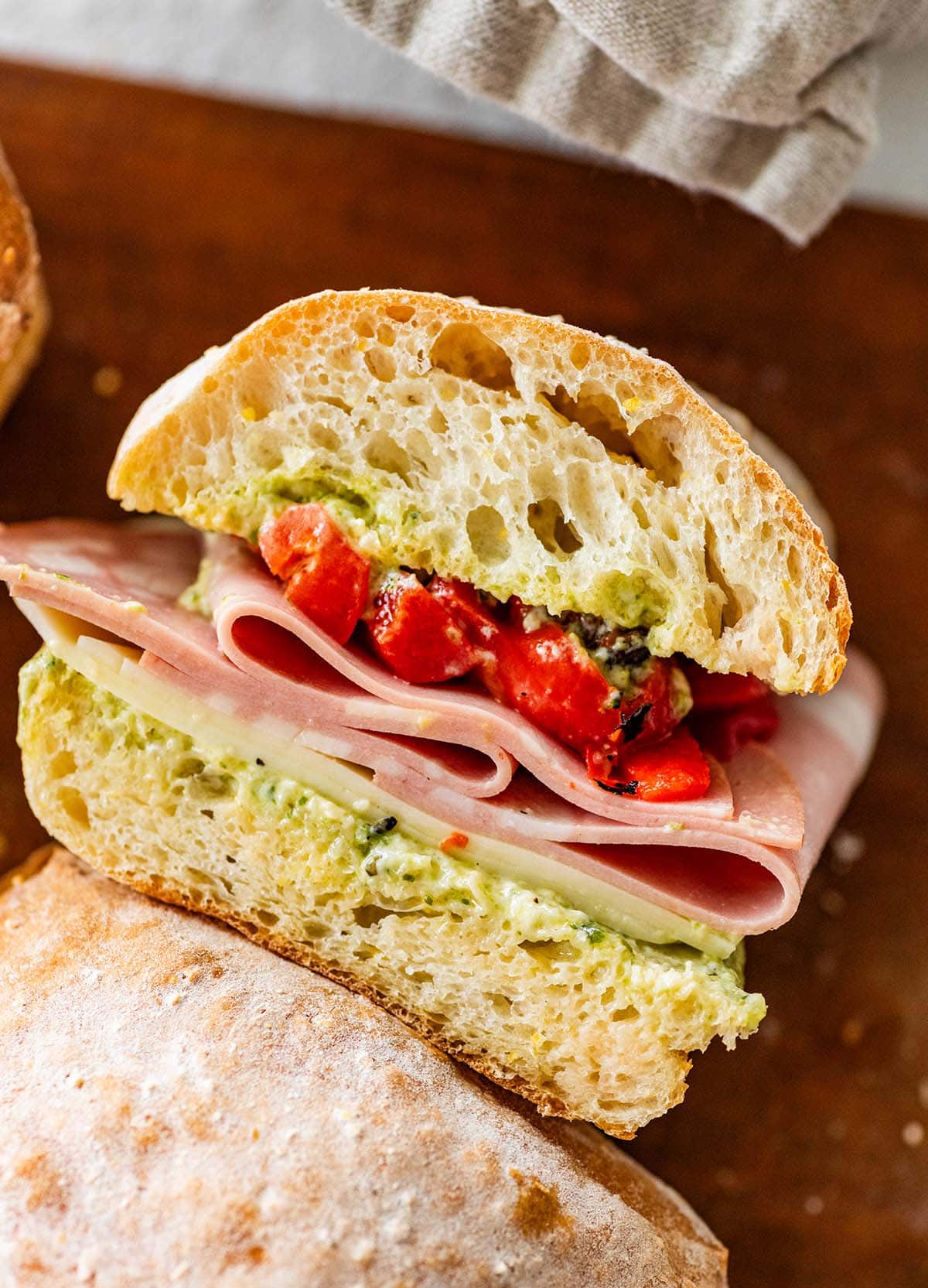
The main difference between ciabatta bread and regular bread is that ciabatta is made from a high hydration dough, which means it has a higher than usual water content and a very sticky texture. This ensures that the ciabatta has a very open crumb structure (large air holes along with small and medium holes), which is one of the most important parts of authentic ciabatta.
Semolina is a high-gluten flour made from hard durum wheat. It has a rather coarse texture and yellow color and is high in gluten protein. The high gluten content means the flour is exceptionally well suited for making pasta, but this flour is also a common ingredient in bread and baked goods. Semolina is available throughout the world, but is most popular in Italy. I love using semolina from Bob’s Red Mill and Antimo Caputo.
The key to measuring flour correctly is to use a baking scale to weigh the flour every time. It’s by far the quickest and easiest way to get an accurate measurement! The correct ratios of ingredients, both liquid and dry, will ensure a perfect taste and texture every time.
The secret to perfect ciabatta is measuring your ingredients accurately (preferably using a kitchen scale for solid ingredients), keeping the dough sticky (don’t add extra flour!), handling it gently, baking in a hot oven, and using the stretch and fold method instead of kneading. The stretches and folds are an ESSENTIAL part of this fast ciabatta recipe! It takes about 2 minutes for each fold, and you repeat it 3 times throughout the 2-hour rise. It’s the key to get an airy, light, and bubbly interior.
Serving Suggestions
Add this no knead Italian ciabatta to your list of bread to try! Once you start, you will be making it all the time.
You can use the freshly baked ciabatta to make a Prime Rib Sandwich or Chopped Italian Sandwich, or enjoy it at dinner as a side with Italian Sausage Meatballs, Pesto Pasta, Eggplant Parmigiana, or Eggplant Caponata. Pair it as a comfort food with our Italian sausage soup or fresh artichoke soup. Use leftovers in Panzanella Salad or even Thanksgiving turkey stuffing!
My Pro Tips
Expert Tips
- Ciabatta dough is very wet and sticky; don’t add extra flour! The moisture is what creates the airy, open crumb.
- Don’t skip the folds. This is a no-knead recipe, but you’ll need to gently stretch and fold the dough a few times during the rise to build gluten strength and structure.
- Don’t deflate the dough too much when shaping; handle it gently to preserve the large air pockets for the classic open crumb of ciabatta.
- Bake in a hot oven with steam for the best rise and crust. A high baking temperature (around 450°F) ensures a crispy crust and proper oven spring. For extra crispiness, place a pan of hot water in the oven or spray the inside with water just before baking.
- Let it cool completely before cutting. This time allows the interior to set (finish cooking) and prevents a gummy texture.
Other Italian Bread Recipes You’ll Love
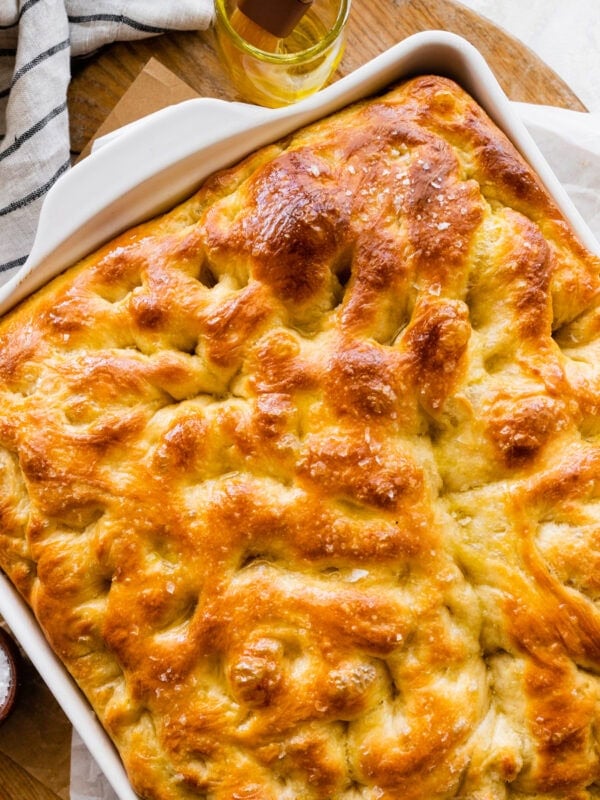

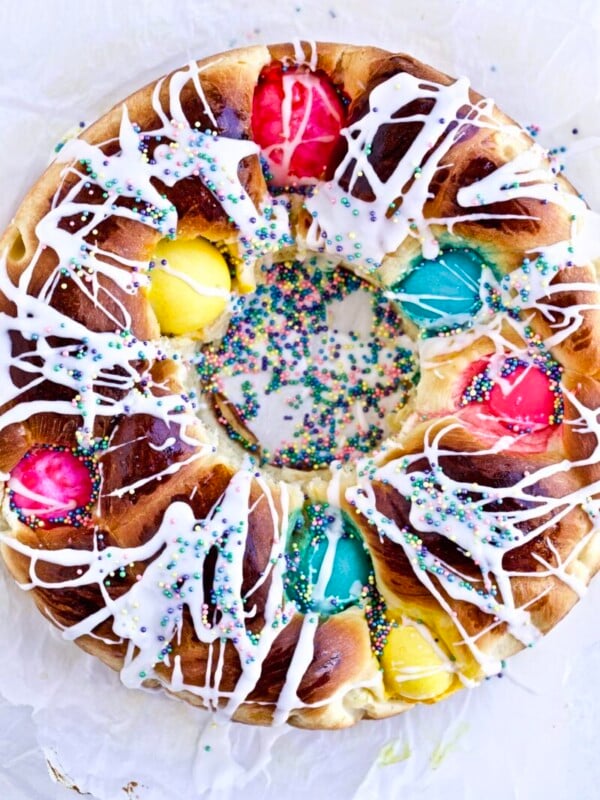
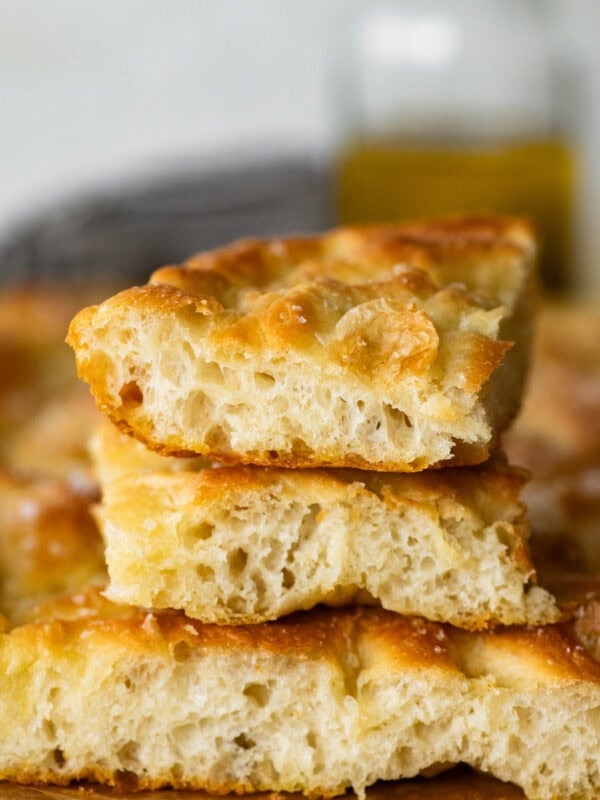
💙 MADE THIS RECIPE AND LOVED IT? 💙 Please leave a ⭐️STAR rating and COMMENT below- I love connecting with you! Tag me with your creations on Instagram and find me on Pinterest.
Italian Ciabatta Bread

Ingredients
- 1 cup lukewarm water, plus ¼ cup (60 ml) in case you need more
- 2¼ teaspoons instant dry yeast, 1 package
- 2 cups all purpose flour, plus more for sprinkling
- 1 tablespoon semolina flour or fine cornmeal, plus more for sprinkling
- 1 teaspoon salt
Instructions
Making the Dough
- In a medium bowl, combine the flour and the semolina and stir to combine. In a large bowl add the water and stir in the salt until it dissolves. Add four tablespoons of the flour mixture to the water.
- Stir with a wooden spoon until it reaches the consistency of a thin crepe batter (The reason for this step is to ensure that the salt does not contaminate the yeast). Then add the yeast and stir until completely incorporated into the mixture.
- Add the rest of the flour mixture and mix until wet shaggy dough forms. It will be more wet than other bread doughs and should be sticky to the touch. (If the dough seems a little dry, add the ¼ cup reserved warm water only 1 tablespoon at a time.) Mix together with a fork or wooden spoon; the dough will be loose and sticky.
- Cover the bowl with plastic wrap and let the dough rise for a total of 2 hours. During the two hours, you'll stretch and fold the dough (this takes about 1 minute to do) every 30 minutes. Fold 3 times total during the two hours.
Stretch and Fold
- Set a timer for every 30 minutes to remember to stretch and fold the dough. Set a bowl of water near the rising dough to wet your hands before every time you touch it (the dough is very sticky).
- After the first 30 minutes, uncover the dough. Wet your hands with water, or use a rubber spatula. Pinch the top corner of the dough (12 o'clock position) and lift it up, letting the dough stretch by lifting your hand away from the bowl.
- Fold the stretched dough back on itself (bring it to the 6 o'clock position). Turn your bowl ¼ of the way clockwise so the 12 o'clock position should now be at 3 o'clock. Repeat the same process of stretching and folding the dough onto itself 3 times total. This is a fast process that takes about 1 minute from start to finish.
- Cover with plastic wrap and repeat this whole process 2 more times every 30 minutes for a total of 3 stretch and folds.
Shaping the Dough
- After the last 30 minute rise, shape the dough instead of folding it. Flour a clean surface with 1 tablespoon of flour and 1 teaspoon of semolina. Invert the bowl upside down onto the floured surface. Do not touch the dough; it will fall out of the bowl on its own.
- Gently shape the dough with floured hands into a large rectangle. Do not press down too much on the dough; try to keep the air bubbles nice and "alive". After forming a rectangle, roll the dough into a fat, long log (like rolling cinnamon rolls). Do not press down on the dough, or the air bubbles will deflate!
- Pinch the end to seal, then divide the dough with a sharp knife or dough scraper into 3 equal parts. Line a cookie sheet with parchment paper and sprinkle with 1 tablespoon of flour and 1 teaspoon of semolina.
- Transfer the 3 ciabatta loaves to the cookie sheet, dust the tops with flour, cover with plastic wrap, and let rise again for 45 minutes. The ciabattas will noticeably increase in size.
Baking & Cooling
- About 30 minutes before the ciabattas are done rising, preheat the oven to 425°F (220°C).
- Once they have risen sufficiently, flour your hands and very gently lift each dough and gently stretch to form a rectangular shape. Fill a 9-inch round baking pan with hot water (about 1 inch) and set it in the bottom rack of the oven.
- Place the tray of bread on the middle rack and bake for approximately 20-25 minutes, or until the crust is golden and the loaves have a minimum internal temperature of 200°F.
- Cool completely on a wire rack before serving. Mangia! (Eat!)
Notes
- Ciabatta dough is very wet and sticky; don’t add extra flour! The moisture is what creates the airy, open crumb.
- Don’t skip the folds. This is a no-knead recipe, but you’ll need to gently stretch and fold the dough a few times during the rise to build gluten strength and structure.
- Don’t deflate the dough too much when shaping; handle it gently to preserve the large air pockets for the classic open crumb of ciabatta.
- Bake in a hot oven with steam for the best rise and crust. A high baking temperature (around 450°F) ensures a crispy crust and proper oven spring. For extra crispiness, place a pan of hot water in the oven or spray the inside with water just before baking.
- Let it cool completely before cutting. This time allows the interior to set (finish cooking) and prevents a gummy texture.
Nutrition
Nutrition information is automatically calculated, so should only be used as an approximation.
Method and recipe adapted from Merry Booster.





Hello! Wondering if this no-knead ciabatta can be made with bread flour instead of all purpose flour.
Looking forward to making this!
Yes! This will work with bread flour. Enjoy!
quicker method than mine
.grazie Elena
You are most welcome. I am happy you loved it!
I mill my own flour, would I use hard white wheat or Kamut or try it with durum wheat? I’m really trying to make Italian ciabatta bread like my grandma but with fresh flour so I don’t have all purpose flour.
Hi! You can start my trying the hard white wheat! I think that will work the best here, or durum wheat. Enjoy and let me know!
Awesome recipe! I never had luck making bread, but this recipe is so easy!! Grazie Elena!!!
Yay! You are most welcome! This recipe is seriously so easy with the best results every time!