Sourdough Rye Bread (Danish Rugbrød)

This post may contain affiliate links. Please read our disclosure policy.
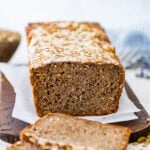

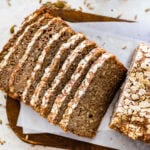
This Sourdough Rye Bread (Danish Rugbrød) is a dense, moist, seeded loaf made with dark rye flour, oats, flaxseed, sunflower seeds, and pumpkin seeds. The dough is mixed in one bowl, fermented in a loaf pan, and baked covered so the bread develops its characteristic hearty texture and deep rye flavor without kneading or shaping. Plan for about 7 hours from mixing to baking, or let the dough rise overnight for a deeper sourdough flavor.
You will also love our no-knead Crusty Bread recipe.


Quick Look: Sourdough Rye Bread (Danish Rugbrød)
- Prep Time: 10 minutes
- Rise Time: About 5 hours
- Cook Time: 1 hour 45 minutes – 2 hours
- Total Time: About 7 hours
- Servings: 24
- Dietary Info: Vegetarian
- Method: No-knead sourdough loaf pan bread
- Technique: Refresh the sourdough starter, mix the rye dough with oats and seeds, transfer it to a parchment-lined loaf pan, let it rise until visibly expanded, then bake it covered.
- Flavor/Texture: Tangy, earthy, nutty, dense, moist
Why You’ll Love This Family Recipe!

An Italian nonna making authentic Danish Rye Bread—who would’ve thought? But when my mamma married the Danish dad who raised me, she knew she had to learn the recipes that made him feel at home. Rugbrød (Danish rye bread) was one of them—a daily staple.
She tried to find it in stores, but nothing ever tasted like the real thing from the bakeries in Denmark. So, she rolled up her sleeves and started baking it herself. Over 20 years later, she still makes it weekly (sometimes multiple loaves!) and has taught many others how to do the same.
This bread is naturally fermented for better digestion and flavor, packed with wholesome grains and seeds, no-knead, no fuss—just time and love. It’s perfect for meal prep, freezes beautifully, and includes modern tips to help you get it right at home. Now, we’re so excited to share this special recipe with you!
Try my Schiacciata Bread next!
Made With AmorE,

“Fantastic recipe. Followed the instructions exactly. It came out to light and hearty. I wish I can post a picture. Thank you for sharing.”
– Nicoletta
Table of Contents
Simple Ingredients
The combination of rye flour, whole grains, seeds, and sourdough gives this Danish bread its characteristic dense texture and deep, tangy flavor.

- Dark Rye Flour: The main flour gives Rugbrød its deep rye flavor, dark color, and dense texture.
- Rye Sourdough Starter: Provides natural fermentation, helps leaven the bread, and gives it its characteristic sourdough flavor.
- Steel-Cut Oats and Flaxseed: Add hearty texture and help create the moist, substantial crumb.
- Sunflower Seeds and Pumpkin Seeds: Add nutty flavor, crunch, and the generous seeded texture associated with this style of rye bread.
- Maple Syrup and Sea Salt: Maple syrup adds a subtle sweetness while salt balances the earthy rye and seed flavors.
See recipe card for full information on ingredients and quantities.
Substitutions & Variations
- Seeds: Use sesame seeds, poppy seeds, or additional sunflower or pumpkin seeds for the topping or replace a portion of the seeds according to what you have available.
- Sweetener: Maple syrup can be replaced with honey, although the flavor will be slightly different. Try my Cinnamon Swirl Bread (One Bowl Cake!) for a delicious sweet bread.
- Flour: Dark rye flour gives the deepest rye flavor. If you use a different rye flour, the dough may require a small adjustment in water because rye flours absorb moisture differently.
- Starter: Use an active sourdough starter that is bubbly and strong enough to ferment the dough. A rye-based starter works especially well with this bread.
How to Make Sourdough Rye Bread
This Rugbrød uses a no-knead method: mix the sticky rye dough, transfer it directly to the loaf pan, let it rise, and bake it covered until the dense crumb is fully set. Follow the step-by-step photos and see the recipe card at the bottom for a printable version.

- After refreshing the starter, reserve 200 mL of the mixture to maintain your mother starter. The remaining approximately 400 mL becomes the leaven for this loaf.

- Add the rest of the lukewarm water (400 mL) and maple syrup into a large mixing bowl. Stir until well combined.

- Add flax meal, steel cut oats, sunflower and pumpkin seeds, rye flour, and salt.

- Stir everything together with a large rubber spatula until well combined. The dough will be very sticky, pliable, and soft. If needed, add 1⁄4 cup to ½ cup more flour to achieve the desired consistency. If it looks dry, add a couple of tablespoons more water to reach this consistency.

- Line your 9 x 5 inch loaf pan (glass, ceramic, or stoneware work best) with parchment paper and pour the dough into the pan using a spatula. Smooth the top and level the surface with a spatula.

- Sprinkle with additional toppings of choice (oats, flax, sesame, poppy seeds, or more pumpkin seeds). Now it’s time to let your dough rise! Cover with another loaf pan so the dough rises upwards. Let rise in a warm place or oven on proof mode for about 5 hours, or in a cool place overnight. The dough will rise about 1-2 inches.

- Preheat the oven to 360°F. Bake the bread with the top loaf pan on top for 1 hour and 45 minutes. Using the second loaf pan on top helps traps moisture and mimics steam, helping the dense dough bake through without drying.

- Remove from oven and let cool fully in the pan with the cover still on. Once cool, lift the bread out using the parchment paper.
Danish Rye Bread FAQs
Rugbrød is a traditional Danish rye bread made with rye flour and usually enriched with whole grains and seeds. It has a dense, moist crumb and is often served in thin slices as the base for open-faced sandwiches. Rugbrød is a type of rye bread, but not every rye sourdough loaf is Rugbrød. Danish Rugbrød is typically a dense, seeded loaf baked in a pan, while many rye sourdough recipes are lighter loaves made with a larger proportion of wheat flour and shaped before baking.
Sticky dough is normal for Rugbrød because rye flour behaves differently from wheat flour and absorbs a large amount of water. The dough should be thick, soft, and scoopable rather than firm enough to knead or shape by hand.
A gummy or collapsed center can result from underbaking, overproofing, or slicing the bread before the crumb has fully cooled and set. Bake the loaf for the full tested time and allow it to cool completely before slicing!!
Yes! You can make a quick version using instant yeast and buttermilk for a mild tang. Just mix the dough as usual with rye flour, seeds, and cracked rye, then use about 2 teaspoons of instant yeast and 2 cups of buttermilk (instead of water and sourdough starter). Let it rise until bubbly (1–2 hours), transfer to a loaf pan, and bake as directed. It won’t have the same deep flavor as sourdough, but it’s hearty, tasty, and much faster!
Store cooled Rugbrød wrapped in parchment or another breathable covering at room temperature for up to 7 days, or refrigerate it in hot or humid conditions. For longer storage, slice the bread and freeze the slices with parchment between them for up to 3 months. Thaw at room temperature or toast slices directly from frozen.
Serving Suggestions
Danish rye bread is delicious sliced thinly and topped for open-faced sandwiches, or smørrebrød. Try it with smoked salmon or Baked Salmon Steaks with dill cream cheese and cucumber slices. You can also top it with a hard-boiled egg, mayonnaise, shrimp, lemon, and fresh dill, or try something with extra bold flavor, such as this Shrimp Salad.
For a heartier option, add roast beef or Pot Roast with remoulade, crispy onions, and pickles. You can also keep it fresh with avocado, radishes, microgreens, and flaky sea salt, or pair aged cheese such as Havarti with apple slices and grainy mustard.
I love pairing a slice of bread with a bowl of soup, such as Italian Penicillin Soup (Pastina Soup) or Italian Wedding Soup.

My Pro Tips
Recipe Tips
- Overnight proof = deeper flavor: If you like a more pronounced sour flavor, let the dough rise overnight at room temperature. Ensure your starter is strong enough to withstand the slow fermentation process.
- Start with an active, bubbly sourdough starter so the dough has enough fermentation power to rise properly.
- Expect a very sticky dough because rye flour absorbs water differently from wheat flour. Do not add large amounts of extra flour simply to make it kneadable.
- Watch the dough rather than the clock during fermentation. It should visibly expand by about 1–2 inches before baking.
- Keep the loaf covered while baking because the enclosed environment helps retain moisture while the dense rye crumb sets.
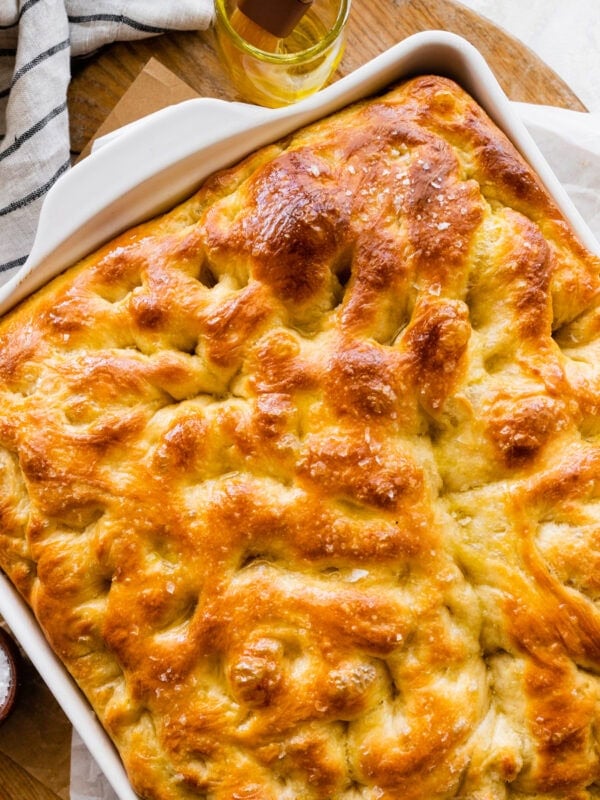
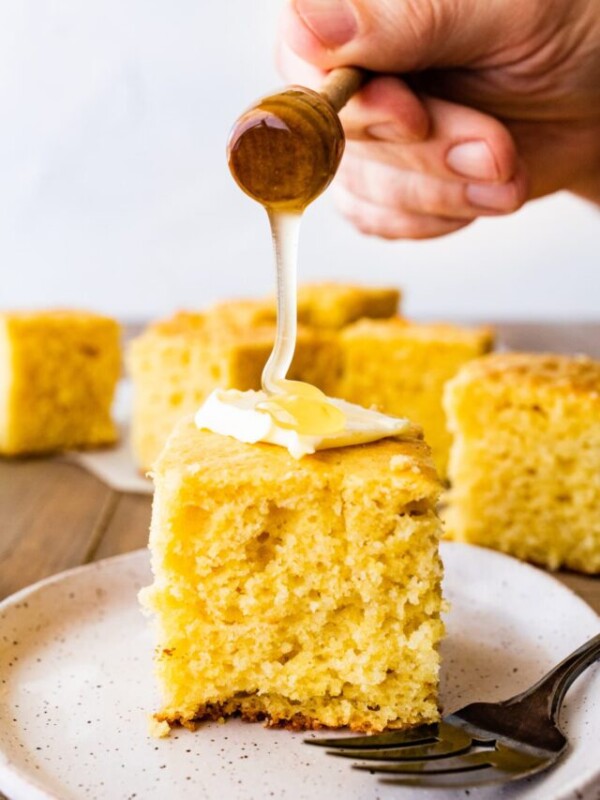
More Bread Recipes to Try


💙 MADE THIS RECIPE AND LOVED IT? 💙 Please leave a ⭐️STAR rating and COMMENT below- I love connecting with you! Tag me with your creations on Instagram and find me on Pinterest.
Sourdough Rye Bread Recipe

Equipment
- 2 Wide-mouth 32 oz Mason jars for the sourdough starter
Ingredients
Bread
- 400 mL active sourdough starter , approx. 3 ⅓ cups
- 700 mL filtered lukewarm water, approx. 3 cups, divided
- 1 tablespoon maple syrup
- 400 g dark rye flour, approx. 2 ½ and up to 3 cups, if needed
- 50 g steel-cut oats, approx. ¼ cup
- 25 g flaxseed meal, approx. ¼ cup
- 80 g sunflower seeds, approx. ½ cup
- 33 g pumpkin seeds, approx. ¼ cup
- 3 teaspoons sea salt
To Feed Mother Starter (Leaven):
- 200 mL of your existing starter (mother starter), approx 1 ⅓ cups
- 120 g dark rye flour, approx. 1 cup
- 40 g rye seeds, approx. ¼ cup optional
Instructions
- I highly recommend reviewing my detailed rye sourdough starter recipe for making rye starter from scratch!
Divide Existing Starter (Mother Starter or Leaven):
- Take existing starter from the refrigerator. Add 300 mL of luke warm water and stir to combine.
- From the above mixture- remove 200 mL and place in a clean jar. To this jar- add 120 g of rye flour, and 40 g rye seeds and mix with a wooden spoon (avoid metal) until well combined. Cover loosely with plastic wrap, and let sit at room temperature for 2-4 hours, until doubled. Store in the fridge until you make your next loaf- (about 1 week).
- This is your 'mother starter'. You won't use this today. Save for the next loaf. You will use the remaining starter mixture for bread dough.
Bread Dough:
- Pour the remaining starter mixture or leaven (about 400 mL), rest of the lukewarm water- (400 mL), and honey into a large mixing bowl. Stir until well combined.
- Add flax meal, steel cut oats, sunflower and pumpkin seeds, rye flour, and salt.
- Stir everything together with a large rubber spatula until well combined. The dough will be very sticky, pliable, and soft. If needed, add 1/4 cup to 1/2 cup more flour to achieve the desired consistency (see photos in the post for visual reference). If it looks dry, add a couple of tablespoons more water to reach this consistency.
- Line your 9 x 5 inches (23 x 13 cm) loaf pan (glass, ceramic, or stoneware work best) with parchment paper and pour the dough into the pan using a spatula. Smooth the top and level the surface with a spatula.
- Sprinkle with additional toppings of choice (oats, flax, sesame, poppy seeds, or more pumpkin seeds).
Let Dough Rise:
- Cover with another loaf pan so the dough rises upwards. Let rise in a warm place or oven on proof mode for about 5 hours, or in a cool place overnight. The dough will rise about 1-2 inches.
Bake Bread:
- Preheat oven to 360°F (180°C). Bake the bread with the top loaf pan on top for 1 hour and 45 minutes to 2 hours. Note: reason to bake with a lid- this traps moisture and mimics steam, helping the dense dough bake through without drying.
- Remove from oven and let cool fully in the pan with the cover still on. Once cool, lift the bread out using the parchment paper.
- Slice thinly with a serrated bread knife. This flavorful bread is ideal for open-faced sandwiches with butter, cheese, avocado, cream cheese and salmon, or smoked meats. See notes for topping ideas.
Notes
- Overnight proof = deeper flavor: If you like a more pronounced sour flavor, let the dough rise overnight at room temperature. Ensure your starter is strong enough to withstand the slow fermentation process.
- Start with an active, bubbly sourdough starter so the dough has enough fermentation power to rise properly.
- Expect a very sticky dough because rye flour absorbs water differently from wheat flour. Do not add large amounts of extra flour simply to make it kneadable.
- Watch the dough rather than the clock during fermentation. It should visibly expand by about 1–2 inches before baking.
- Keep the loaf covered while baking because the enclosed environment helps retain moisture while the dense rye crumb sets.
Nutrition
Nutrition information is automatically calculated, so should only be used as an approximation.






Hello again
Rugbrød and not Røgbrod 🙂
Thank you – This is the first time I try a recipe for Røgbrod – and it is a success.
I have tried many – believe few went to waste – not edible.
The pan you use is 9 x 5 inches – is it the length and width ?
Please can you give me the depth too ?
Thank you
You’re so welcome, and I’m so happy to hear it was a success 🤍 Røgbrod can be tricky, so that’s a big win.
Yes, the pan is 9 x 5 inches (length x width), and the depth is about 3-4 inches. That size gives the bread enough structure and the right bake.
Thank you so much for trying the recipe and for writing—I’m thrilled it worked for you!
Fantastic recipe. Followed the instructions exactly. It came out to light and hearty. I wish I can post a picture. Thank you for sharing
Thank you so much 🤍 I’m thrilled to hear it turned out light and hearty for you. I’d love to see a photo too. Thank you for baking along with me and for taking the time to leave such a kind comment.
Elena
Hi again. Quick question if I want to double and use a bigger Pullman’s pan how long does it need to bake? Two to two and a half hours?
Yes! You can also test the internal temp. Enjoy!
Do you use sunflower kernels or seeds for your moms bread recipe.
Sunflower seeds! Enjoy
This bread is probably the most delicious bread I ever had and I can’t believe I made it myself! It is incredible served with your suggestions, or with just a small dab of butter!
My mom calls this “life bread” it is packed with the best nutrients and so good for your gut with the sourdough. So many health benefits besides the incredible taste!
Hi Elena- I am ready to bake the bread, it looks so delicious. I already have active rye starter and just want to confirm that the measurements for the bread are 400 ml active rye starter, 400 ml water and 400 grams of rye flour. Thank you.
Yes, that is correct!
Can you use regular sourdough starter? Or does it require a rye sourdough starter? Thanks!
Hi, for this bread, no, you have to use this starter as it is different than regular white flour starter. You’ll be so happy you started this it is absolutely amazing!
very confusing. sounds like you use old starter, unwed for bread, and fed the rest and keep fed starter for later. could you just please do steps for what goes in bread? thank you.
Hi! Thank you for your questions. This post is written in detail, so you can keep using the same starter. This bread works with the rye sourdough starter (see the recipe for that). You can see all the list of the ingredients for the bread above. I hope that help. Enjoy the delicious bread.
I have an allergy to flax. I typically replace with soaked Chia seeds – will this be ok? Also, do the steel cut oats need to be soaked ahead of time? Looking forward to trying this. Thanks!
Yes, you can use chia seeds. No, you do need to soak the steel cut oats. Enjoy!
Thank you for sharing something so special from your family. You’re kind and generous. 💕
You are most welcome! Enjoy.