How Long to Boil Spaghetti: Perfect Every Time

This post may contain affiliate links. Please read our disclosure policy.
Are you wondering How Long to Boil Spaghetti: Perfect Every Time? The answer is, most dried spaghetti takes about 8–10 minutes to reach al dente, but the exact spaghetti cooking time varies by brand and thickness. Use the package directions as your starting point, then start tasting 1–2 minutes before the suggested time to determine when the pasta is ready.
This guide is for dried, store-bought spaghetti. Fresh homemade pasta cooks much faster and requires a different method.
Why I Cook Spaghetti This Way

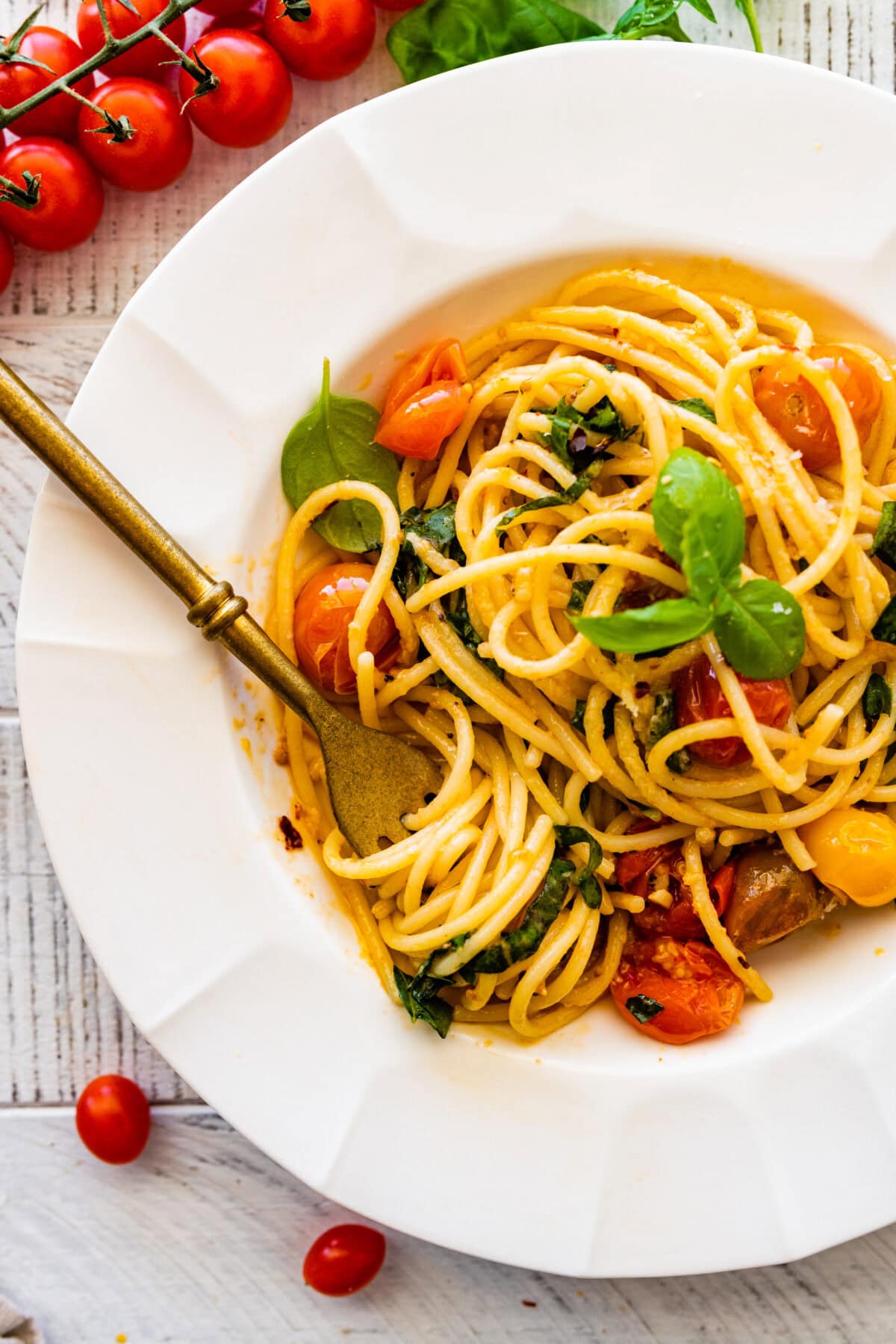
I grew up in an Italian family where pasta was part of everyday cooking, so I learned that recognizing the right texture is just as important as knowing the cooking time.
I don’t rely on one exact number of minutes because different spaghetti cooks differently. I check the package, start tasting early, and make sure the sauce is ready before I drain the pasta. That way, the spaghetti goes straight from the pot into the sauce while it is hot and at the texture I want.
Made With Amore,

Table of Contents
How Long to Cook Spaghetti?
Dried spaghetti usually takes about 8–10 minutes to cook al dente. However, cooking times vary depending on the brand, thickness, and type of pasta, so always check the package directions.
For the best texture, don’t wait until the exact package time to taste the pasta. Start checking 1–2 minutes early.
How to Boil Spaghetti
The best way to cook spaghetti is to use plenty of boiling water, season it well, stir the pasta as it cooks, and taste it before draining.
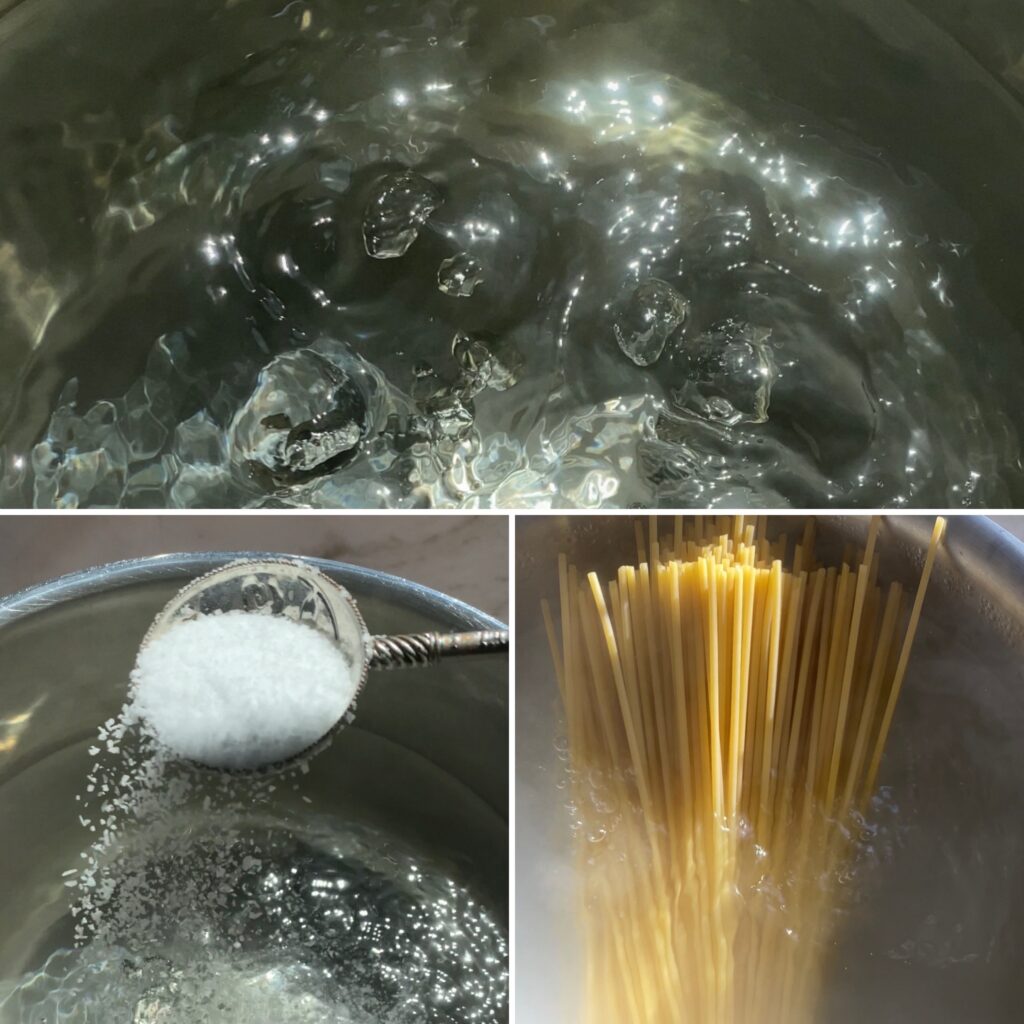
- Start with a large pot of cold water. Hot water from the tap often contains added minerals that can damage pots and alter taste. Start with high heat to bring the water to a full boil.
- Make sure you have plenty of water in the pot. Your pasta needs a place to move around and swim while cooking. Salt your pasta water generously! This is an Italian MUST to flavor the pasta from the inside out. You want the pasta to taste the plain pasta and tell that it is seasoned even before adding any sauce.
Wondering how much pasta to make? A good starting point is about 56 grams (2 ounces) of dried spaghetti per person.
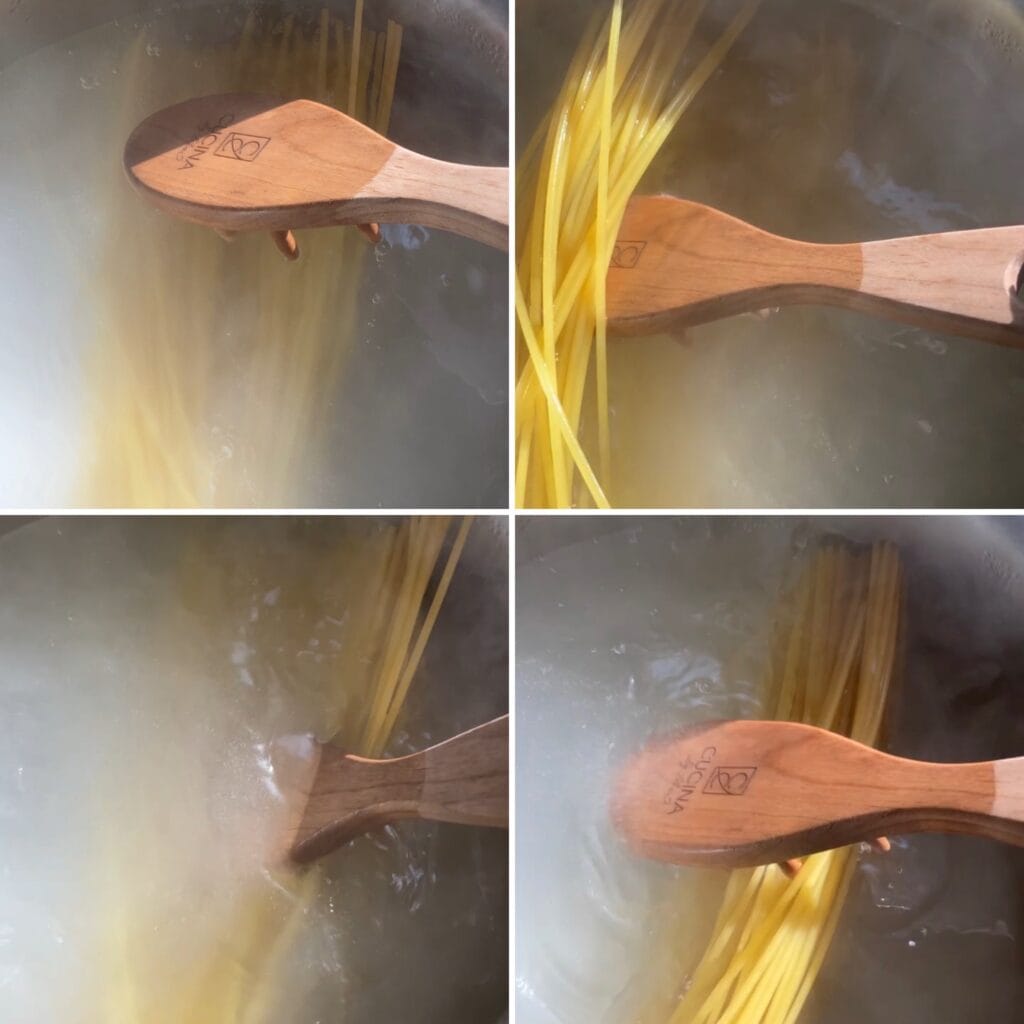
- Bring the water to a full or rolling boil before adding the pasta. Leave the pot uncovered. Covering the pot can make it easier for the water to foam over once the pasta is cooking.
- Once it returns to a boil, reduce the heat to medium or medium-high as needed to maintain a steady boil without letting the water boil over.
- Stir occasionally with the proper utensil to keep the pasta from sticking. Don’t just dump and run. Use a back-and-forth motion in the pot until the pasta gets soft and starts to move freely in the water
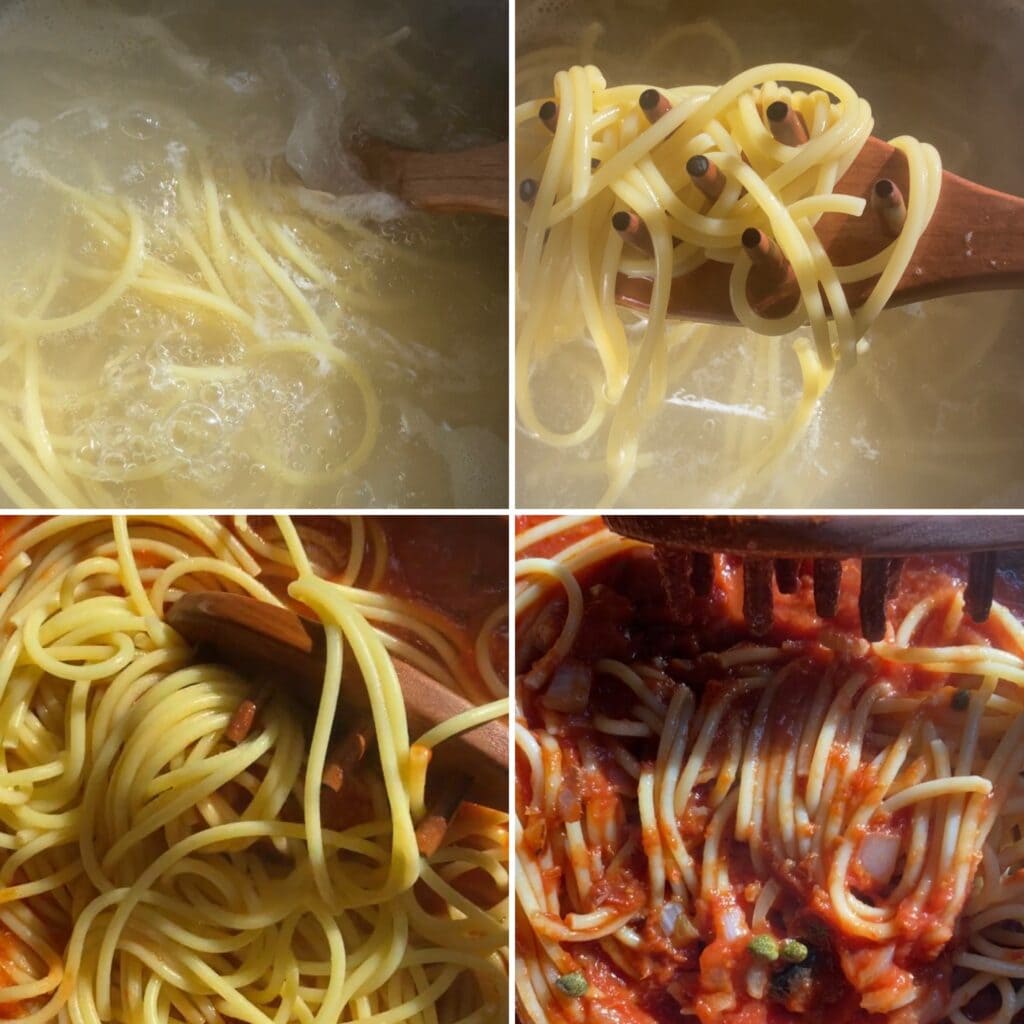
- Test the pasta two minutes before it’s “al dente”.
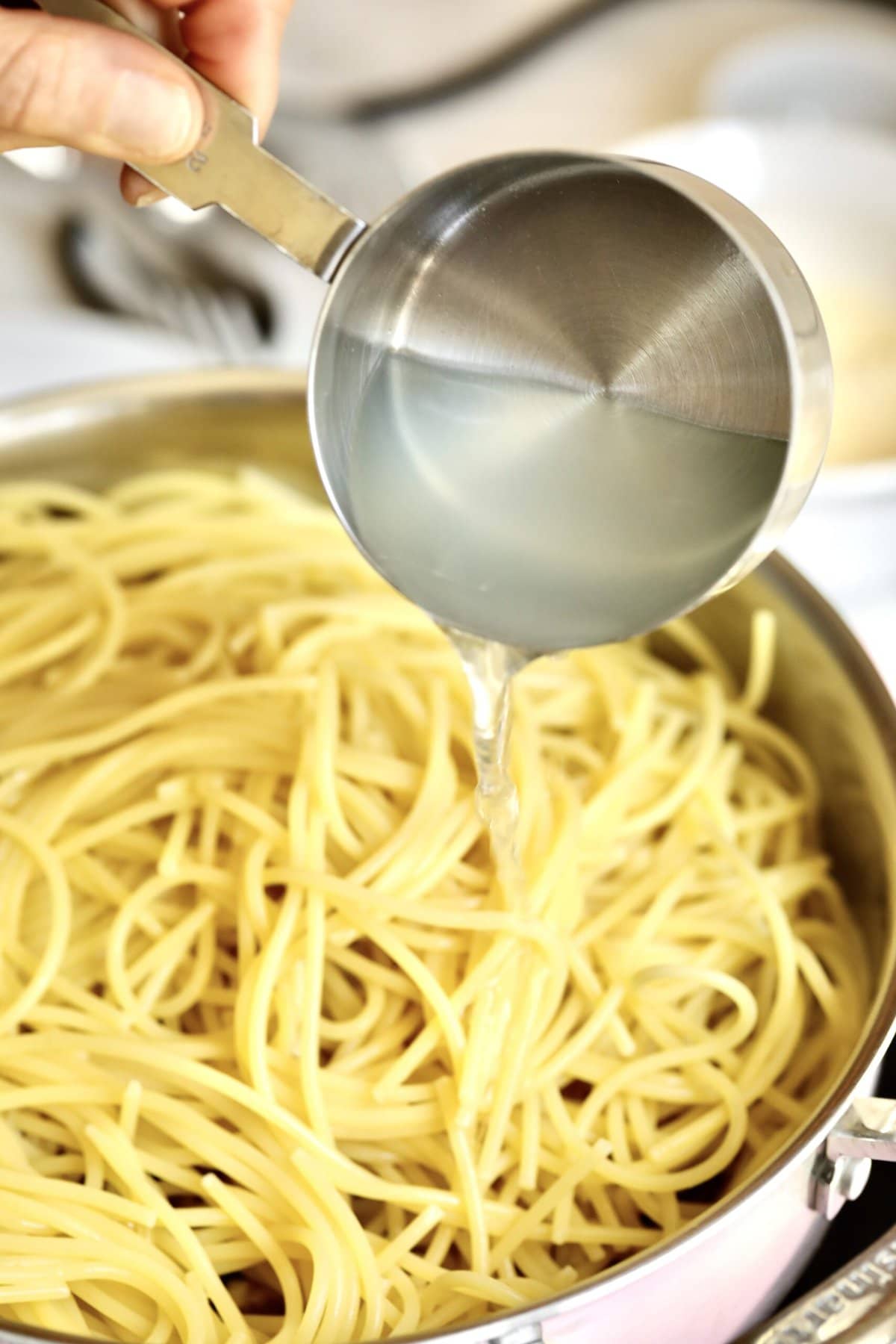
- Save a scoop of pasta water. Another Italian secret!
- Drain the pasta. Do not rinse, unless you are making pasta salad. Toss with sauce and serve hot!
How to Cook Spaghetti Al Dente
Al dente means “to the tooth” in Italian. It describes pasta that is tender but still has a slight firmness when you bite into it. Take a strand from the pot and bite into it. Taste testing is the most reliable way to know when spaghetti is ready because package cooking times are estimates.
- If the center is hard or crunchy, it needs more time.
- If the spaghetti is tender with slight resistance, it is al dente.
- If it feels soft or mushy, it has cooked past al dente.
Your bite is the final test, not the timer. If you are finishing the spaghetti in a hot sauce, you can drain it slightly before it reaches your preferred texture. It will continue cooking as you toss it with the sauce.
How Much Water and Salt Do You Need for Spaghetti?
For 1 pound of spaghetti, I use about 4 quarts of water and 2 tablespoons of salt. Bring the water to a full boil, add the salt, and once it has dissolved and the water returns to a boil, add the spaghetti. The generous amount of water gives long pasta room to soften and move freely, while the salt seasons the noodles as they cook. You can adjust the amount of salt to your taste and based on how salty your finished sauce will be.
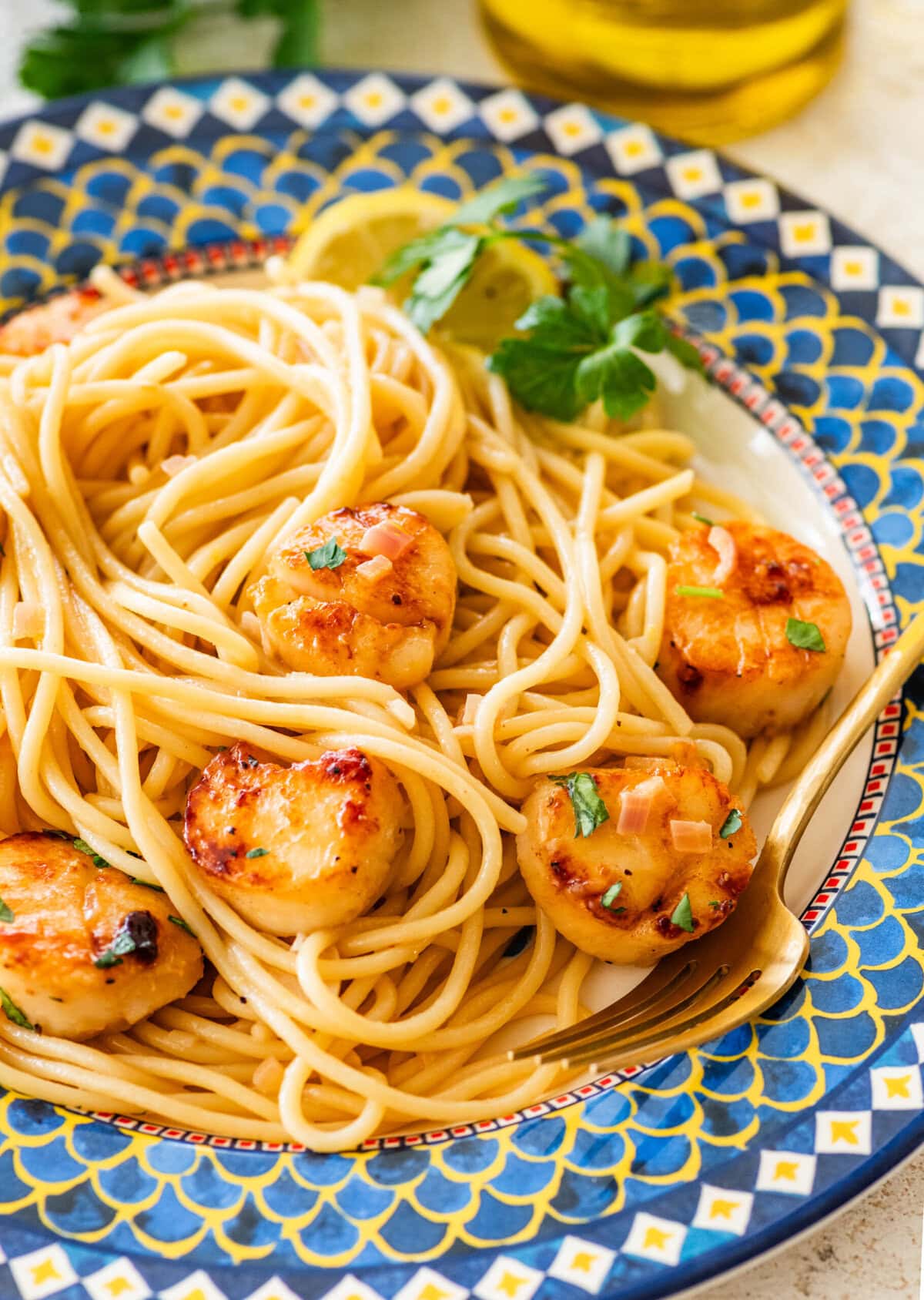
How Do You Keep Spaghetti From Sticking?
A few habits will keep spaghetti from clumping:
- Add the spaghetti only after the water reaches a full boil.
- Stir immediately after adding the pasta.
- Stir again during the first few minutes of cooking.
- Use enough water for the amount of pasta you’re cooking.
- Don’t add oil to the cooking water.
- Toss the drained spaghetti with sauce while it is still hot.
The first few minutes are especially important because that’s when the strands are most likely to stick together.
Why Should You Save Pasta Water?
Pasta water contains starch released from the spaghetti as it cooks. That starchy water can help loosen a sauce while helping it cling to the noodles. Before draining, reserve about ½–1 cup of pasta water.
You can add it a little at a time to:
- Loosen a thick sauce
- Help sauce coat the pasta
- Adjust the consistency of a finished sauce
- Create a smoother pasta sauce
It is especially useful for sauces such as Cacio e Pepe, Pasta alla Gricia, and Carbonara.
Common Mistakes to Avoid
- Adding Spaghetti Before the Water Boils. Wait until the water reaches a full rolling boil before adding the pasta.
- Not Salting the Water. Salt seasons the spaghetti as it cooks, giving the noodles flavor before you add the sauce.
- Adding Oil to the Water. Oil isn’t necessary for preventing sticking and can make it harder for sauce to cling to the noodles.
- Relying Only on the Timer. Package times are estimates. Start tasting 1–2 minutes early.
- Letting the Pasta Sit After Draining. Have your sauce ready before the spaghetti finishes cooking. Toss the hot pasta with the sauce as soon as it drains.
- Forgetting the Pasta Water. Reserve some before draining. You can always add it to the sauce, but you can’t get it back once it goes down the drain!!






That is Great
Thanks so much! I am happy it was useful to you! Let me know what pasta recipe you try out first!
People who need this much explanation for cooking pasta should not be using a stove. This is ridiculous. I wanted a number of minutes, not a thesis. Wayyyy too wordy!
Very good my son loved it. Husband was critical and said it was barley cooked! LOL
Ha! Tell him it also has a lower GI this way and it is better for digestion when it is cooked al dente :).
thanks alot of information
You are welcome!
Perfect pasta every time! Thank you
You are welcome!
The one guide you need to make perfect pasta every time!