Traditional Italian Panettone

This post may contain affiliate links. Please read our disclosure policy.
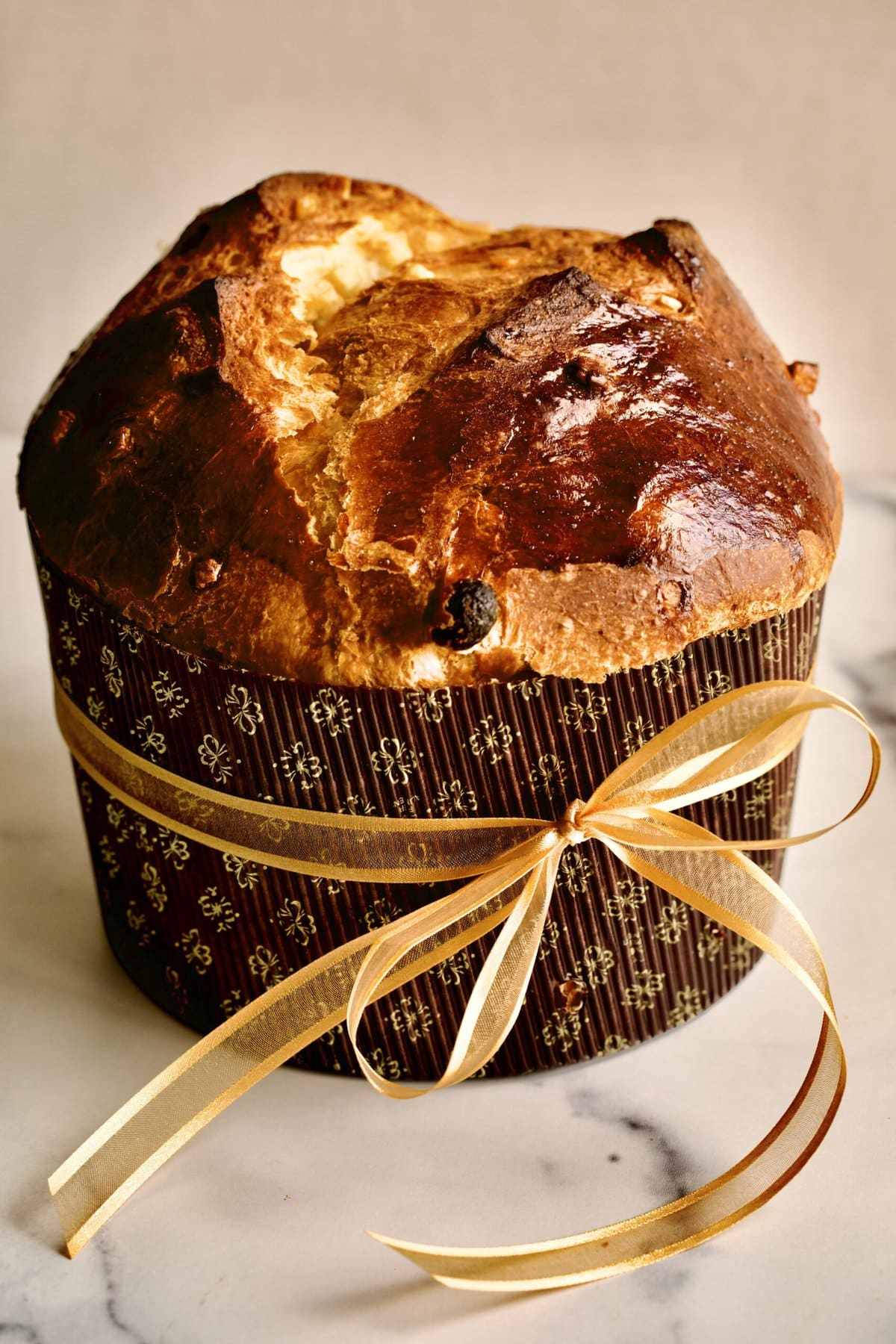
Traditional Italian Panettone is a tender lemon and orange scented sweet dough that’s studded with candied fruit and raisins. You will want to devour this buttery bread every year during Christmas time! This detailed post with step-by-step photos makes this panettone recipe achievable even if you’re a beginner baker.
Want to taste more traditional Italian recipes? Try my favorite Italian Christmas Recipes for lots of delicious ideas!

Quick Look at This Recipe
- Prep Time: 40 minutes
- Cook Time: 45 minutes
- Total Time: 5 hours 25 minutes (including 4 hours of rising time)
- Servings: 12 people
- Dietary Info: Vegetarian; can be made Dairy Free
- Method: Oven Baked
- Technique: Mix up a biga (dough starter), combine the honey and zest, and mix the raisins with water; let all mixtures sit overnight. Mix up the dough, then let it rise once. Mix in remaining ingredients and let it rise again. Shape and place in the mold and rise again, then bake. Cool upside down and enjoy.
- Flavor & Texture: This traditional panettone has a perfect light texture, a wonderful citrus aroma, and a beautiful crust and presentation that will ensure it’s a hit at any Christmas celebration.
Why You’ll Love This Recipe

Panettone is a sweet bread similar to brioche. It is loaded with lemon and orange zest, orange peel, raisins, and spices and baked in a paper mold to give it a tall shape.
We call it Italian Christmas bread since it is traditionally shared with friends and family at Christmas and in the New Year. (You can call it a “fruit cake,” but I don’t like those, ha!) Pair it with our best Christmas desserts, or serve alongside Thick Italian Hot Chocolate, Cranberry Orange Bread, or Homemade Chocolate Syrup.
Since my mamma’s birthday is at the end of December, this panettone recipe was her birthday cake when she was growing up in Italy! As a child, she wasn’t always a fan, but she adores the tradition we still keep today.
This traditional panettone recipe comes straight from Italy and is adapted from my great nonna Pierina’s. It resembles my Italian Brioche Bread and Italian Sweet Braided Easter Bread.
Made With Amore,

“When I married my Italian husband I was told that no one makes panettone from scratch – it’s too complicated. But this recipe changed that and I made a perfect panettone (according to him) on my first try! It’s clear, easy to follow, and the results are excellent. Thank you Elena!”
– HP
Table of Contents
Ingredients for Italian Panettone
Homemade panettone is 100% worth the effort. The ingredients are simple, and you can easily find all candied and dried fruit this time of year!
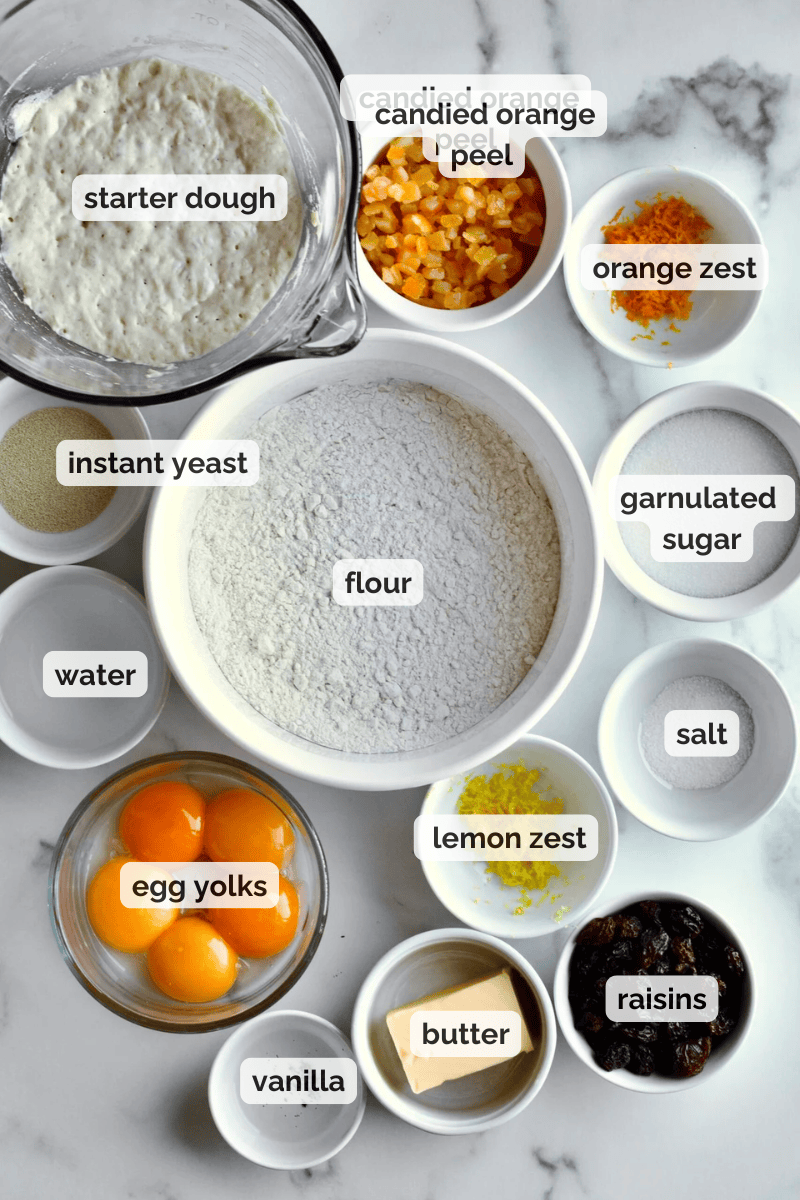
- Flour: I recommend using all-purpose flour for the biga (this is a type of pre-fermentation used in Italian baking) and bread flour for the panettone dough.
- Instant Yeast: Be sure to use yeast that hasn’t expired! If you’re using instant (aka fast action) yeast, there’s no need to bloom it first.
- Lemon & Orange Zest & Peel: You’ll need some freshly grated lemon and orange zest, as well as some candied orange peel to add to the dough later. This adds an incredible aroma and flavor to the dough!
- Raisins: I love the sweetness that raisins bring to panettone, but you’re welcome to substitute with a different dried fruit if you prefer.
See recipe card for full information on ingredients and quantities.
Variations & Substitutions
A traditional Italian panettone recipe is filled with candied oranges, raisins, currants, and orange zest. There are other classic panettone variations to try besides the classic dried fruit variety.
- Chocolate Chip: add chocolate chips (I love dark chocolate chips).
- Black Forest Panettone: dried cherries, candied oranges, chocolate chip.
- Rum-Soaked Raisins: use rum soaked raisins instead of soaking them in water.
- Dairy Free Version: Swap the butter for solid coconut oil or vegan butter.
How to Make Italian Panettone
This is the PERFECT way to make traditional Italian panettone. For this recipe, using a kitchen scale and measuring your ingredients is important. All you need is a bit of patience for the dough to rise at different stages. You start the dough starter (biga or lievito madre) the night before; the rest is all done in ONE DAY!
The Night Before Baking
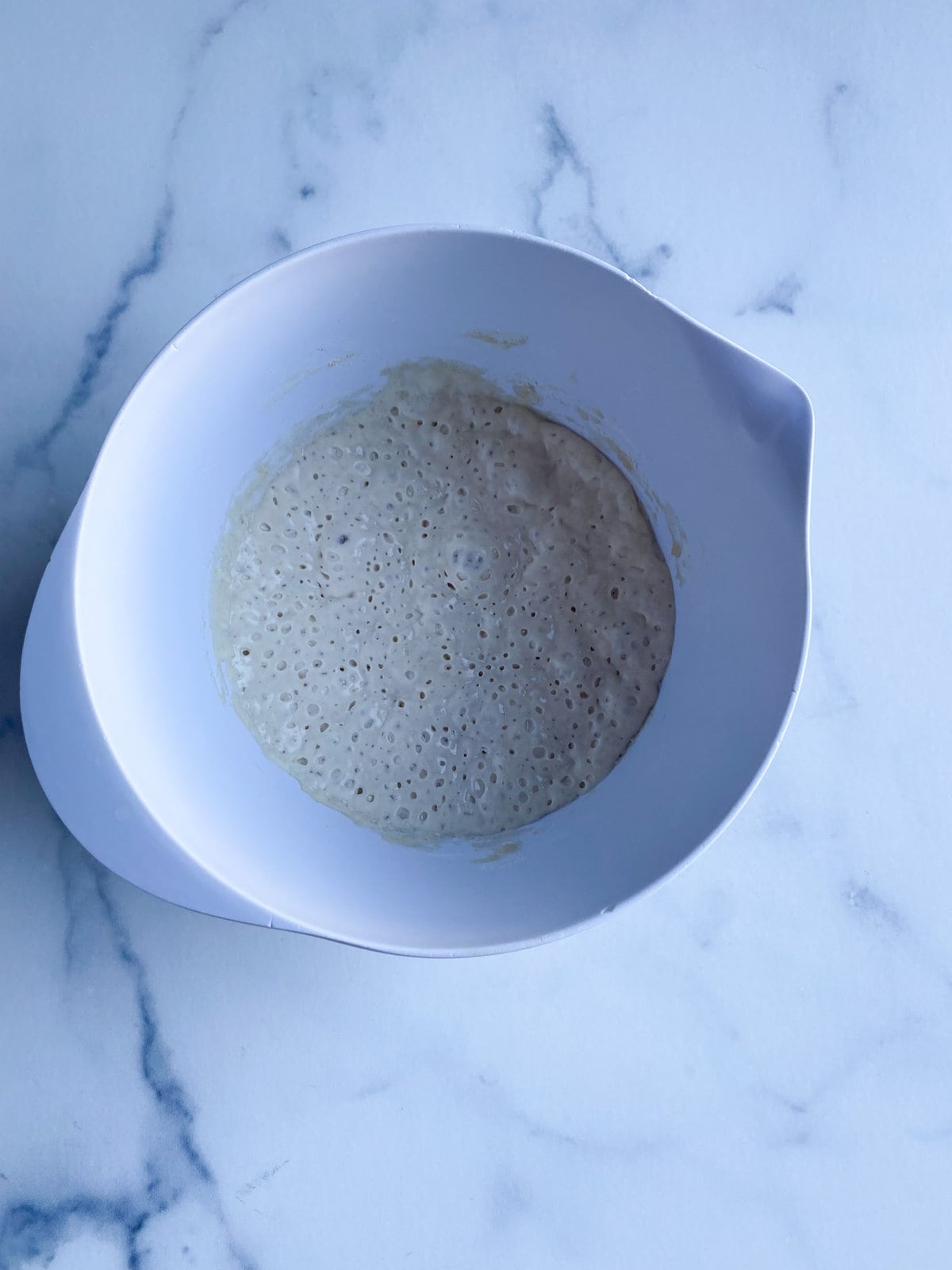
- Combine the starter dough ingredients in a medium-sized mixing bowl, and mix with a fork until a shaggy mixture. Cover, and allow it to rest in a warm place for 8-12 hours. This is called your biga, which is a type of pre-fermentation.(The photo above was taken AFTER the overnight rise.)
NOTE: You can also use a sourdough starter if you have some and skip this step (use 190 g of the starter if you have it already).
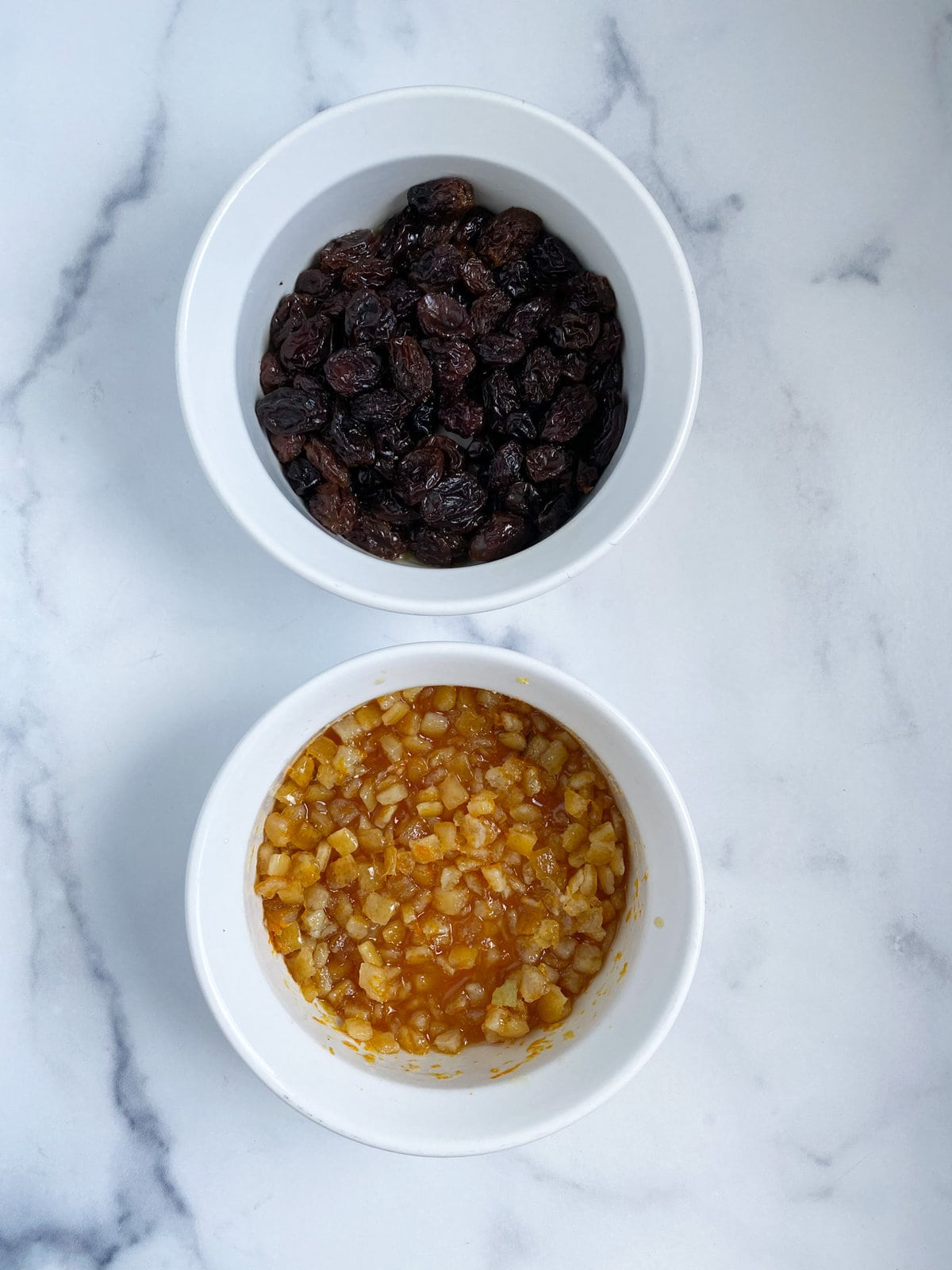
- In a small bowl, combine the honey, vanilla extract, orange peel, and lemon + orange zest. Mix to combine. Cover and set aside. In a separate bowl, combine raisins with water. Cover and set aside. This step makes sure the raisins stay moist during baking. Let them rest overnight.
Baking Day

- In a stand mixer with a dough hook, combine the dough starter (biga), half of the flour, and all of the water and yeast. Mix until combined, and knead with the dough hook for about 5 minutes. Cover with plastic wrap and let rise for 1 hour in a warm place. The dough should triple in size.
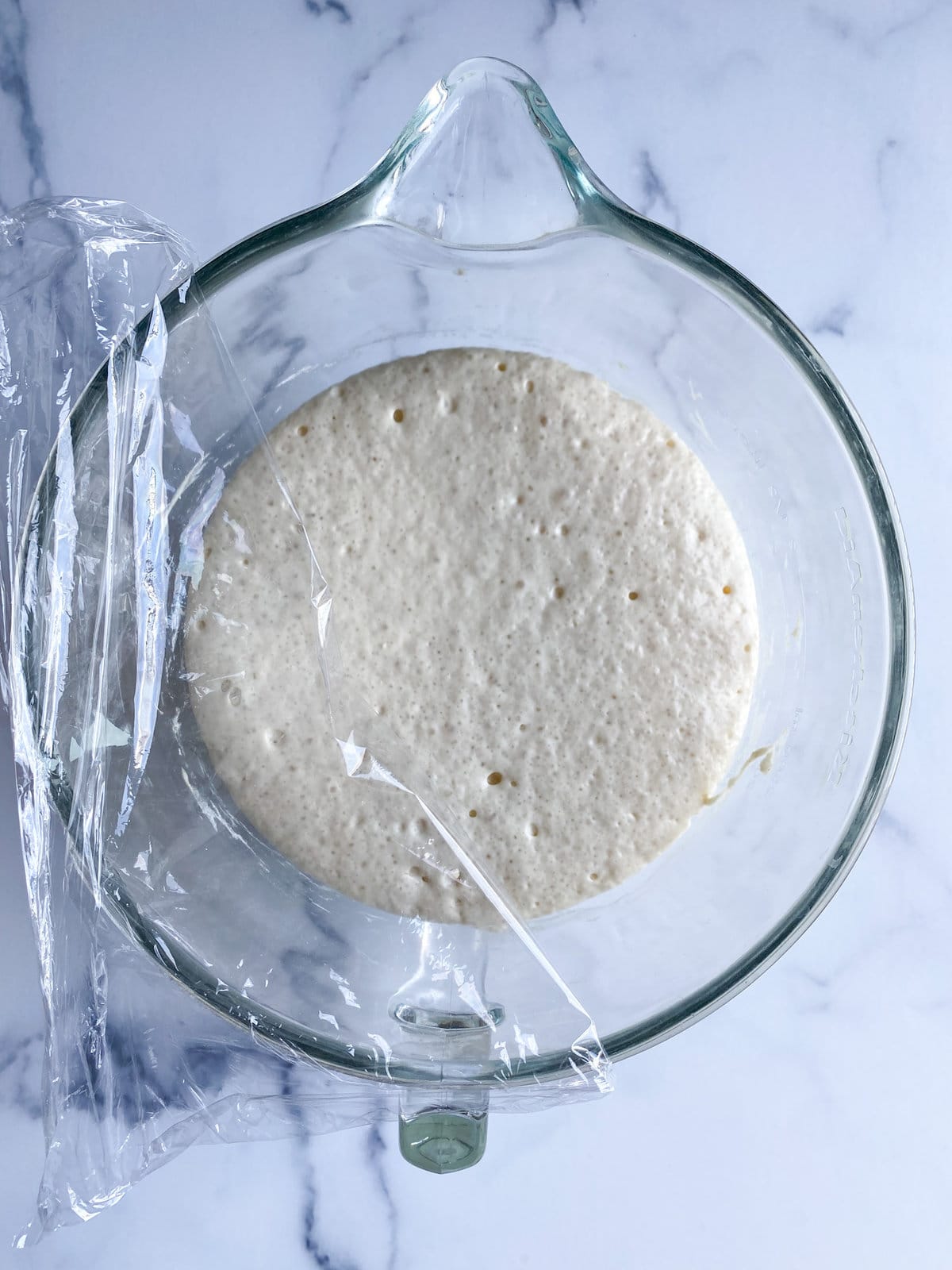
- After the dough rises for 1 hour, add the rest of the flour and mix to combine. (The photo above was taken after the rise.)

- After adding the remaining flour, the dough will look shaggy and crumbly. Let rest for 10 minutes.
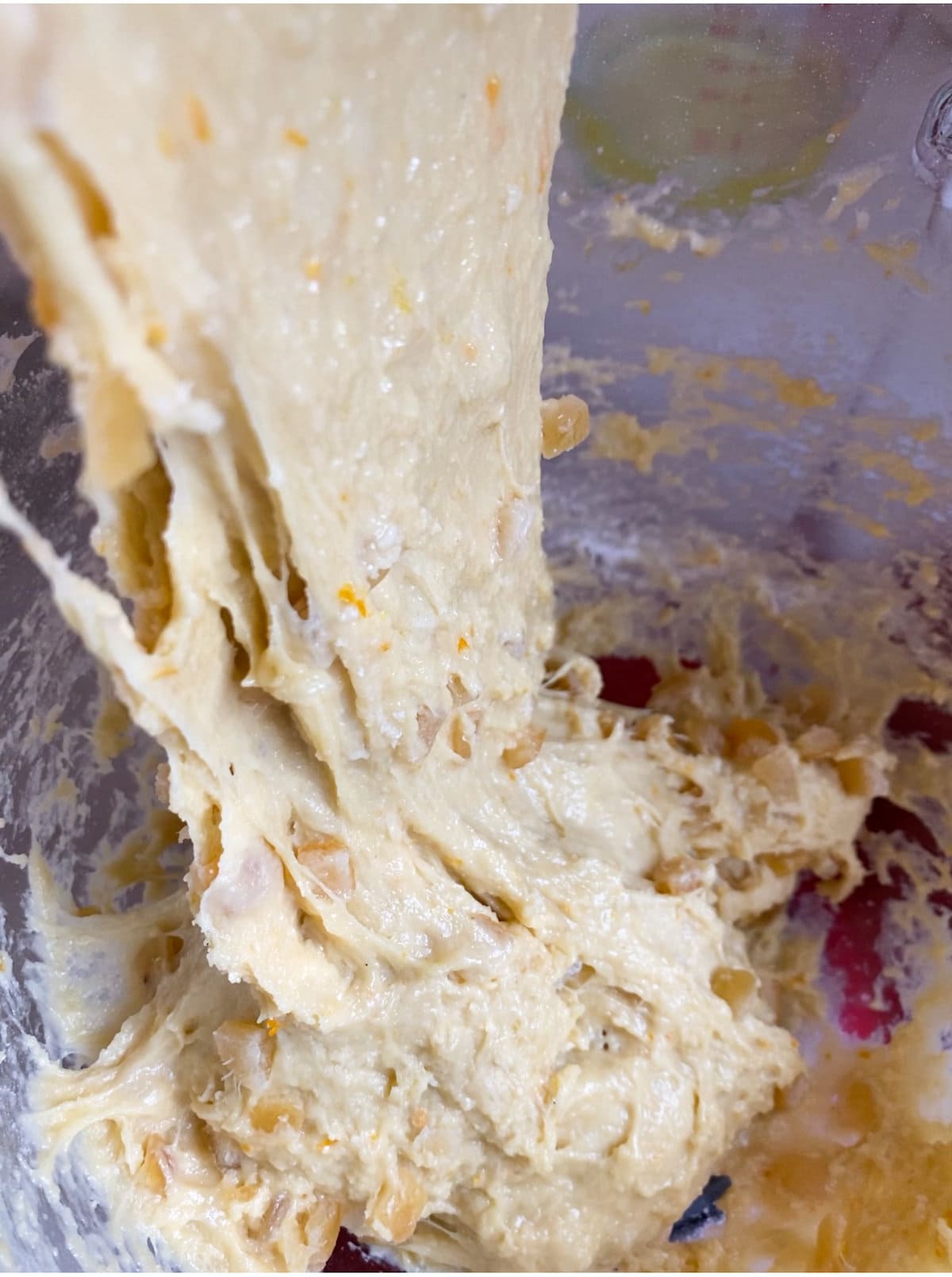
- Beat the egg yolks, salt, and sugar in a bowl until fluffy and creamy, about 5 minutes. Add the honey, candied orange, and zest mixture to the egg mixture. Slowly add the egg mixture to the dough and mix with a dough hook until a sticky dough forms; about 5 minutes. (If the dough is too wet and not coming together, add a bit of flour.)
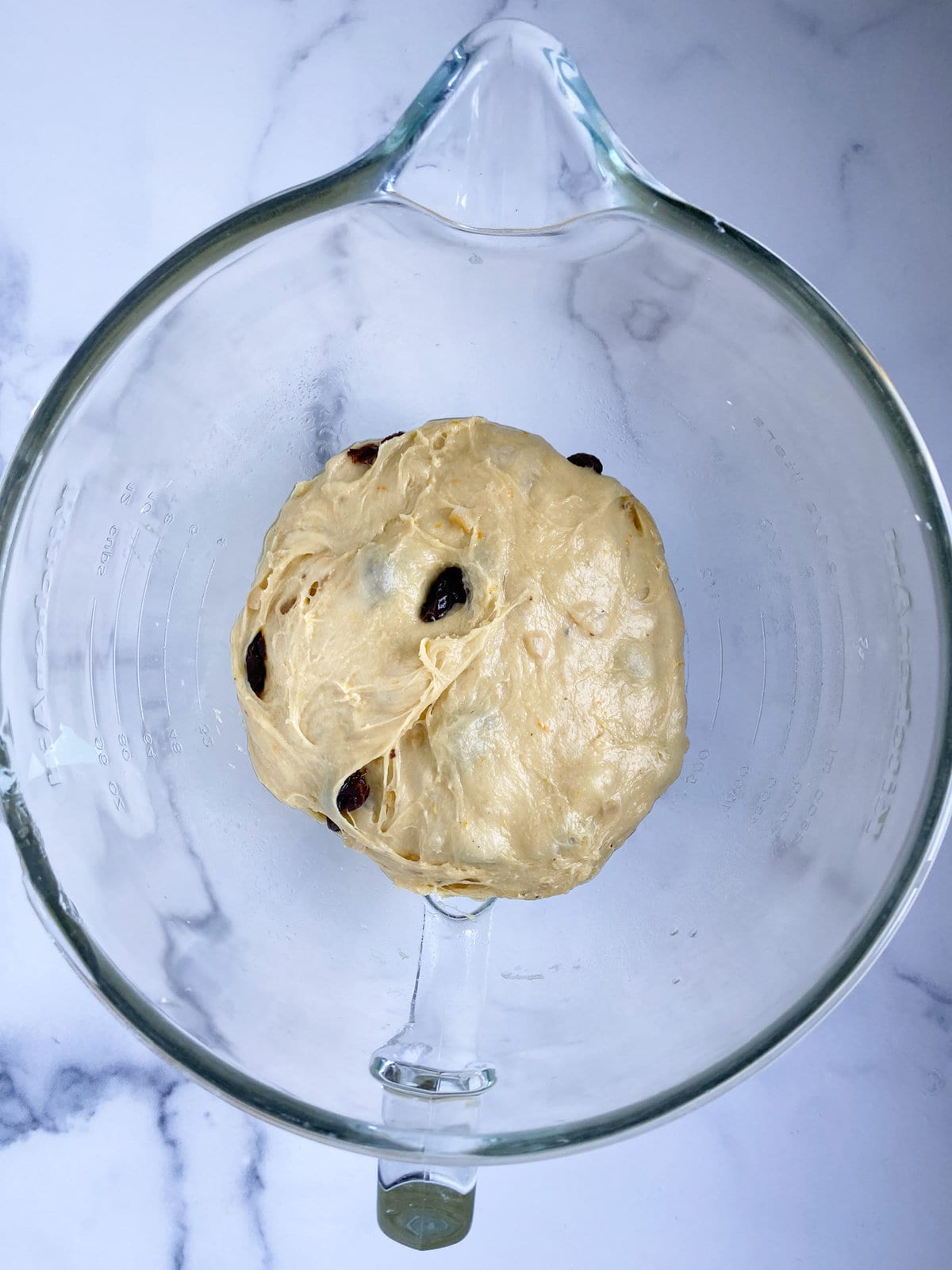
- Add the butter to the dough, small bits at a time, mixing after each addition. After the butter is incorporated, add the raisins (remove excess water, if any). Gently mix until the raisins are incorporated into the dough. Move the dough to a clean and greased bowl.
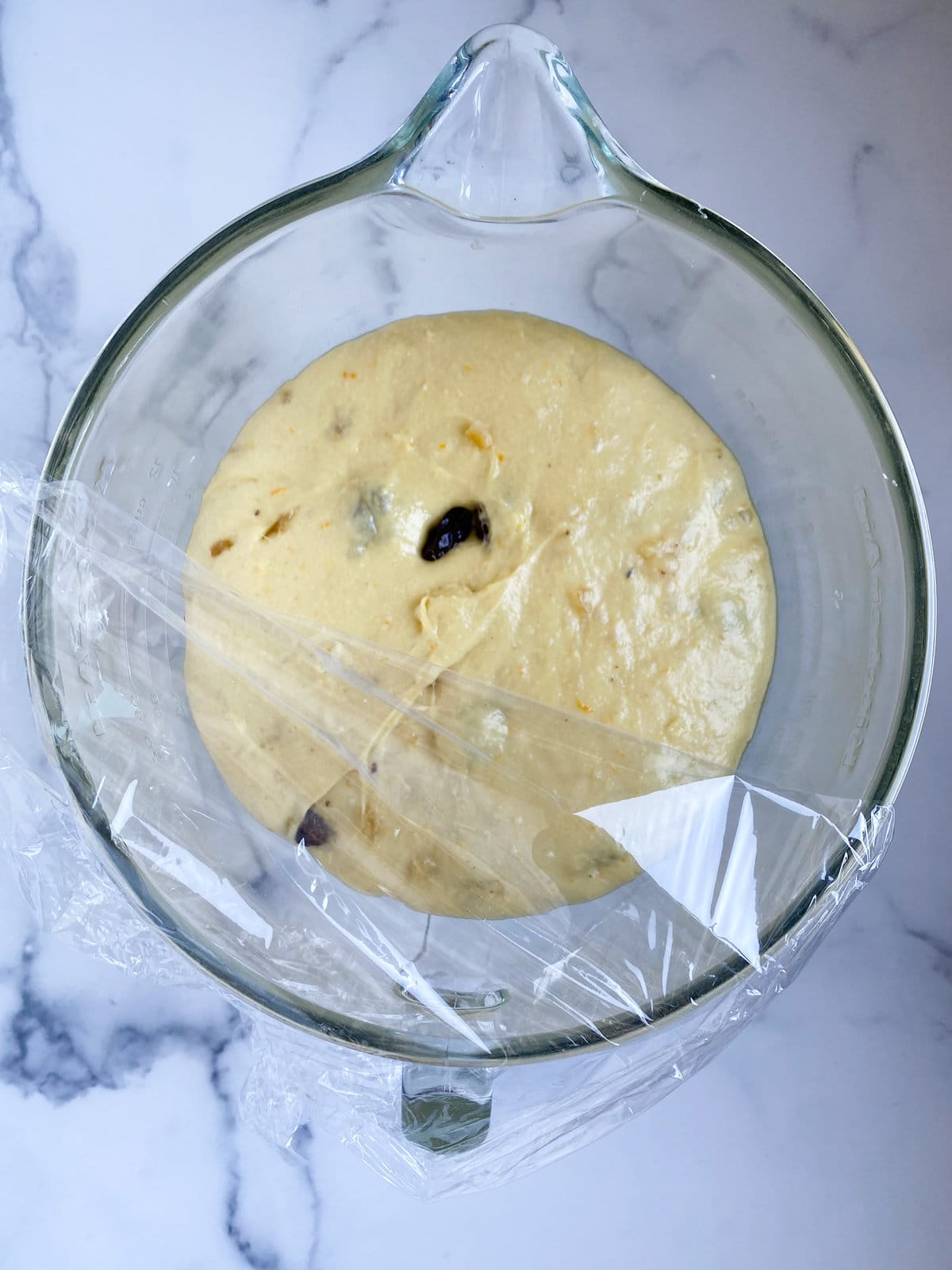
- Dough Rise 2. Cover the dough, and let it rise for 1 to 1 1/2 hours, or until it’s puffy or proofed and doubled in size. Gently deflate the dough.
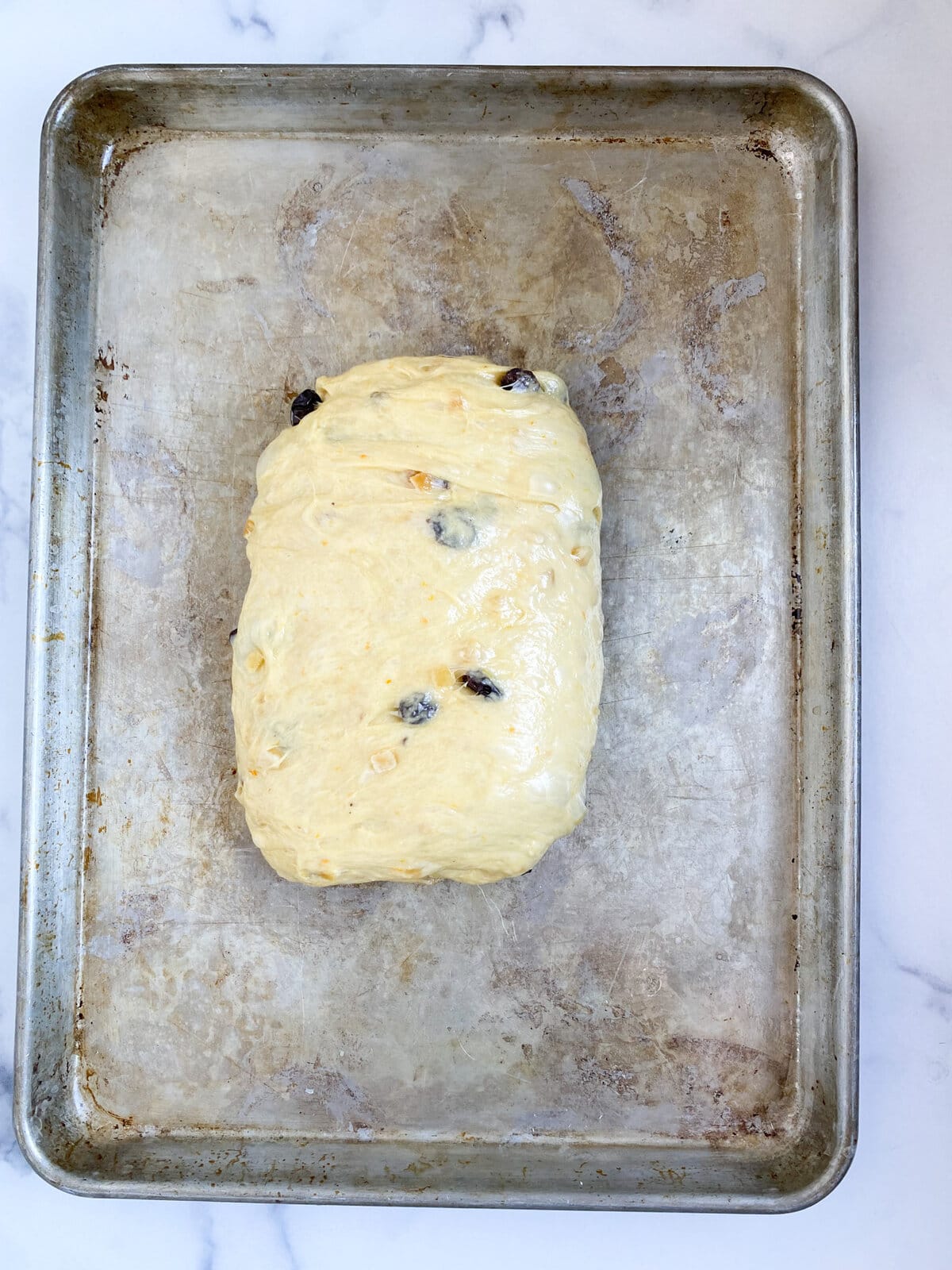
- Place dough on a greased baking sheet. Working clockwise, pinch the top corner of the dough, lift it to let the dough stretch, then fold the stretched dough back on itself. Turn the dough 90 degrees clockwise. Repeat this stretch and fold process three times, then let the dough rest for 10-15 minutes. Repeat the folding process two more times with a rest between each one.
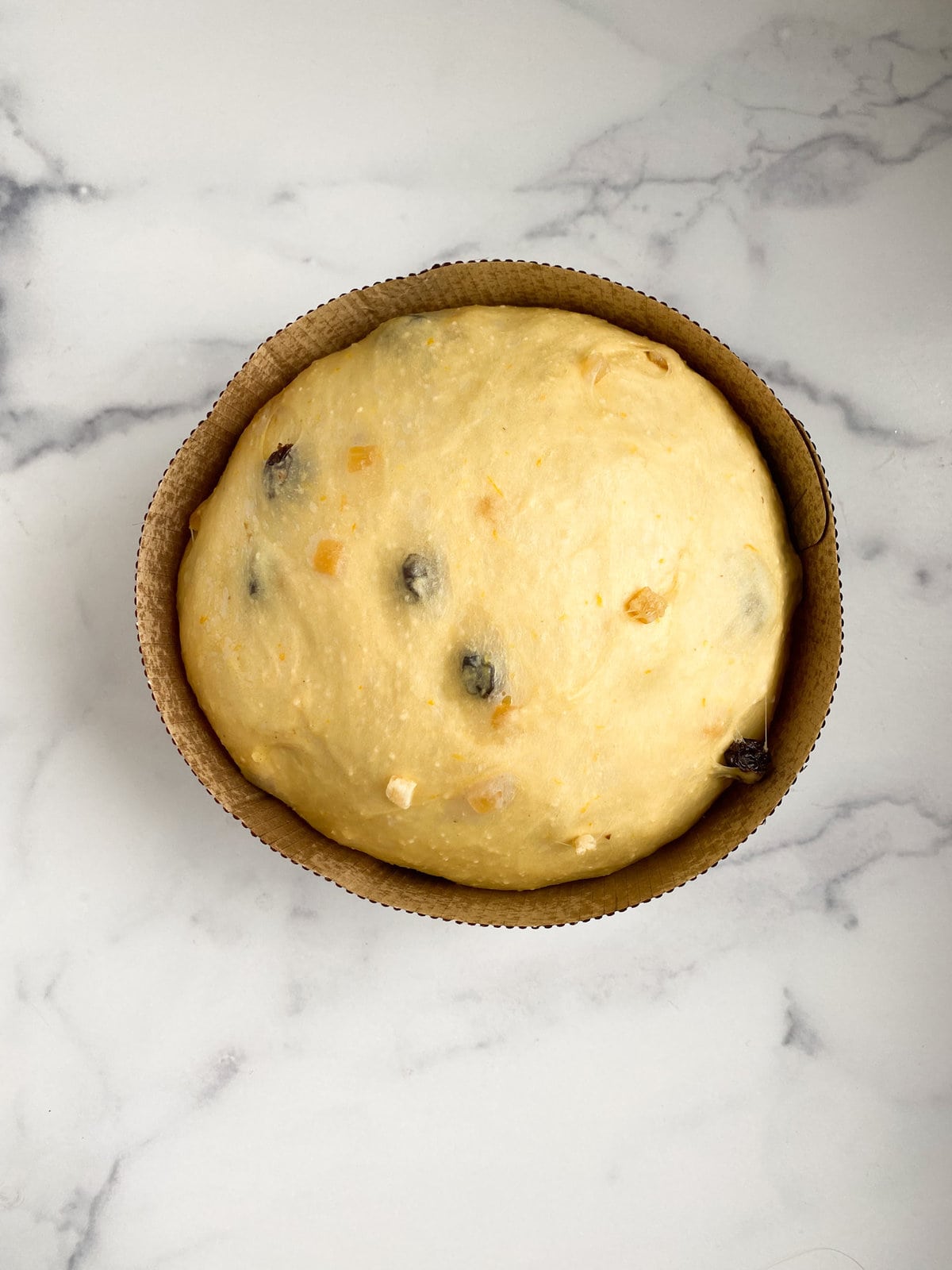
- Bring the corners toward the center to form a ball, and pinch the loose ends together. Cup your hands around the dough to round the ball. Place it in a well-buttered or sprayed panettone pan, mold paper, or other straight-sided, tall 1.5 to 2-quart pan. Let the dough rise in a warm place until it reaches over the rim of the mold, about 1 1/2- 2 hours (time varies depending on humidity and temperature).
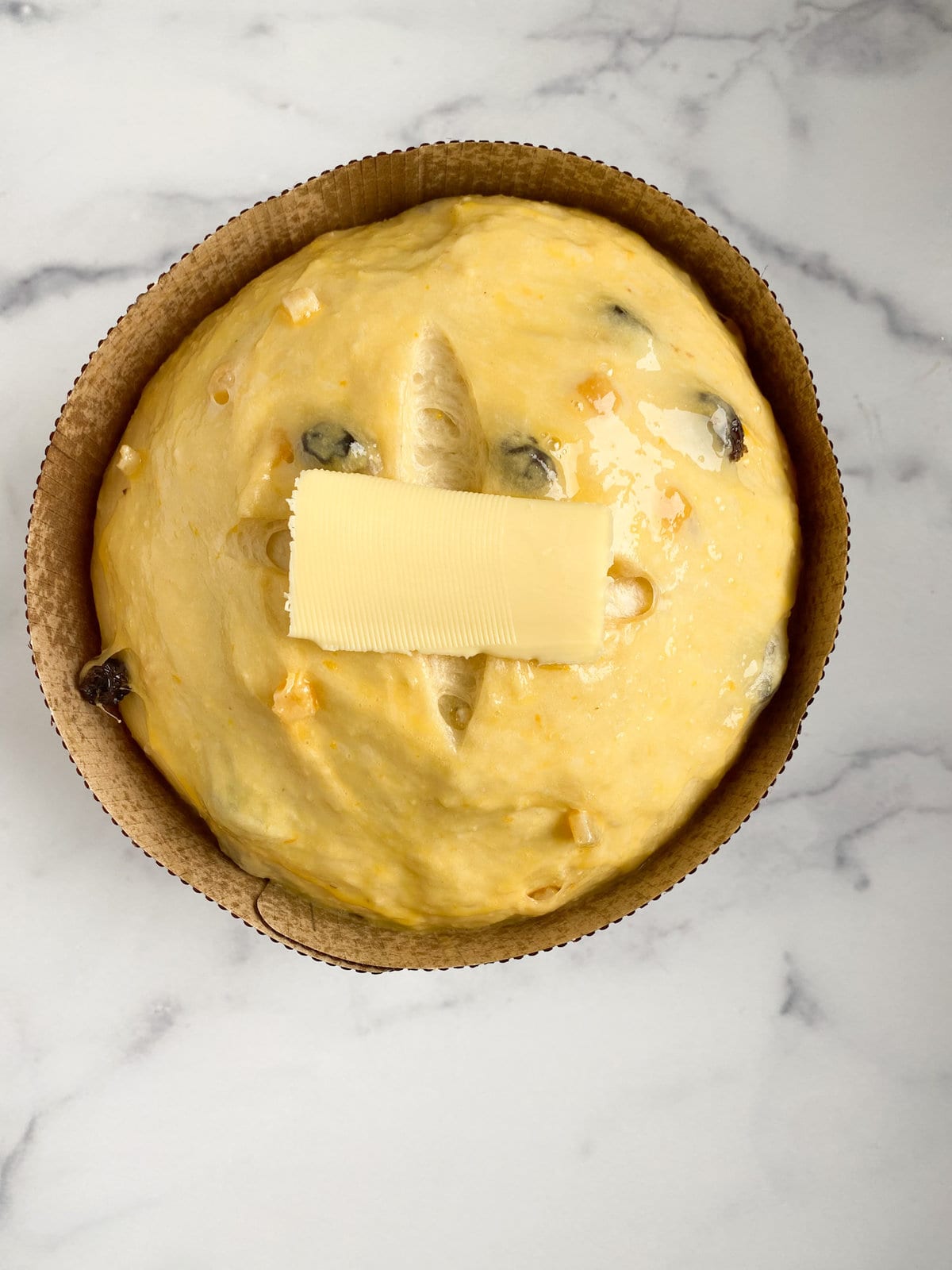
- When the rise is complete, brush the top with egg wash. Make cross cuts on the panettone with a sharp knife, and put a small pat of butter in the center of the cake. Sprinkle with pearl sugar if desired.
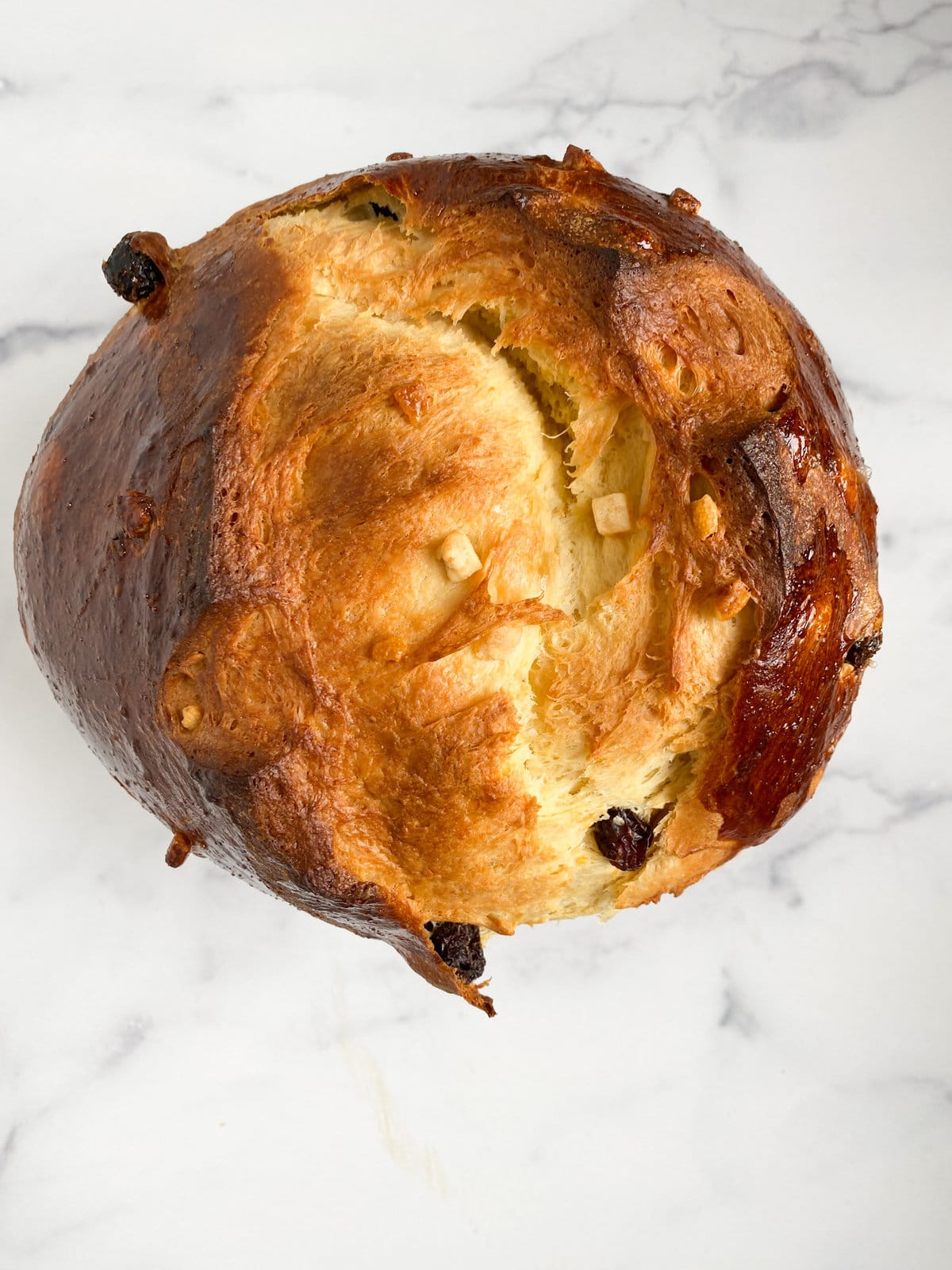
- Bake at 375°F for 10 minutes; then reduce the heat to 350°F and bake for about 40 minutes, tenting with aluminum foil if it’s browning too fast. It’s done when a digital thermometer reads 190°F in the center. Remove from the oven and cool completely.
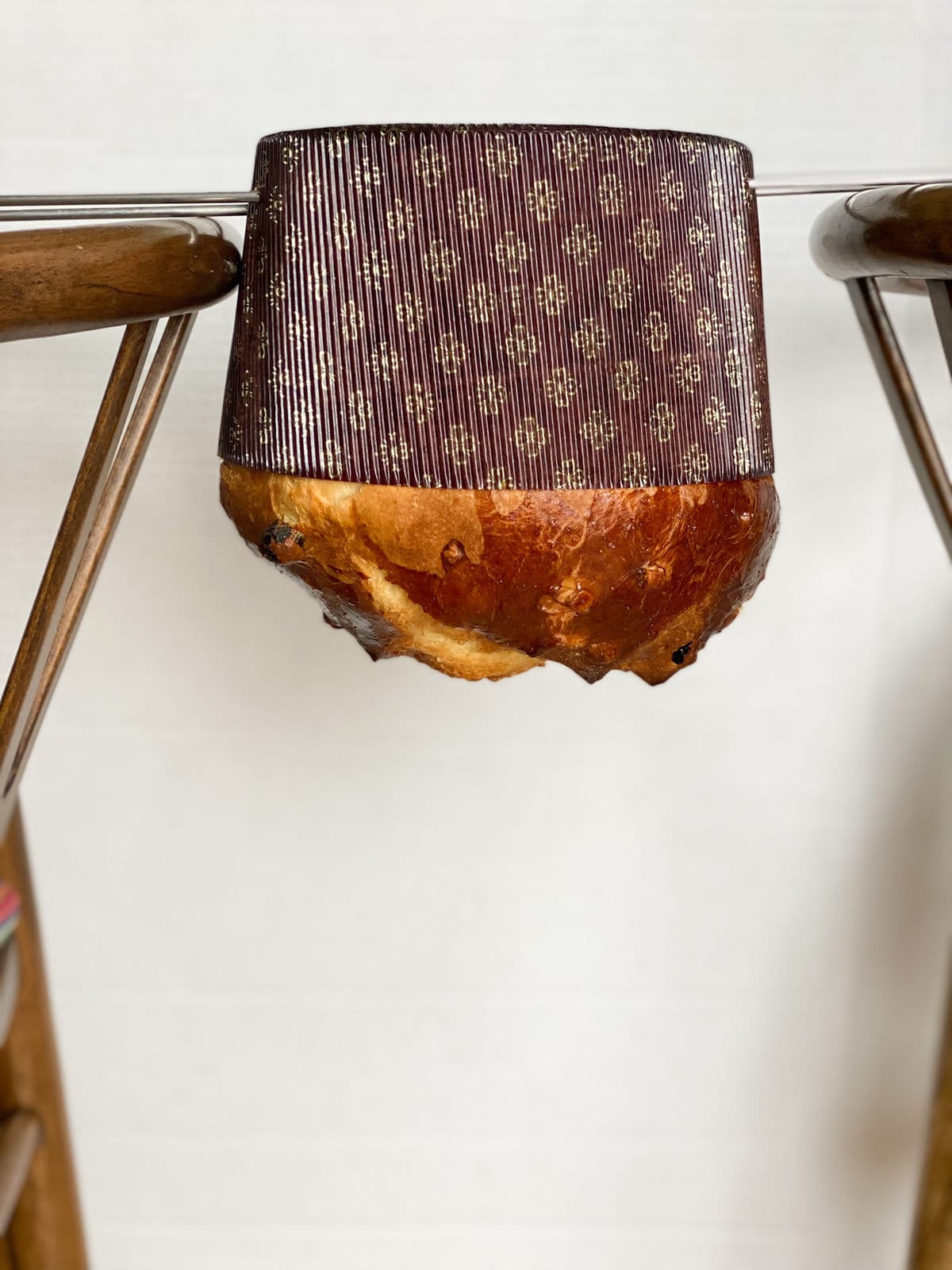
- To cool the panettone, pierce each side with a bamboo skewer (or these panettone hangers), flip it over, and hang it between two tall jars. Hanging it upside down for a few hours prevents the panettone from caving. (You do not have to cool it upside down; you can cool it on a cooling rack.)
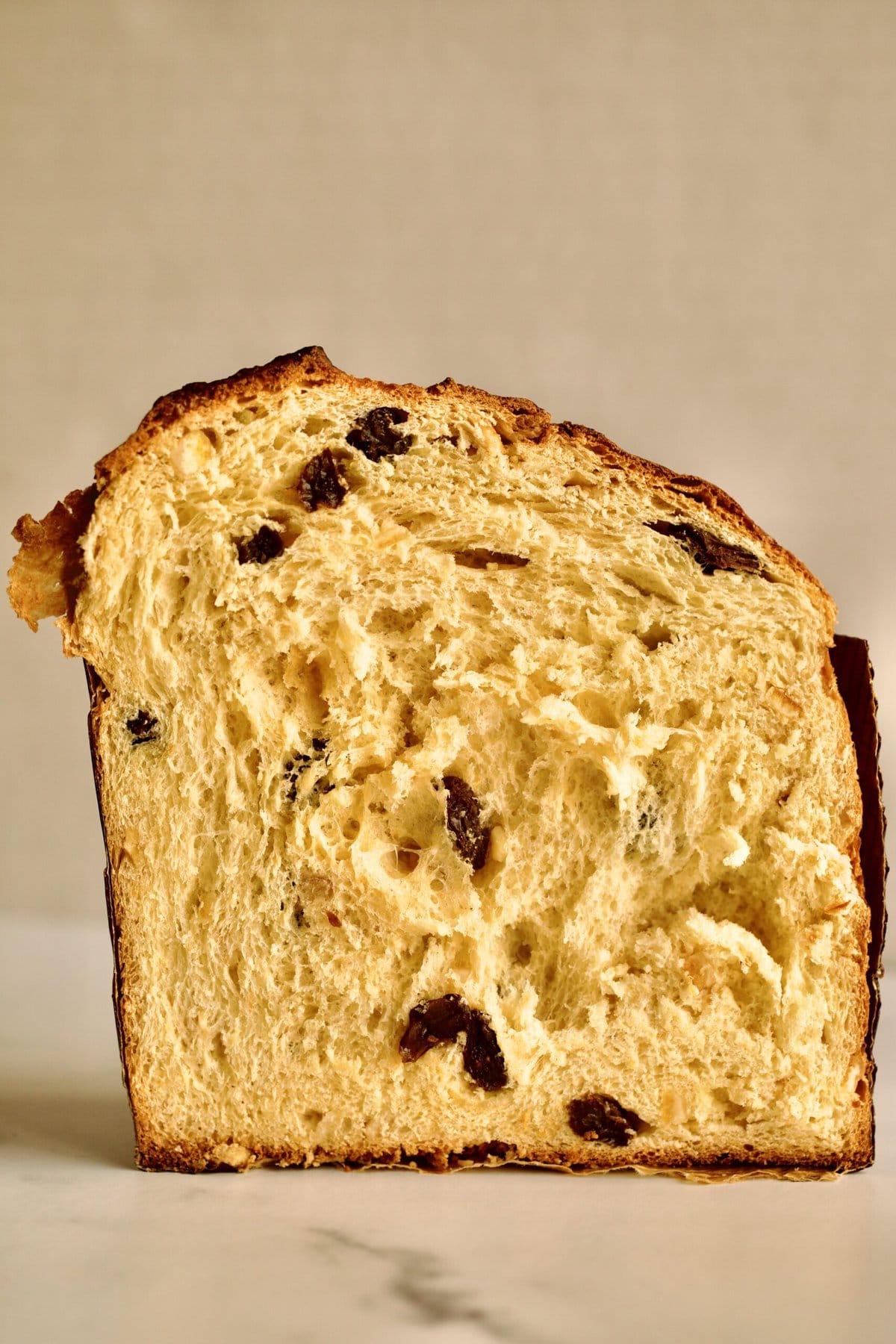
- Slice your freshly baked panettone into wedges and enjoy this light-as-air Christmas treat!
How to Fold the Panettone Dough
Here is a quick video on how to fold the panettone dough. In Italian, this process is called metedo della pirlatura. This refers to working a dough according to the Pirlatura method or folding and shaping the dough.
Recipe FAQs
One popular legend states that its origin goes back to the late 1400s. During a luxurious Christmas banquet given by the Duke of Milan, the desert they were serving got burnt.
A kitchen boy (young cook), called Toni, came up with a rich brioche bread filled with raisins and candied fruit. The Duke loved it, and so the tradition of ‘Pane di Toni’ was born and later changed to “panettone” and become a bread of luxury.
In the Italian dictionary, the Italian word panettone derives from panetto, a small loaf cake. The augmentative suffix -one changes the meaning to “large cake.”
It is a bit of both! Italian panettone is a sweet bread that is baked in a round mold, which gives it a lighter-than-air fluffy texture that reminds many people of cake. It is a sweet bread studded with candied fruit, raisins, and sometimes chocolate chips.
Traditional Italian panettone is rich in raisins and candied fruit, with its classic tall dome shape. In contrast, pandoro is a simple and rich cake made with butter and eggs, with its distinctive star shape. Both are traditional Italian holiday cakes and taste delicious in their way.
When finished baking, the panettone bread or cake should be a deep brown color. It will sound hollow when tapped and read 190°F at the center using a digital thermometer. It’s easy to underbake panettone since the top can brown quickly that is why I cook it at different temperatures and tent it will aluminum foil when baking.
To keep panettone fresh for up to one week at room temperature, wrap it in plastic wrap and then foil and place it in a resealable bag or airtight container.
Yes, this panettone cake can be frozen whole or in slices. When stored in the freezer, homemade cakes are good for up to 1 month. For best results, slice the cake first and wrap each slice individually. Pull out individual slices and reheat in a toaster oven.
Serving Suggestions
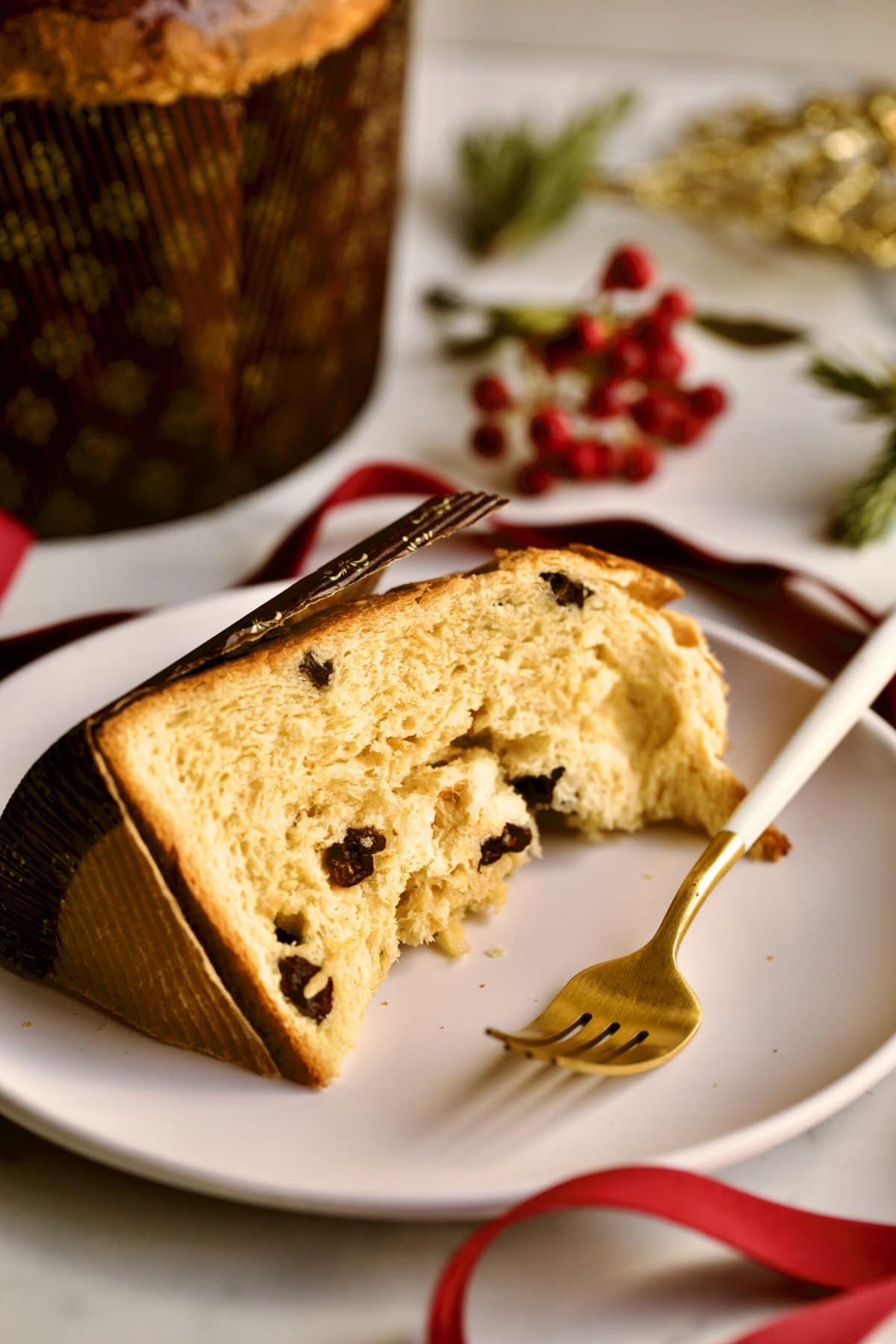
Slice panettone into thick or thin wedges; that’s the traditional Italian way. If you baked it in a paper mold, slice right through it. Italian panettone is more bread than cake. It’s slightly sweet. You eat it plain or serve a slice of panettone with a slather of butter to make it more decadent.
Use leftover panettone to make overnight french toast bake or simple french toast in a pan. I doubt you will have any leftovers after a couple of days! Serve it with a simple spinach quiche or potato and egg breakfast casserole for a lovely spread.
My Pro Tips
Expert Tips
- Use room temperature ingredients, and use a kitchen scale to measure them quickly and accurately.
- Hydrate the raisins in a bit of water, or they will be dry.
- Make sure the yeast is NOT expired, or you will do a lot of work for nothing.
- Follow the recipe exactly and be patient with the dough rising at the different stages. Find the warmest place in your home, or use a proofing oven.
- Cool the panettone upside down. Poke it with two long metal or wooden skewers about 3-4 cm from the base. Then, let it rest upside down to cool completely. This will prevent the bread from collapsing while cooling.
Other Italian Desserts You’ll Love
💙 MADE THIS RECIPE AND LOVED IT? 💙 Please leave a ⭐️STAR rating and COMMENT below- I love connecting with you! Tag me with your creations on Instagram and find me on Pinterest.
Traditional Italian Panettone

Ingredients
For the Starter Dough/Biga
- ¾ cup unbleached all-purpose flour
- 1 pinch instant yeast
- ⅓ cup cool water
Mix-Ins
- ½ tablespoon lemon zest, from 1 lemon
- 1 tablespoon orange zest, from 1 orange
- 2 tablespoon honey
- 2 teaspoons vanilla extract
- ½ cup raisins
- 3 tablespoons water
For the Dough
- all of the starter dough from above
- 3 cups all-purpose flour, divided
- ½ cup lukewarm water
- 1 tablespoon instant yeast
- ⅓ cup granulated sugar
- 1¼ teaspoon salt
- 5 egg yolks, room temperature
- 8 tablespoons butter, softened
- ½ cup candied orange peel, finely chopped
For the Topping
- 1 beaten egg
- 1 pat butter, for topping
- pearl sugar, optional
Instructions
The Night Before Baking
- Starter Dough/Biga: Combine the starter ingredients in a medium-sized mixing bowl, mix with a fork until a shaggy mixture. Cover, and allow it to rest in a warm place for 8-12 hours. This is a biga, a type of pre-fermentation. (You can use a sourdough starter instead of the biga; simply use 190g of proofed starter and move on to step 1 of baking day.)
- Mix-Ins: In a small bowl, combine the honey, vanilla extract, orange peel, and lemon + orange zest. Mix to combine. Cover and set aside. In a separate bowl, combine raisins with water. Cover and set aside. This step makes sure the raisins stay moist during baking. Let them rest overnight.
On the Baking Day
- Dough Part 1 and First Rise: Combine the dough starter (biga), half of the flour, and all of the water and yeast in a stand mixer with a dough hook. Mix until combined, and knead with the dough hook (or by hand) for about 5 minutes. Cover with plastic wrap and let rise for 1 hour in a warm place. The dough should triple in size.
- Dough Part 2: After the dough rises for 1 hour, add the rest of the flour and mix to combine. The dough will look shaggy and crumbly. Let rest for 10 minutes.
- Meanwhile, beat the egg yolks, salt, and sugar in a medium bowl until fluffy and creamy, about 5 minutes. Add the honey, candied orange, and zest mixture to the beaten eggs and stir until combined.
- Slowly add the egg and orange mixture to the dough. Mix with a dough hook until the dough is sticky and uniform; mix with a dough hook (or by hand) for about 5 minutes. The dough will be sticky, and it will take several minutes to come together, about 10 minutes of kneading!
- Add the butter to the dough, small bits at a time, mixing after each addition. Mix dough with a dough hook (or by hand) until a smooth dough forms (still sticky). After the butter is incorporated, add the raisins (remove excess water, if any). Gently mix until the raisins are incorporated into the dough. Make the dough into a ball. Move the dough to a clean and greased bowl.
- Second Rise: Cover the dough, and let it rise for 1 to 2 hours, or until it's doubled in size. Gently deflate the dough.
- Fold Dough: Move to a greased baking sheet or countertop and lightly grease your hands. Working clockwise, pinch the top corner of the dough (12 o'clock position), lift it up and let the dough stretch, then fold the dough back on itself (6 o'clock position). Turn the dough 90 degrees clockwise (the 12 o'clock position is now the 3 o'clock position). Repeat this process of stretching and folding two more times.
- Let the dough rest for 10-15 minutes, then repeat the full folding process two more times with a rest between each.
- Shape Dough: Bring the corners in toward the center to form a ball, and pinch the loose ends together. Cup your hands around the dough to round the ball. Place it in a well-buttered or sprayed panettone pan, mold paper, or other straight-sided, tall 1½ to 2-quart pan.
- Dough Rise 3: Let the dough rise in a warm place until it reaches over the rim of the mold, about 1½-2 hours (time varies depending on humidity and temperature).
- Topping: When the rise is complete, brush the top with egg wash. Make cross cuts on the panettone with a sharp knife, and put a small pat of butter in the center of the cake. Sprinkle with pearl sugar (optional).
- Bake: Bake in a preheated 375°F oven for 10 minutes; then reduce the heat to 350°F and bake for about 30-35 minutes, tenting with aluminum foil if the top of the panettone appears to be browning too fast.
- When finished baking, the panettone should be a deep brown, sound hollow when tapped, and read 190°F at the center using a digital thermometer. (It's easy to underbake panettone since the top can brown quickly, so be sure to check with a thermometer.)
- Cool & Rest: To cool the panettone, pierce each side with a bamboo skewer, flip it over, and hang it between two tall jars. Hanging it upside down for a few hours prevents the panettone from caving in on itself. You do not have to cool it upside down; you can cool it on a cooling rack.
- Serve: Slice in wedges and enjoy. Store at room temperature, well-wrapped, for up to a week; freeze for longer storage.
Notes
- This recipe makes 2 small panettone or 1 large one. The small molds I use measure 5¼” x 3¾” and hold a 500g loaf. The large mold I use measures 6⅝” x 4⅓” and holds a 1kg loaf. This is the size I used.
- Use room temperature ingredients and measure them with a kitchen scale for accuracy.
- Hydrate the raisins in a bit of water, or they will be dry.
- Make sure your yeast is NOT expired, or you will do a lot of work for nothing.
- Follow the recipe exactly and be patient with the dough rising at the different stages. Find the warmest place in your home, or use a proofing oven.
Nutrition
Nutrition information is automatically calculated, so should only be used as an approximation.





Hi Elena,
I am going to bake my panettone tomorrow. I have been unable to find panettone moulds here in the right size so I have bought a special tin.
Can I still hang the panettone? I am worried that the skewers will tear through it.
Should I use metal or bamboo?
Thank you kindly.
D
Hi there,
You can absolutely still hang your panettone, even if you’re using a tin. Just be sure to insert the skewers through the base of the panettone, about 1–1½ inches from the bottom, while it’s still hot from the oven. The crumb is sturdy enough at that point and won’t tear if supported properly.
I recommend metal skewers if you have them, they’re stronger and more reliable for the weight. Bamboo can work in a pinch, but make sure they’re thick and doubled up.
You’re going to do great, and your panettone will thank you for the hang. Happy baking and enjoy the process 🤍
Hi Elena,
Thanks for the reply. I did hang it with metal skewers – it did tear a bit but only after it had been hanging a while.
Very pleased with the result, lovely airy crumb.
Hubby is impressed.
Deslynn
I am so happy it worked out great for you! It is truly one of of our favorite traditional recipes!