This post may contain affiliate links. Please read our disclosure policy.
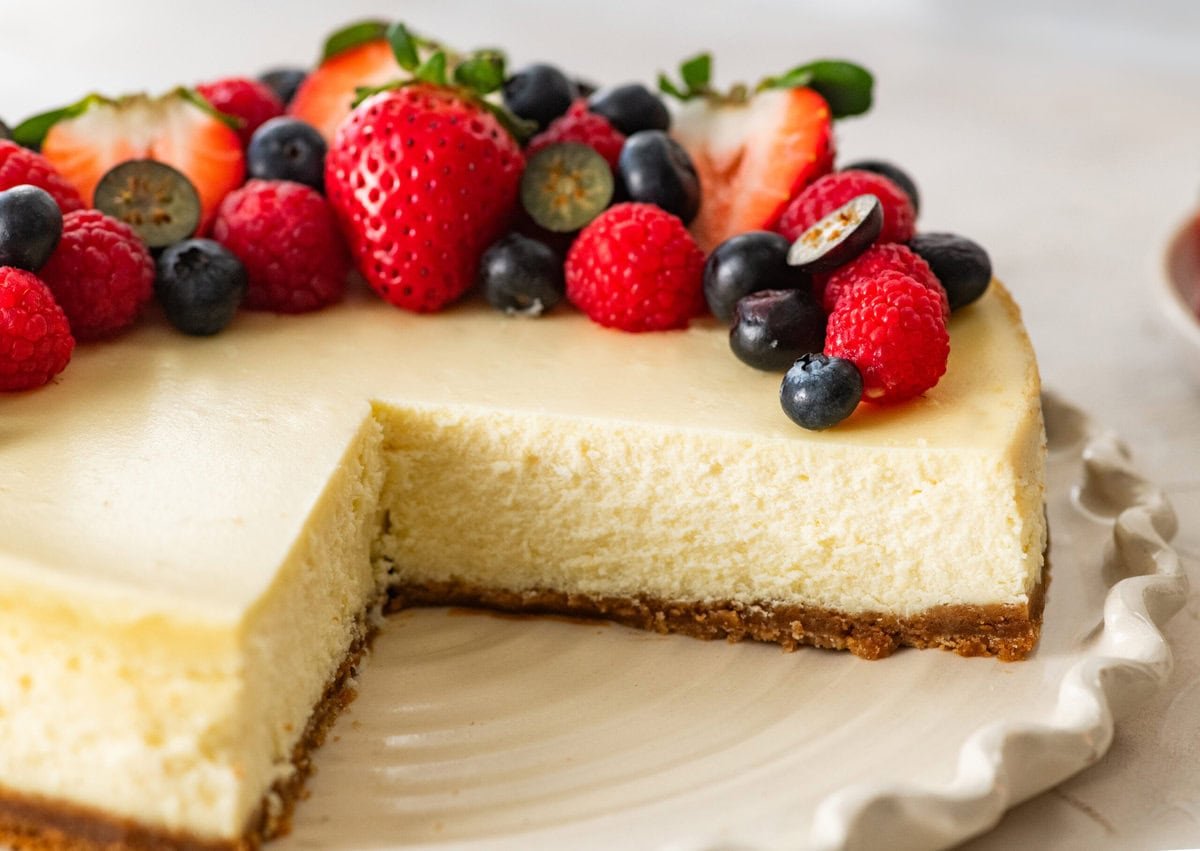
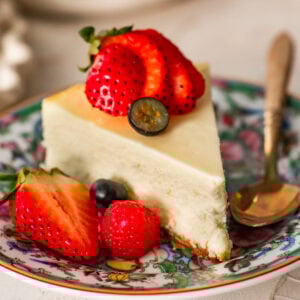
This light and creamy Italian Ricotta Cheesecake blends ricotta and cream cheese for a silky, super-creamy dessert. Brightened with lemon and a hint of almond, baked to perfection (no water bath needed!)- a stunning make-ahead dessert everyone loves.
You’ll also love my New York-style cheesecake, Italian cheesecake, lemon ricotta cookies, and ricotta pie.

Quick Look at This Recipe
- Prep Time: 20 minutes
- Cook Time: 90 minutes
- Total Time: 8 hours (includes fridge chilling)
- Servings: 12
- Dietary Info: Vegetarian, dessert
- Method: Low-and-slow baking (no water bath)
- Technique: Gentle mixing + slow oven cooldown
- Flavor/Texture: Light, creamy, custardy, softly sweet with hints of lemon and almond
My No-Fail Ricotta Cheesecake (No Water Bath!)

This is the baked ricotta cheesecake I make when I want something creamy, cloud-light, and beautifully balanced, not overly sweet, and gently flavored with lemon and almond the way Italian pasticcerie do it.
The ricotta keeps the texture soft and luscious, while the cream cheese adds the regular cheesecake richness. It’s a dessert that feels special without being fussy. You’ll love that it bakes perfectly without a water bath.
More ricotta recipes you’ll want to try: Ricotta Meatballs in Tomato Sauce and Italian Lemon Ricotta Cake Recipe (One Bowl!).
Made With Amore,

Table of Contents
Simple Ingredients for Ricotta Cheesecake
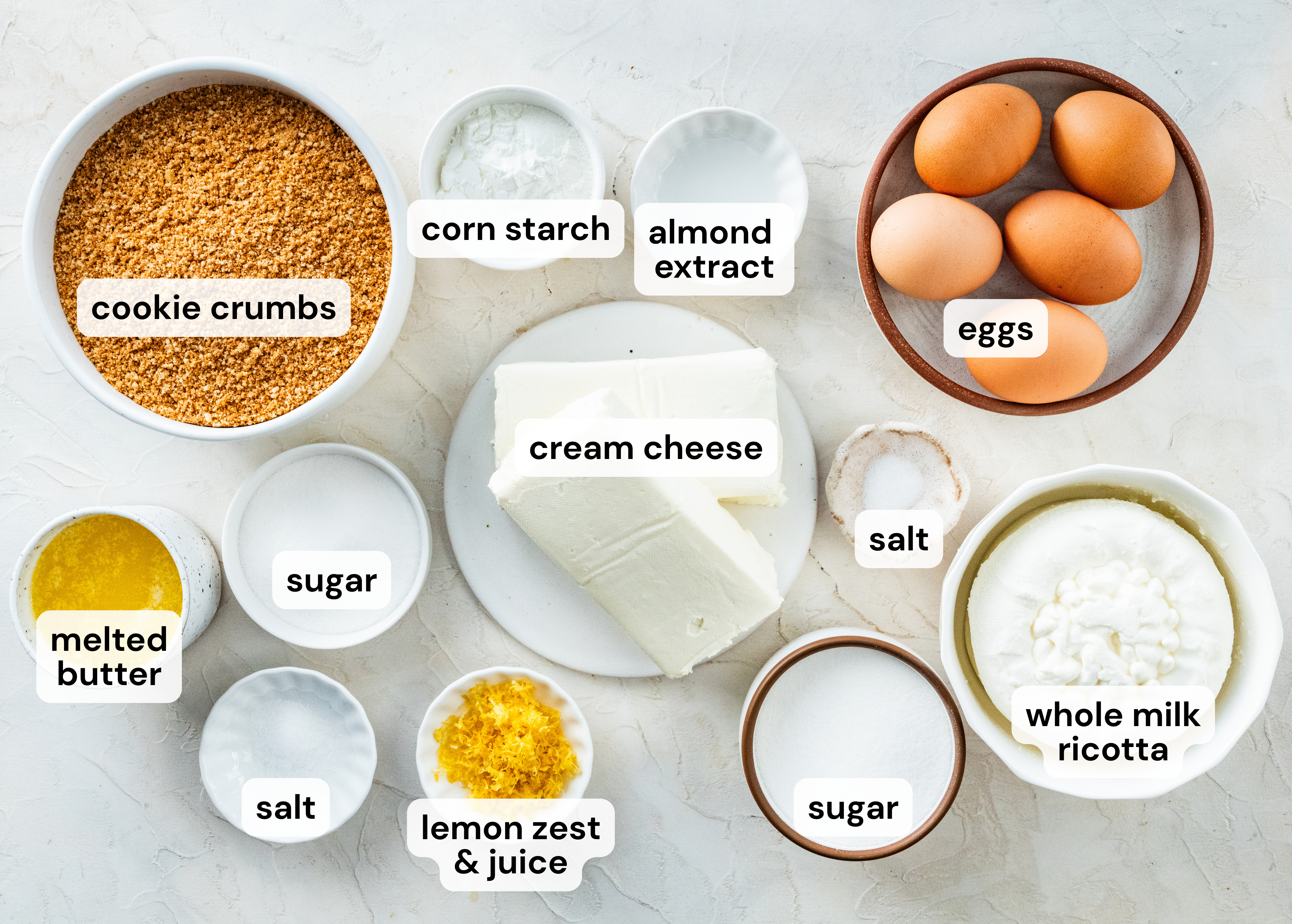
- Cookie crumbs — classic graham, spicy gingersnap, buttery vanilla wafers, or Biscoff for extra flavor
- Melted butter — binds the crumbs
- Salt — balances sweetness
- Cornstarch- stablizes the cheesecake as it cooks
- Cream cheese — gives structure and classic cheesecake richness
- Whole Milk Ricotta — adds lightness and authentic Italian texture
- Sugar — just enough to sweeten without overpowering
- Lemon zest + juice — brightens the whole cake
- Almond extract — Italian bakery style flavor
- Salt — enhances creaminess
- Whole Eggs — bind everything and create that silky custard texture
See the recipe card for exact quantities.
Substitutions and Variations
- Crust alternatives: almond biscotti or lemon biscotti crumbs, soft amaretti cookies, or shortbread.
- Flavor swaps: replace almond extract with vanilla if preferred.
- Citrus twist: Use orange zest instead of lemon for Sicilian flair. Try my cannoli cake and cannoli dip.
- Ricotta texture: for extra-smooth filling, blend ricotta in a food processor until silky.
How To Make Ricotta Cheesecake
This is a step-by-step photo overview of the recipe; the full instructions are in the recipe card below.
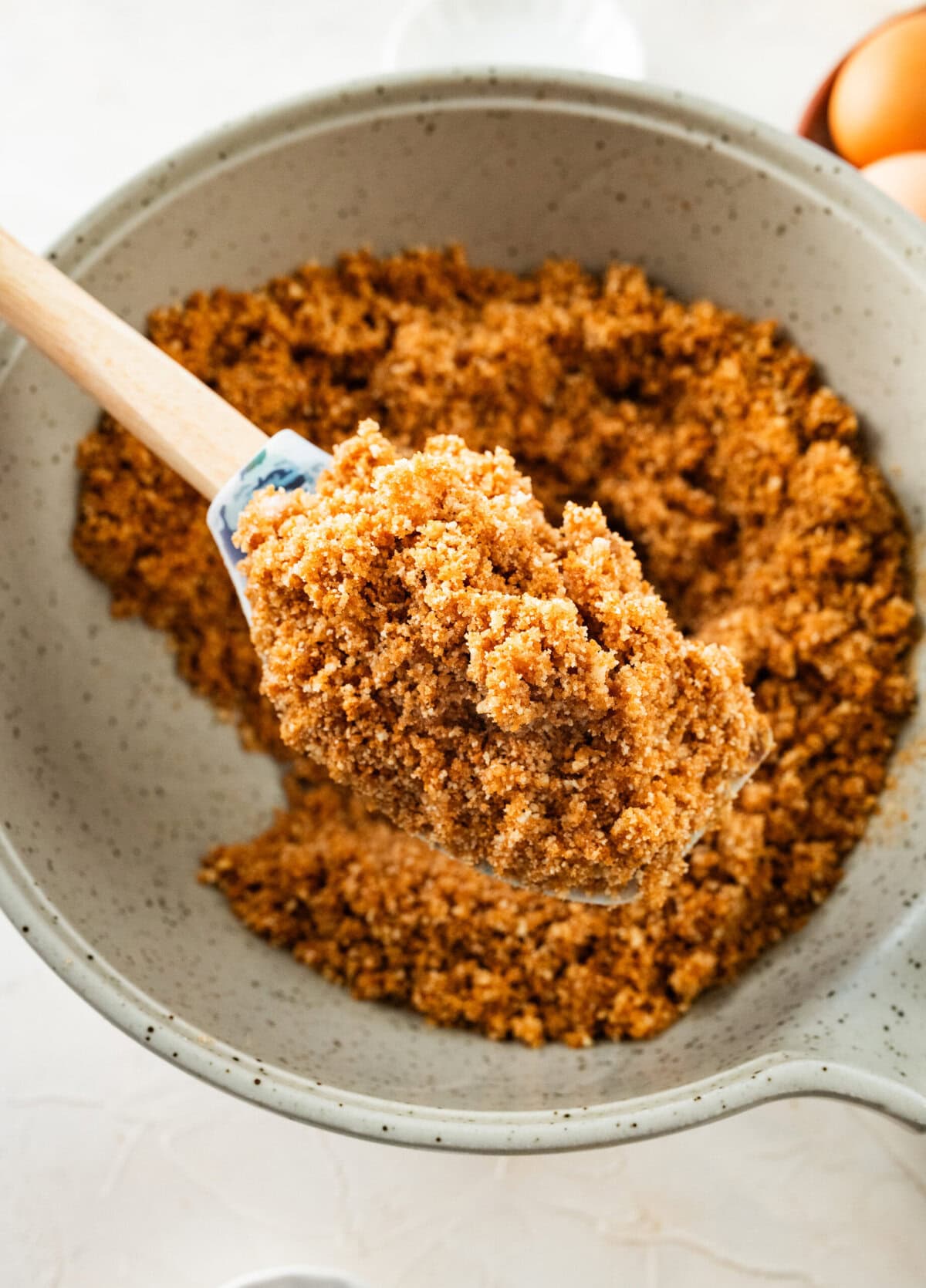
Step #1: Prepare the Crust.
Preheat oven to 300°F (150°C). Grease a 9-inch springform pan. Mix cookie crumbs, melted butter, and salt until evenly moistened.
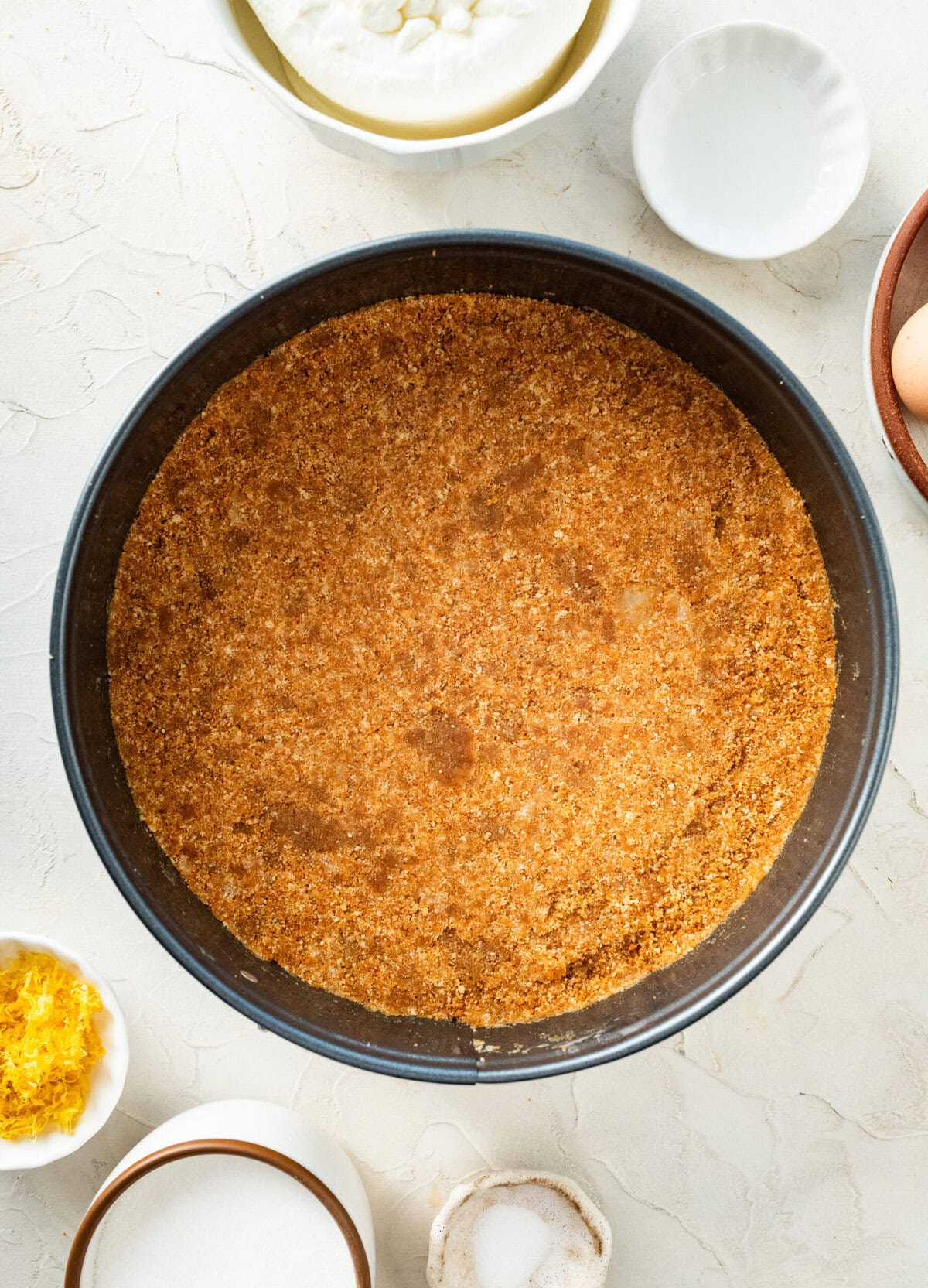
Step #2: Press mixture firmly into the bottom of the prepared pan. Bake 10 minutes and cool completely.
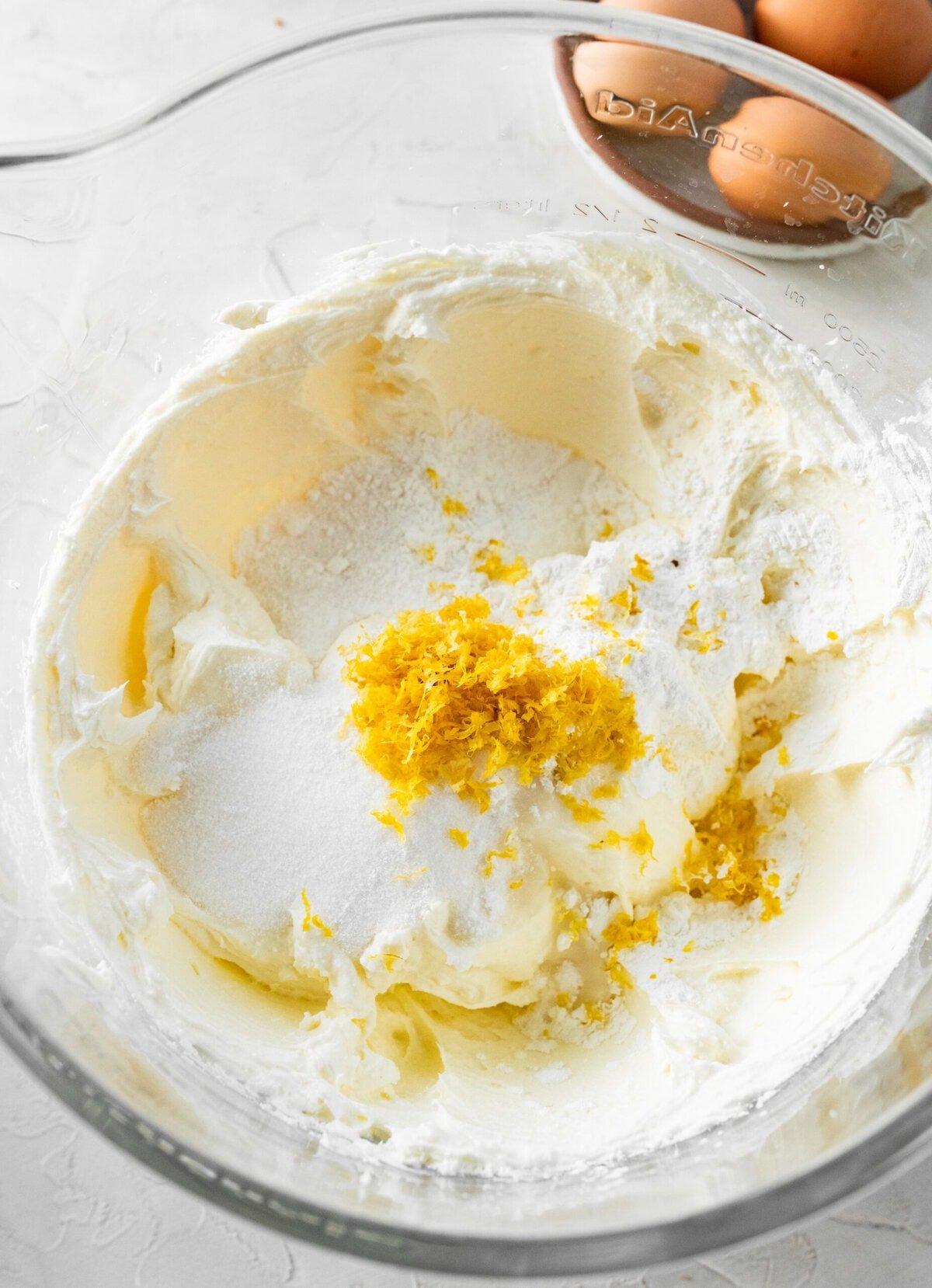
Step #3: Make the Filling.
Beat the cream cheese on medium-low speed in a large bowl until silky smooth. Add the ricotta and mix until creamy. (If your ricotta is very wet, drain it using a cheesecloth or a fine mesh sieve for 10–15 minutes.) Add sugar, lemon zest, lemon juice, almond extract, and salt.
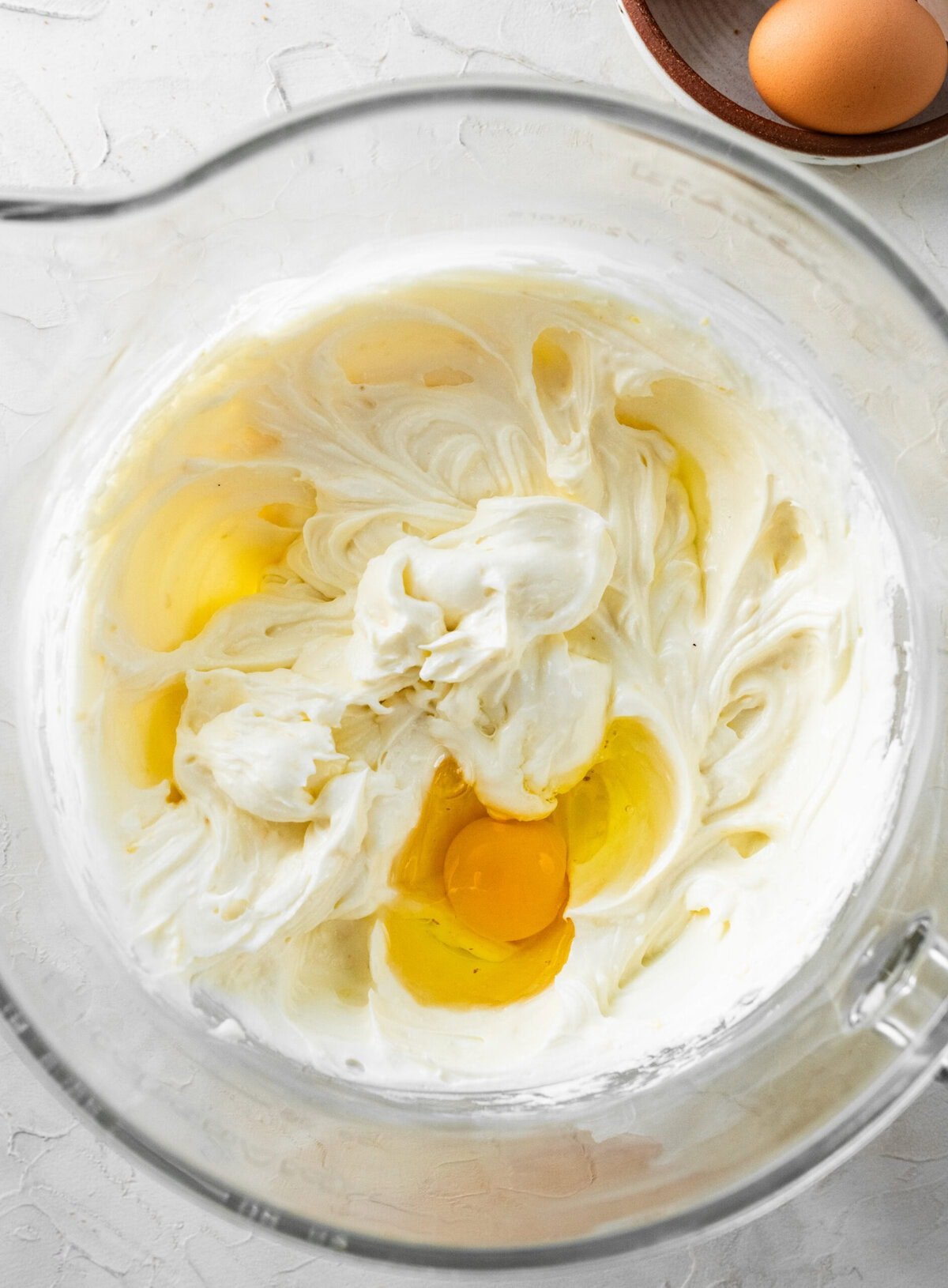
Step #4: Mix gently until combined. Add eggs one at a time.
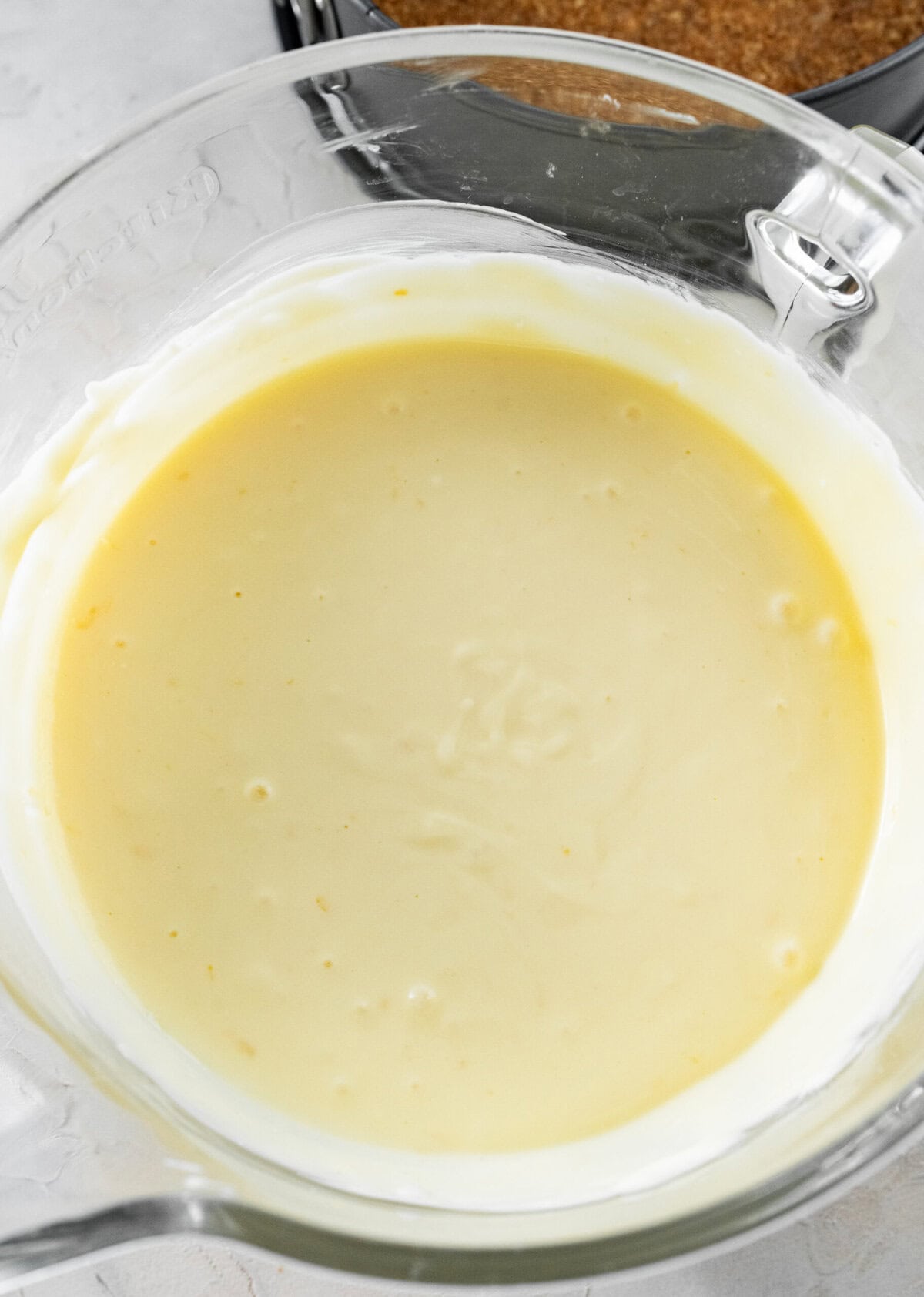
Step #5: Mix on low just until incorporated.
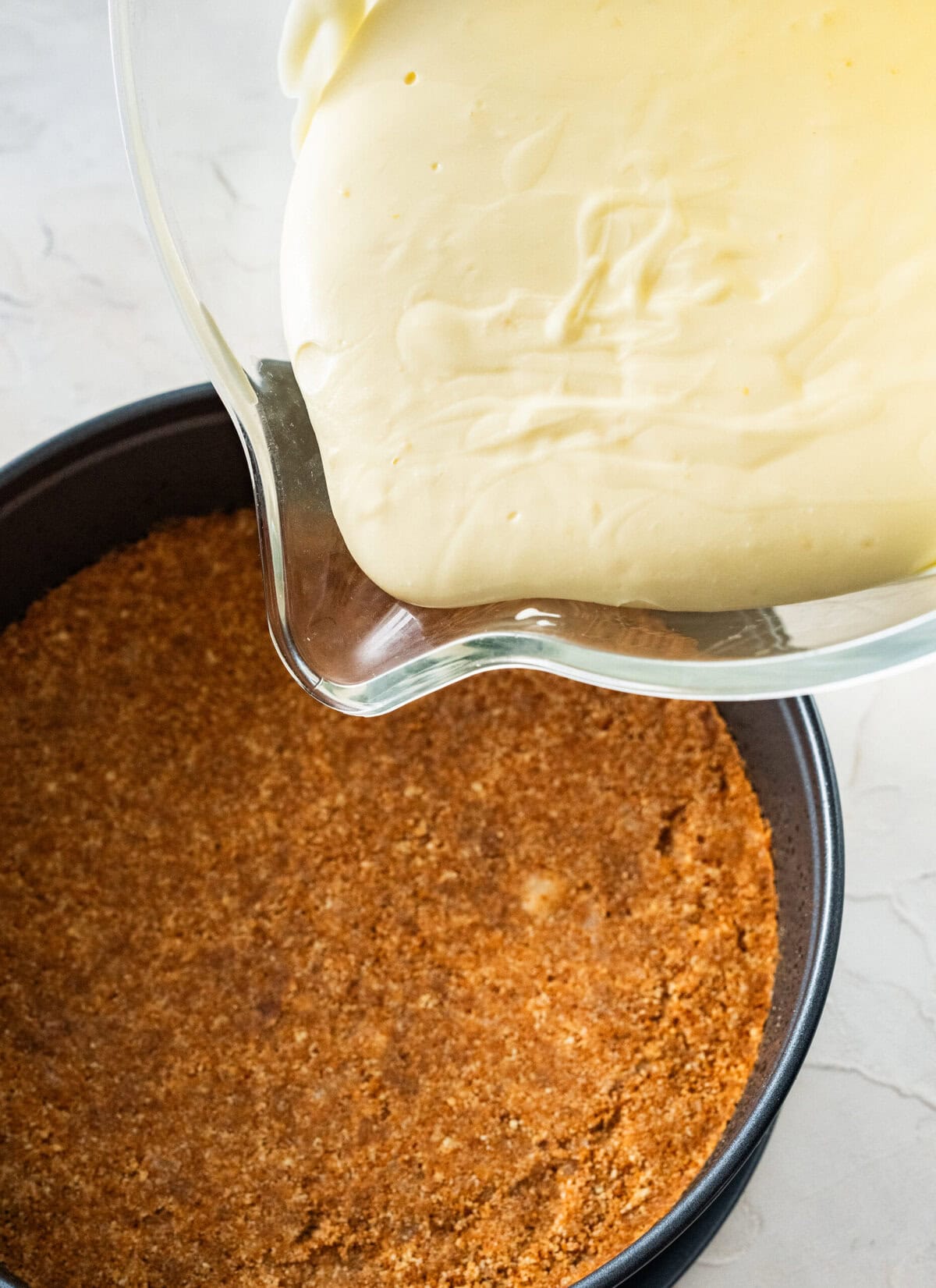
Step #6: Bake (No Water Bath Needed)
Pour cheesecake batter over the crust and smooth the top.
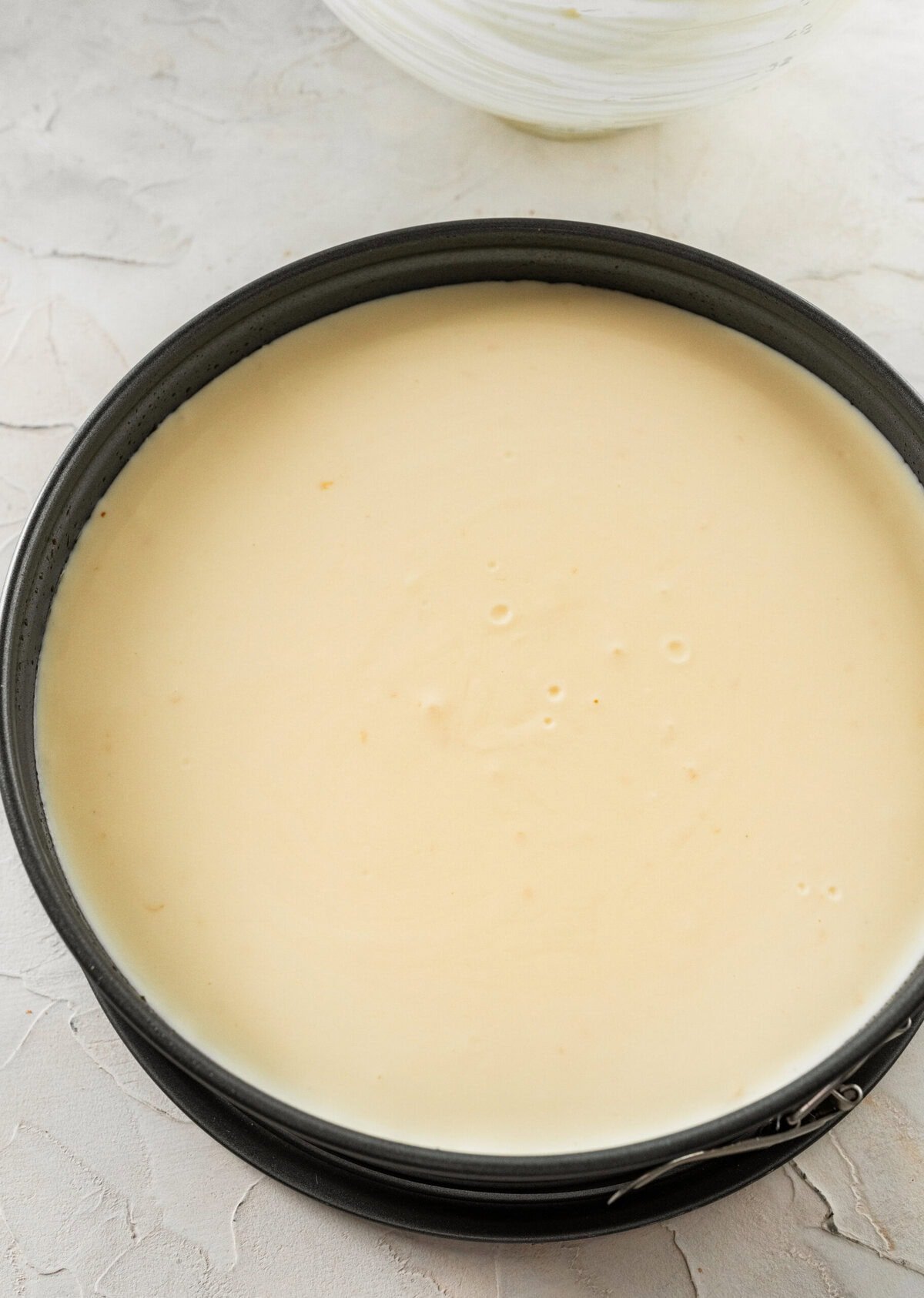
Step #7: Bake at 300°F for 1 hour 30 minutes. Remove and cool completely at room temperature on the counter. The edges should be set and the center should have a slight wobble. Internal temp for perfect texture: 150–155°F in the center. Use a baking thermometer. Turn off the oven, crack the door, and let the cheesecake cool inside for 1 hour. This slow cool mimics the gentle heat of a water bath.
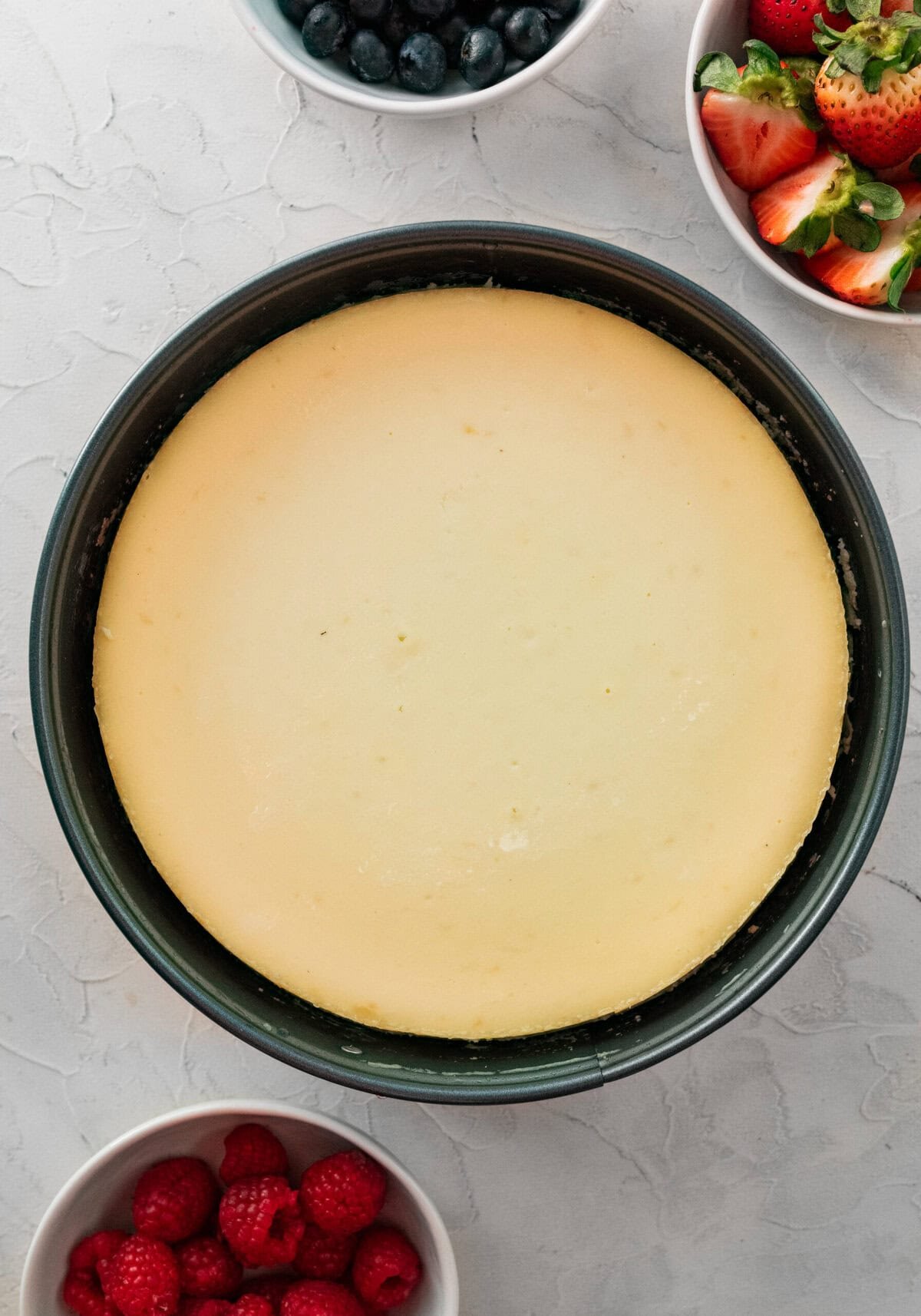
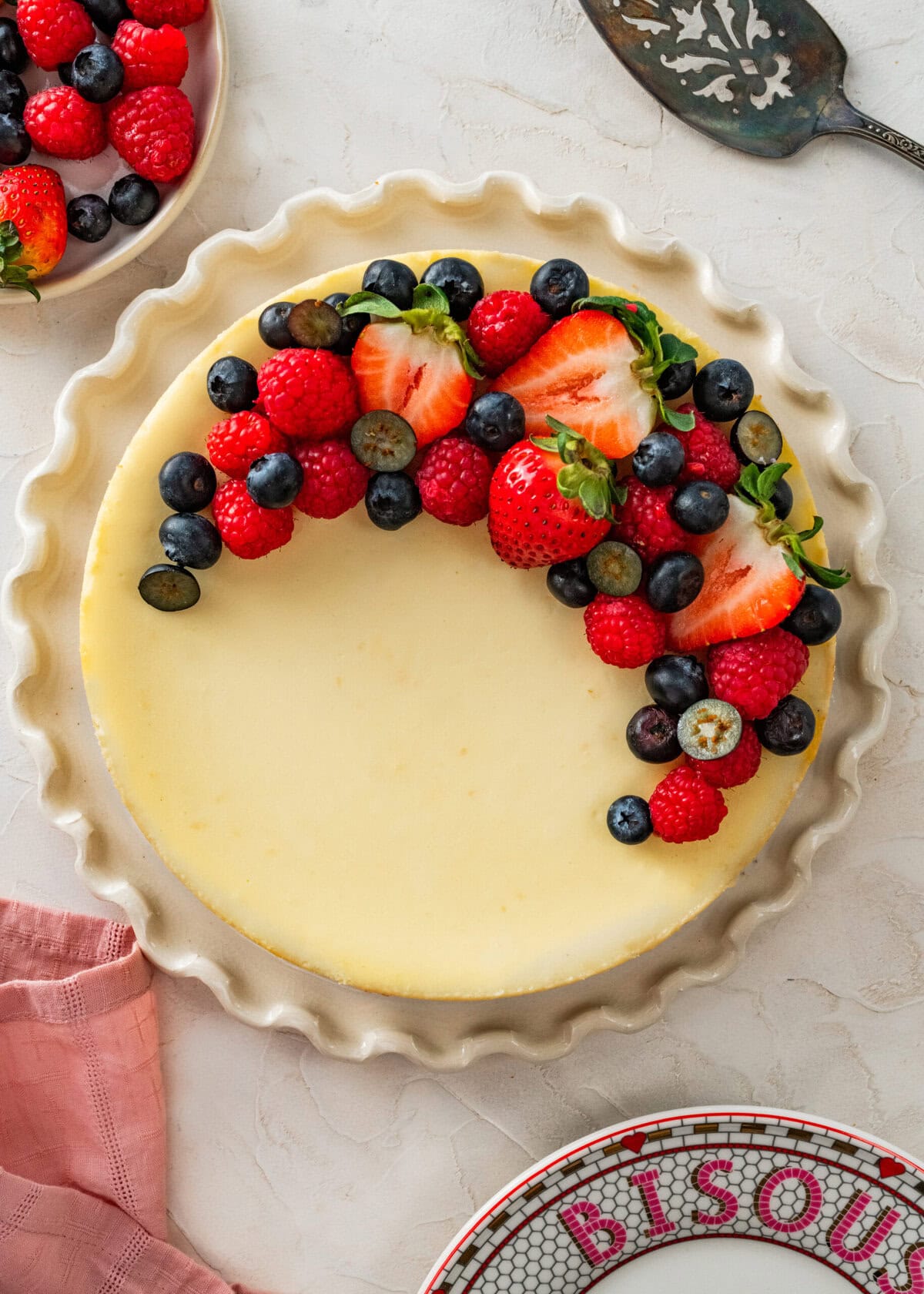
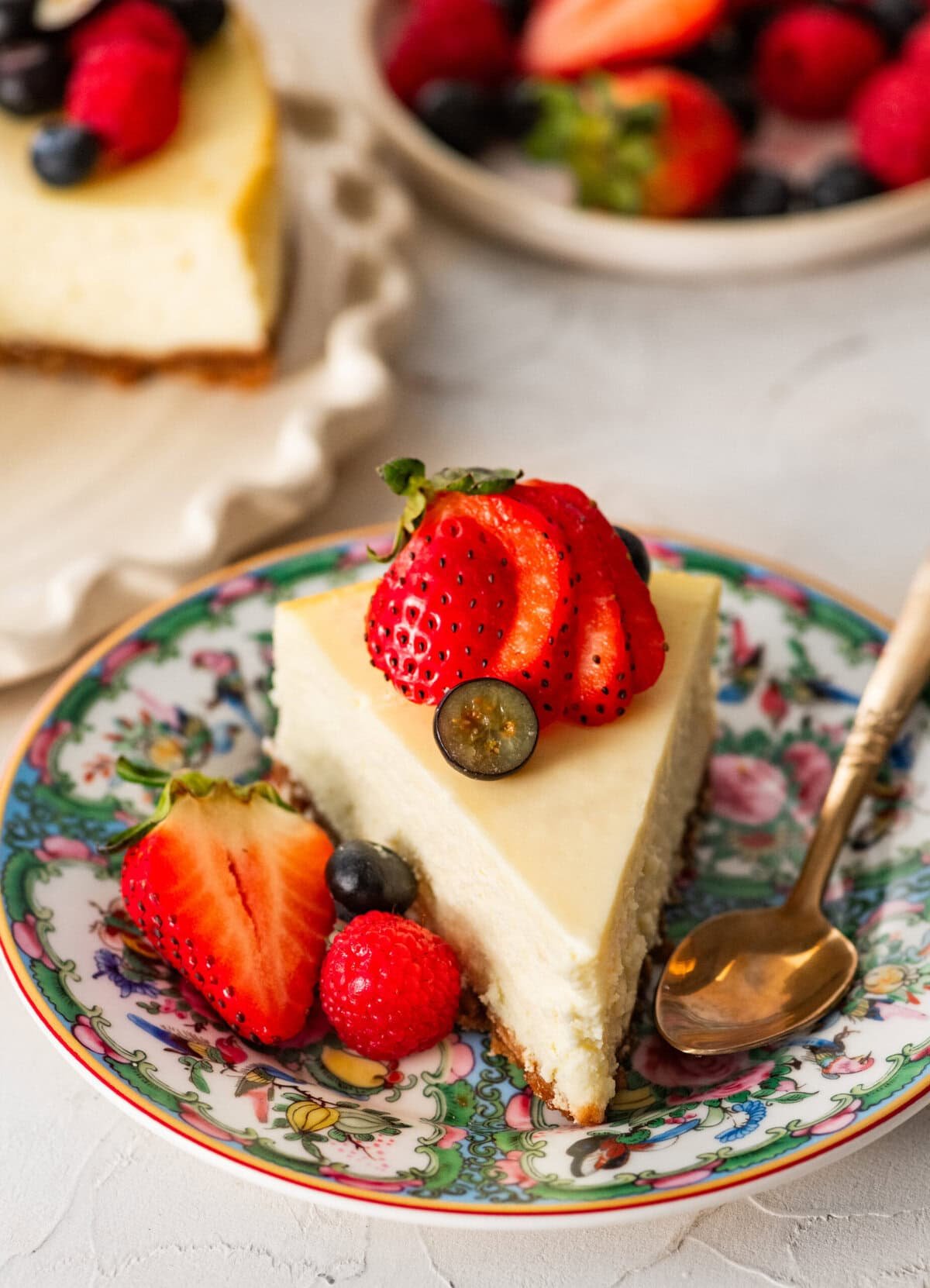
Step #8: Cover with plastic wrap. Refrigerate for at least 6 hours, preferably overnight. Serve. Run a knife around the edge, release the springform, and cut individual slices with a warm knife for clean edges. Serve plain or with fresh berries.
My Pro Tips
Recipe Tips
- Bake low and slow. 300°F gives the cheesecake time to set gently without a water bath.
- Room-temperature ingredients = no lumps and fluffy texture. Cold dairy creates a grainy batter.
- Don’t overmix. Mix on low and stop once ingredients are just combined—too much air causes cracks.
- Check for the “soft wobble.” The edges should be set, and the center should jiggle slightly.
- Internal temp matters. For a perfect custard texture, pull the cheesecake at 150–155°F.
- Cool gradually. Leave it in the turned-off oven for 1 hour; this prevents splitting and sinking. Some splitting is normal!
- Drain ricotta only if needed. If it’s watery, strain briefly for a creamier finish.
- Chill overnight. The flavor deepens and the texture becomes velvety after a full chill.
- Warm knife for clean slices. Dip in hot water and wipe between cuts.
FAQ’s
No water bath needed! This cheesecake bakes low and slow, then cools gradually in the oven, giving you the same silky, crack-free finish without the extra steps.
Why did my cheesecake crack if this doesn’t use a water bath?
Cracks come from overmixing or cooling too fast. Mix on low speed, avoid whipping air into the batter, and let it cool inside the oven for the full hour.
It cooled too quickly or was underbaked. Let it rest in the oven for the full hour after baking, and ensure the internal temp reaches at least 150°F.
Yes. Wrap slices tightly in plastic, then foil and in an airtight container. Freeze up to 3 months and thaw overnight in the refrigerator.
Yes! Ricotta cheesecake tastes even better the next day. Chill at least 6 hours, but overnight is best.
The edges should look set, and the center should wobble slightly. For accuracy, check the internal temperature—it should read 150–155°F in the center.
More Recipes with Ricotta Cheese
💙 MADE THIS RECIPE AND LOVED IT? 💙 Please leave a ⭐️STAR rating and COMMENT below- I love connecting with you! Tag me with your creations on Instagram and find me on Pinterest.
Ricotta Cheesecake Recipe
Ingredients
Crust
- 2 ¼ cups fine cookie crumbs, Biscoff, gingersnaps, graham crackers, or vanilla wafers
- 4 tablespoons unsalted butter, melted
- Pinch of salt
Filling
- 16 ounces full-fat cream cheese, room temperature
- 16 ounces full-fat ricotta, room temperature
- ¾ cup granulated sugar
- Zest of 1 large lemon
- 1 teaspoon almond extract
- 2 tablespoons cornstarch
- 1/4 teaspoon salt
- 5 large eggs, room temperature
Instructions
Prepare the Crust
- Preheat oven to 300°F (150°C). Grease a 9-inch springform pan.
- Mix cookie crumbs, melted butter, and salt until evenly moistened.
- Press firmly into the bottom of the pan. Bake 10 minutes and cool completely.
Make the Filling
- Beat the cream cheese in a large bowl until silky smooth.
- Add the ricotta and mix until creamy. (If your ricotta is very wet, drain it 10–15 minutes.)
- Add sugar, lemon zest, lemon juice, almond extract, cornstarch, and salt. Mix until creamy and combined. About 5 minutes.
- Add eggs one at a time, scraping the bowl after each addition. Mix until fully incorporated and creamy smooth.
Bake (No Water Bath Needed)
- Pour filling over the crust and smooth the top.
- Bake at 300°F for 1 hour 30 minutes.
- The edges should be set and the center should have a slight wobble.
- Internal temp for perfect texture: 150–155°F in the center.
- Turn off the oven, crack the door, and let the cheesecake cool inside for about an 1 hour. This slow cool mimics the gentle heat of a water bath.
- Remove and cool completely at room temperature. Refrigerate for at least 6 hours, preferably overnight.
Serve
- Run a knife around the edge, release the springform, and slice with a warm knife for clean edges. Serve plain or with berries an dfreshly whipped cream.
Notes
- Bake low and slow. 300°F gives the cheesecake time to set gently without a water bath.
- Room-temperature ingredients = no lumps. Cold dairy creates a grainy batter.
- Don’t overmix. Mix on low and stop once ingredients are just combined—too much air causes cracks.
- Check for the “soft wobble.” The edges should be set, and the center should jiggle slightly.
- Internal temp matters. For perfect custard texture, pull the cheesecake at 150–155°F.
- Cool gradually. Leave it in the turned-off oven for 1 hour to prevent major splitting and sinking. Some splitting is normal and natural for this type of recipe.
- Drain ricotta only if needed. If it’s watery, strain briefly for a creamier finish.
- Chill overnight. The flavor deepens, and the texture becomes velvety after a full chill.
- Warm knife for clean slices. Dip in hot water and wipe between cuts.
Nutrition
Nutrition information is automatically calculated, so should only be used as an approximation.