Italian Easter Bread (Pane di Pasqua)

This post may contain affiliate links. Please read our disclosure policy.
Italian Easter Bread (Pane di Pasqua) is a festive and delicious braided brioche bread served for Easter. Beautifully decorated with colorful eggs, sprinkles, and a sweet glaze, it is sure to be the beautiful centerpiece of your Easter table.
Cooking a big meal for family this Easter? You’ll love these recipes for Overnight Challah French Toast Bake and Italian Ricotta Pie.


Quick Look at This Recipe
- Prep Time: 45 minutes
- Cook Time: 30 minutes
- Total Time: 3 hours 15 minutes (including 2 hours of rising time)
- Servings: 12 people
- Dietary Info: Vegetarian; can be made Dairy Free and Gluten Free
- Method: Oven Baked
- Technique: Make a soft and tender brioche dough, then braid it and shape into a ring.
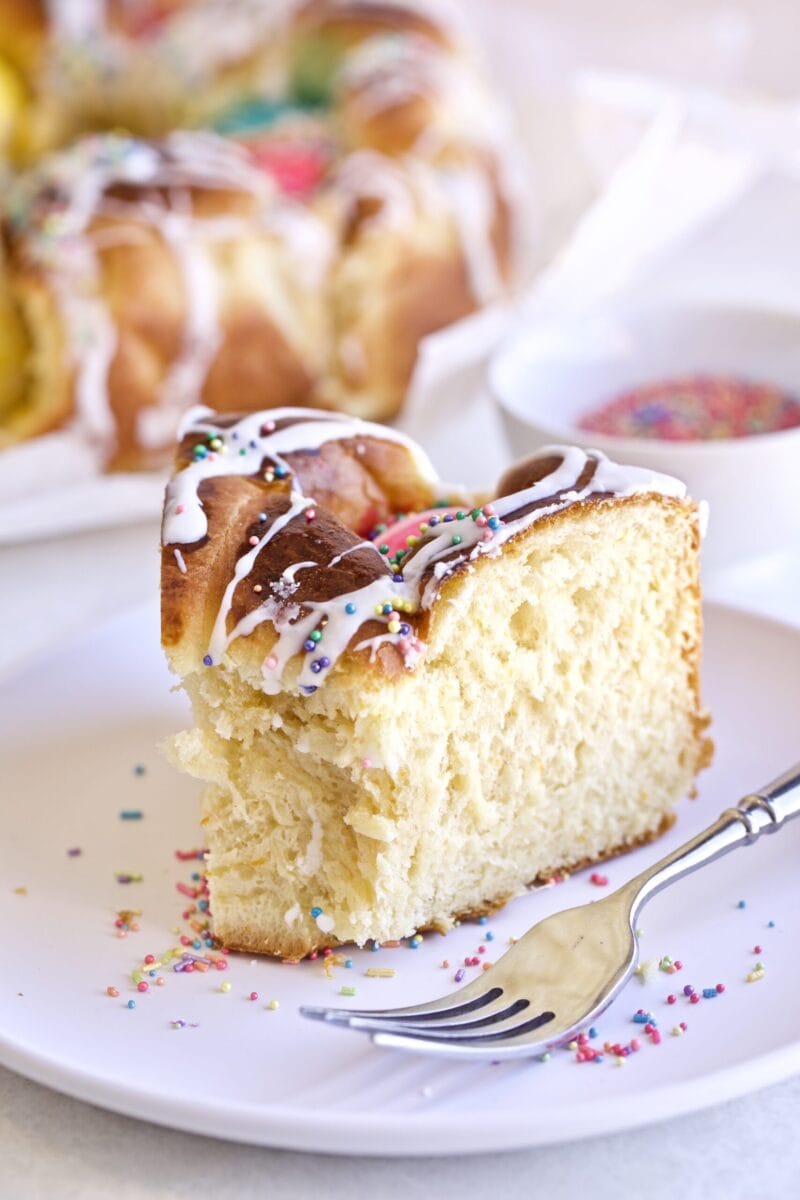
- Flavor & Texture: This pane di pasqua has an incredibly moist and fluffy texture, crisp golden crust, and a colorful finish that will delight everyone at your Easter table.
Why You’ll Love This Family Favorite!

Italian Easter bread (pane di pasqua in Italian) is similar to a challah bread, Greek Easter bread (tsoureki), or paska bread (Ukrainian Easter bread). The soft kneaded dough is twisted together, braided, and formed into a circle to represent the crown of thorns worn on Jesus’s head.
My whole family looks forward to this light and fluffy treat every Easter. It’s a tradition that I’ve loved ever since I was a child living in Sardegna.
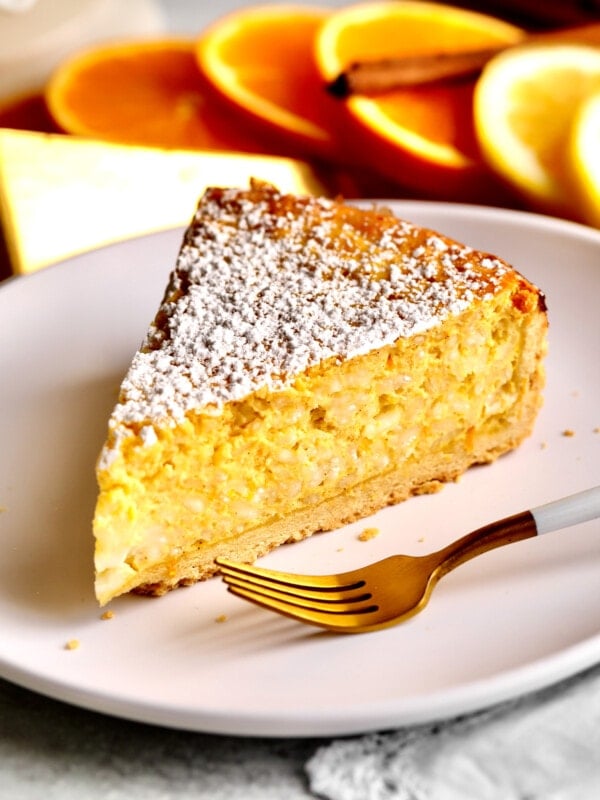
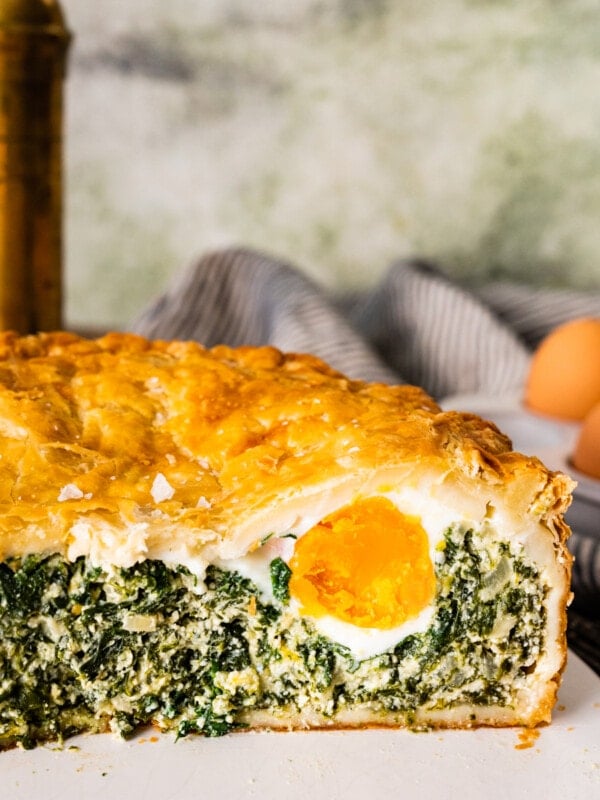
Enjoy it as part of your Easter dinner with roasted rack of lamb and oven-roasted potatoes. Or serve it with authentic Italian Easter recipes like Pizza Rustica, Italian Easter Rice Pie (Pastiera di Riso), or Torta Pasqualina. See all of my Italian Easter Recipes for more ideas!
Made With Amore,

“I nailed it!!! I’ve tried every Italian Easter bread to replicate my grandmother’s and until now were always duds. This truly was my last attempt at making one, the dough seemed too slick and I was losing faith… then it blossomed in the rising … Unbelievable how on point this texture and flavor is to what she used to make, wish I could show you!!! I can’t wait to try again and again.”
-Judy
Table of Contents
Ingredients for Italian Easter Bread
You don’t need anything fancy to make this simple Easter bread (pane di pasqua)! For the brioche dough recipe, we are using our basic Italian-Style Brioche Bread ingredients.
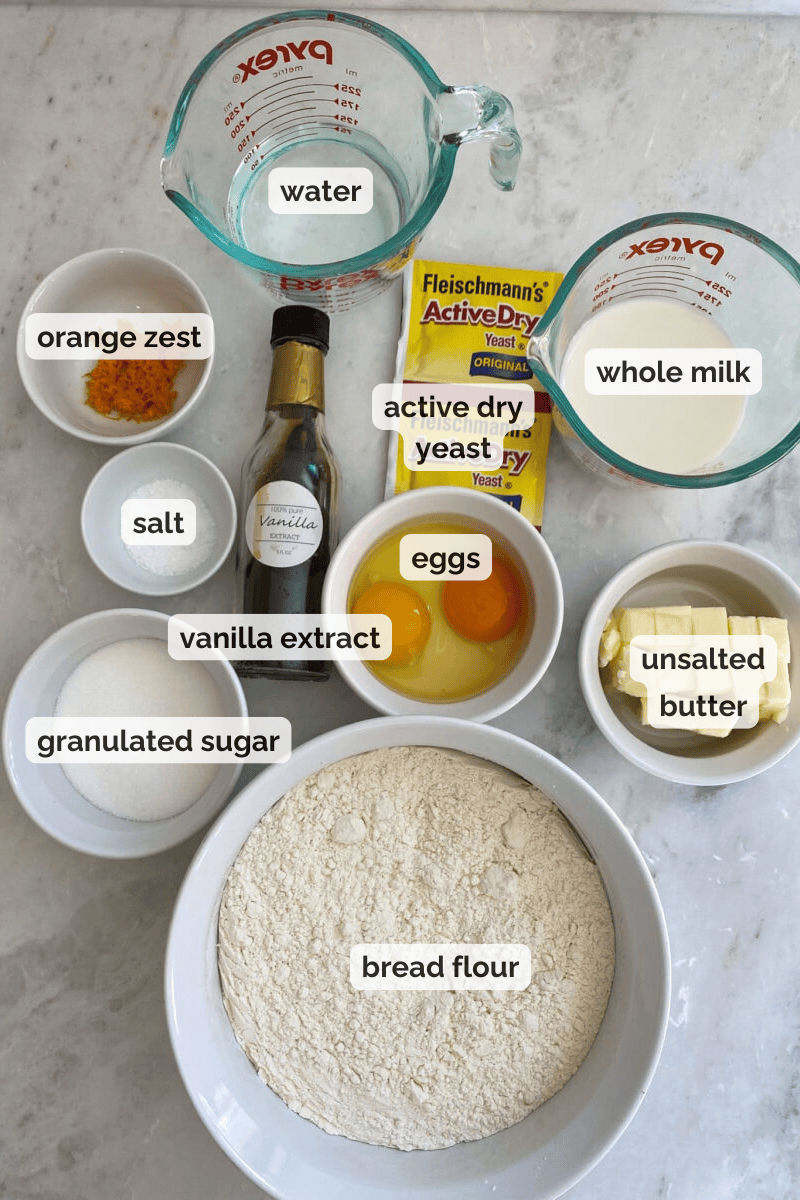
- Active Dry Yeast: Ensure your yeast isn’t expired, or all your work will be for nothing! Feel free to swap with instant yeast if you have it on hand.
- Flour: You can use either bread flour or all purpose flour for this recipe, but you will get the best rise and texture if you can use bread flour.
- Citrus Zest: Adding a touch of orange zest or lemon zest to the dough gives it an incredible aroma. Use a microplane grater to grate it fresh right into the dough.
- Dyed Hard-Boiled Eggs: This is the perfect way to use dyed Easter eggs in a showstopping dessert! However, if you are worried about the dye, you can use either naturally dyed eggs, non-dyed ones, or simply leave them out. (If you have extra boiled eggs from Easter, use them up in my best deviled eggs or spring salad!)
- Colorful Sprinkles: Use your favorite spring-colored or Easter-themed sprinkles to add a fun and colorful finish to the bread.
See recipe card for full information on ingredients and quantities.
Variations & Substitutions
- Want to bake it in a loaf pan? Follow the shaping instructions in my brioche bread recipe. (You can also lay it as a single flat large braid on a baking sheet.)
- Add Flavorings: Add ground spices and extracts to the dough, such as cinnamon, cardamom, nutmeg, even saffron, and/or almond extract. If you want to try a saffron version, use the dough from my St. Lucia Sweet Saffron Rolls recipe.
- Dairy Free Version: Use almond milk instead of whole milk, and use an equal quantity by weight of either melted coconut oil or lard in place of the butter.
- Gluten Free Version: Use a gluten free bread flour blend that’s designed for use with yeast.
How to Make Italian Easter Bread
Follow these steps to make a delicious Easter bread dough. See the printable recipe card at the bottom for more.
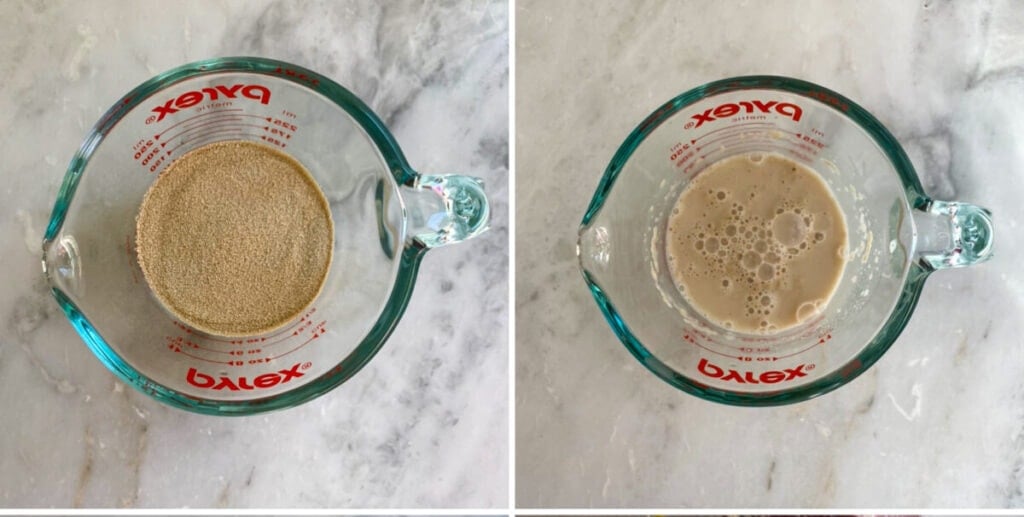
- Dissolve the yeast in warm water. Stir gently until foamy.
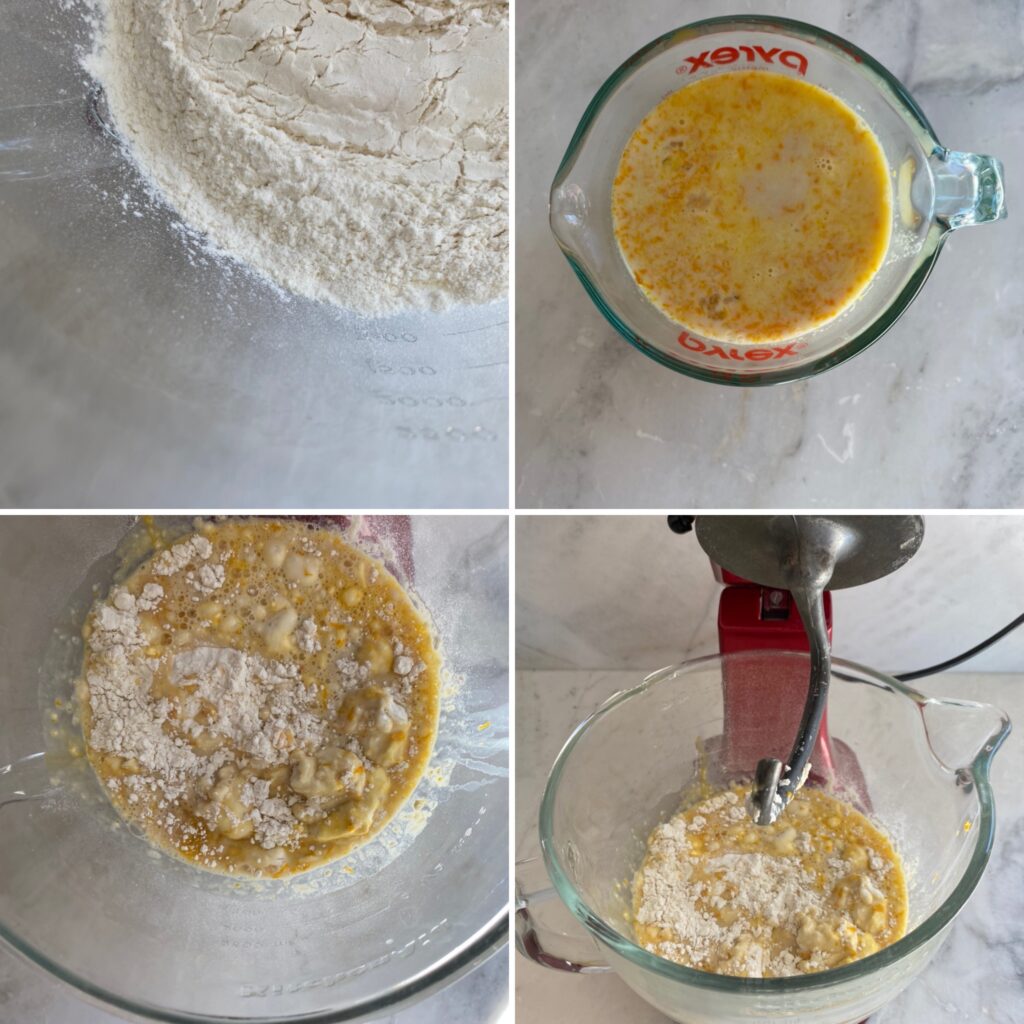
- Add the flour to the bowl of a stand mixer. Mix the wet ingredients in a separate bowl. Mix the wet and dry ingredients with a dough hook.
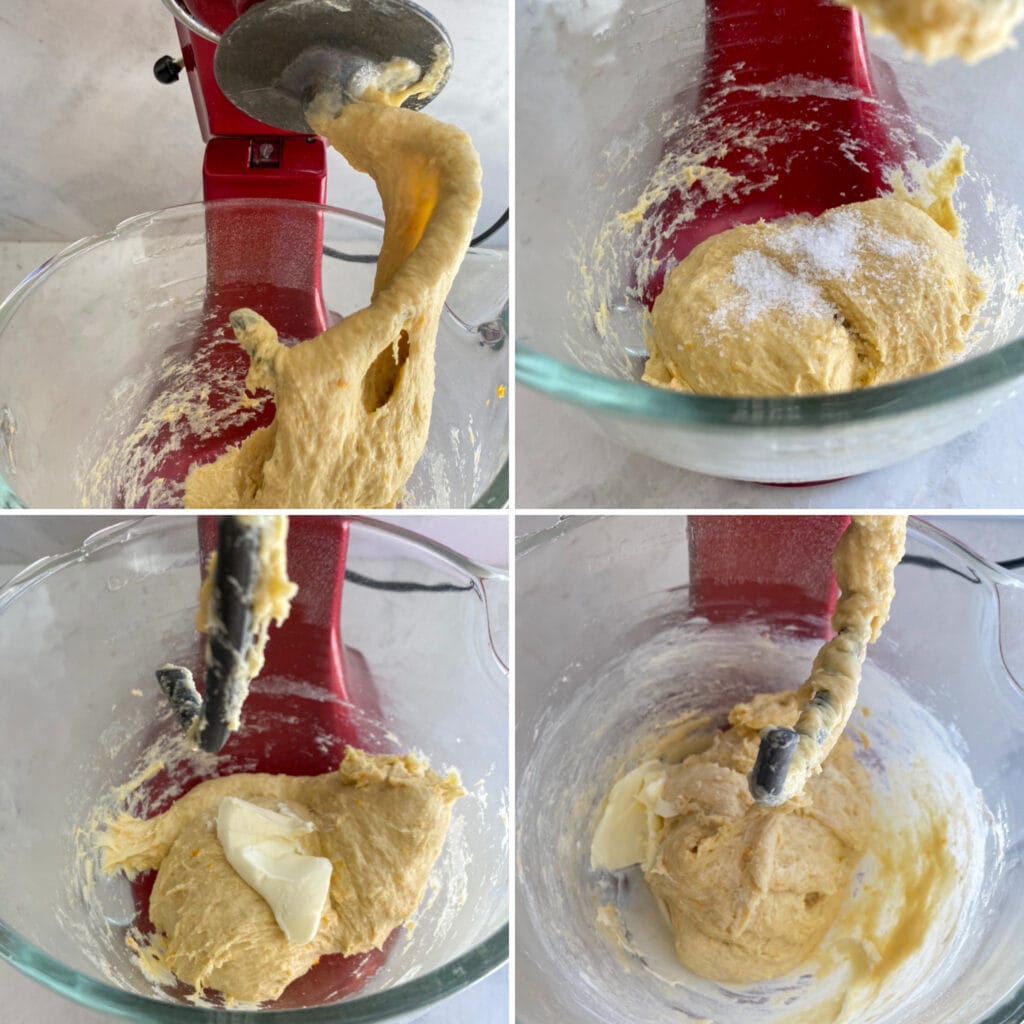
- The dough will be very sticky and shaggy. Add the salt. Mix to incorporate. Add the butter a little at a time. Mix with each addition. Mix on low speed for about 10 minutes, or until butter is completely incorporated. Scrape down the sides of the mixing bowl.
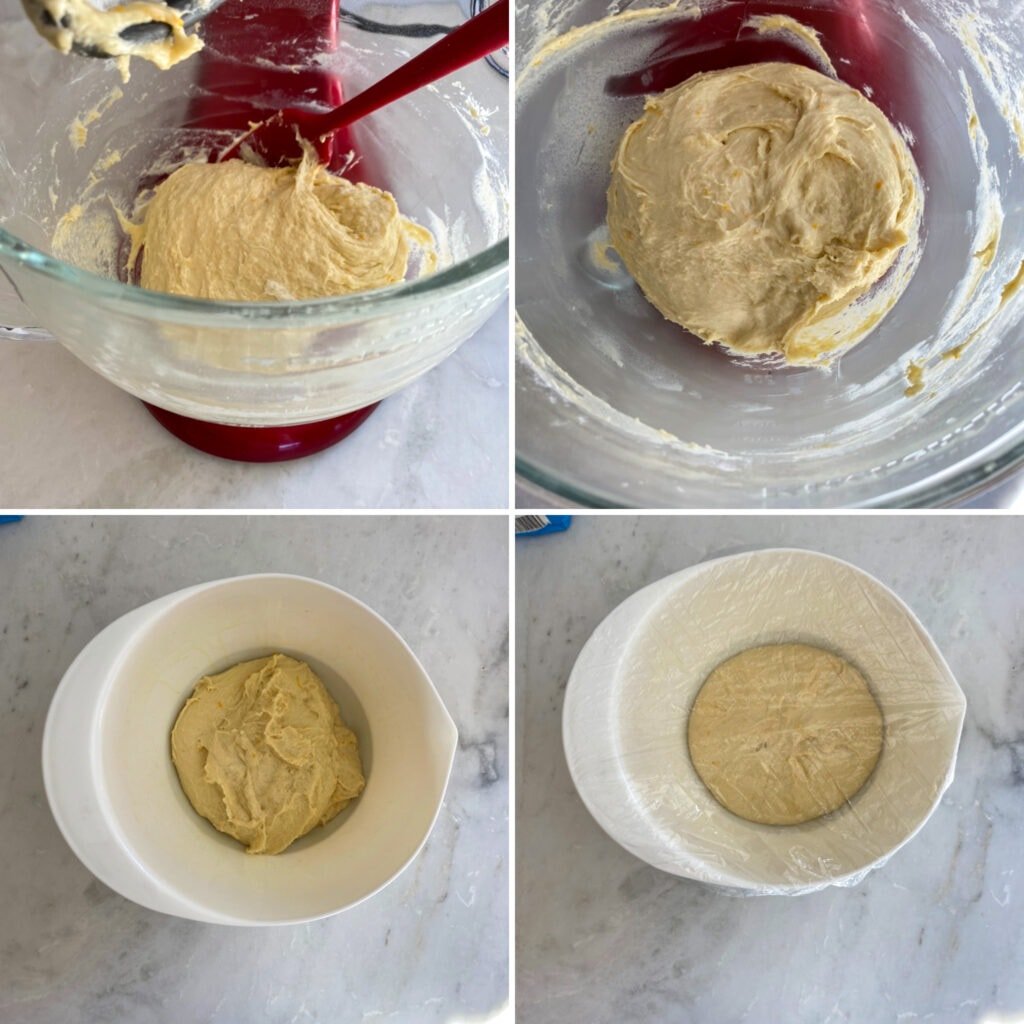
- The dough is ready when it’s smooth and stretchy and can be gathered together and picked up in one piece, but it will remain sticky. Place the dough in a large oiled bowl, cover with plastic wrap, and let it rise for 60 minutes in a warm place.
How to Shape and Decorate
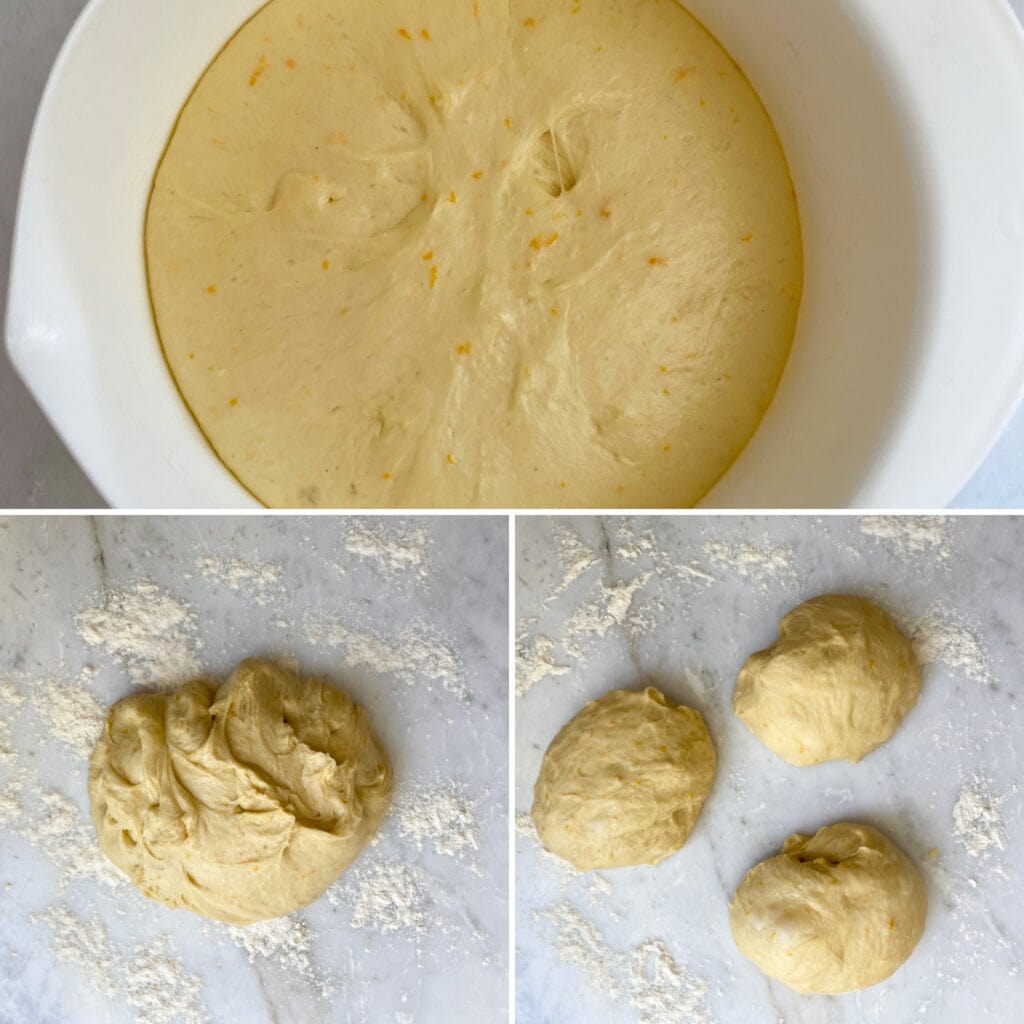
- For this sweet bread braid, divide the dough into three equal pieces. You can either weigh it to be more precise, or just do it by eye.
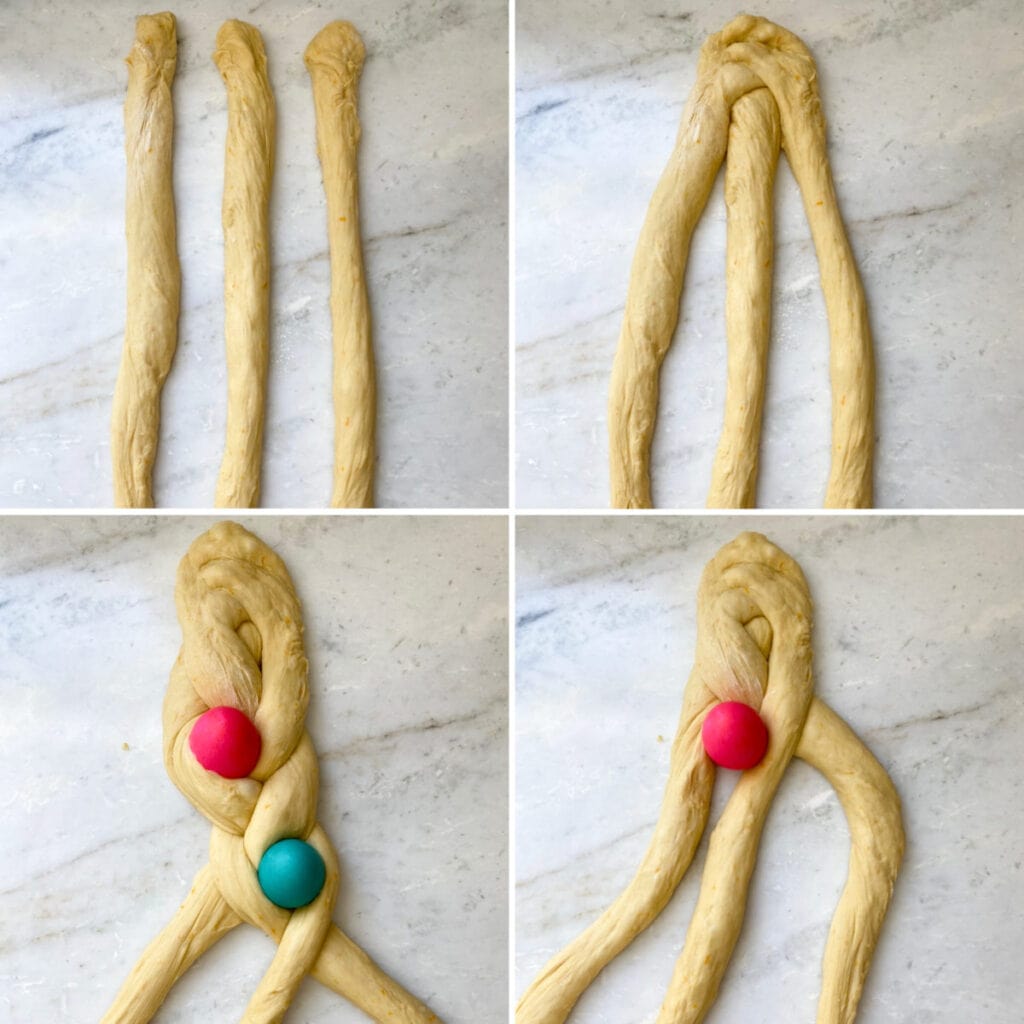
- Start with three equal part dough balls and roll each piece into ropes. Gather them at the top and pinch the dough to secure it. Braid as you would for braiding hair. After every braid section, add one egg.
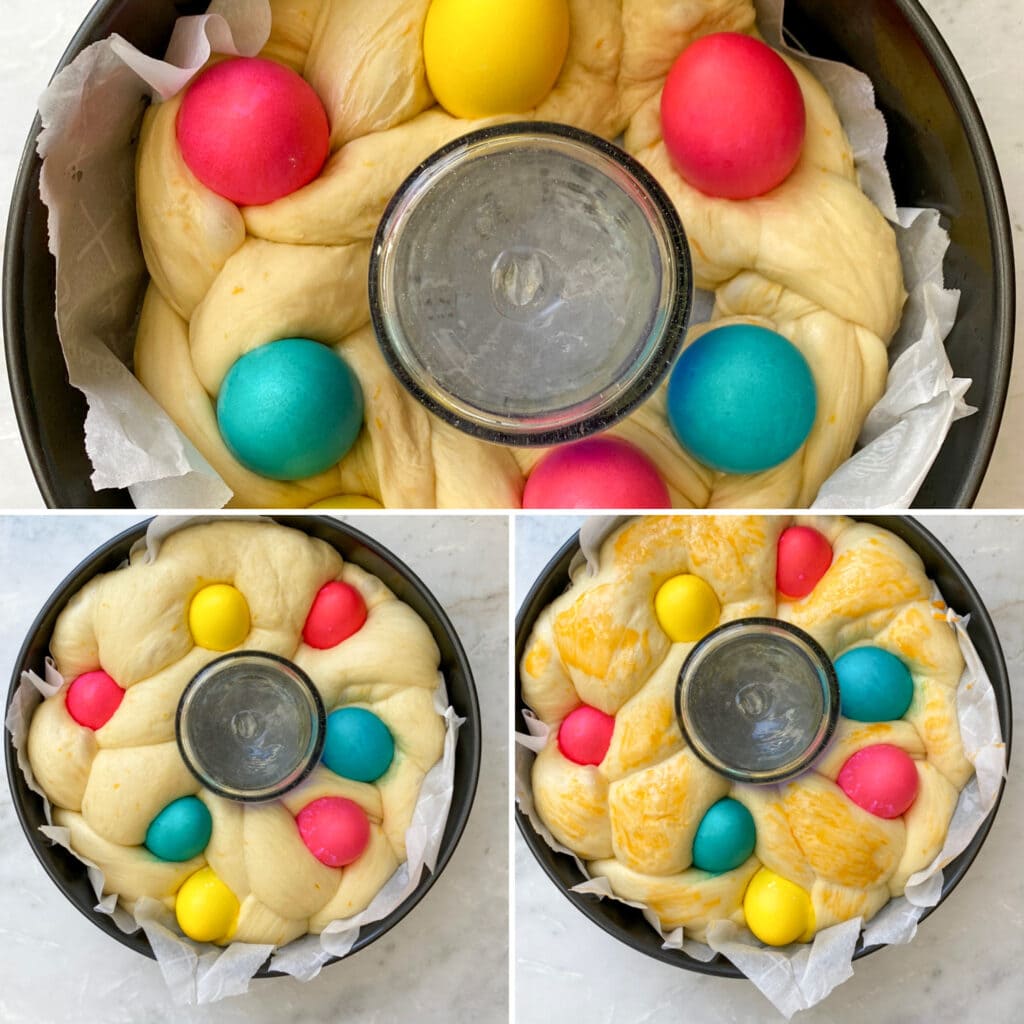
- Transfer the braid into a round pan. Spray a can or oven safe glass with cooking spray and place in the middle of the circle so it keeps its shape. Let the dough rise a second time, then brush with egg wash.
- Bake at 350°F until the bread is golden; about 30 minutes. Let it cool completely (at least 1 hour), then drizzle with the glaze and sprinkles. Slice and enjoy!
Recipe FAQs
Italian Easter bread is a light and fluffy brioche bread that’s shaped into a ring to resemble the crown of thorns that Jesus wore at His crucifixion. It’s also traditional to add dyed hard boiled eggs to the bread when braiding it for decoration.
To store baked bread, ensure it is completely cool, then store it in an airtight container. It can be kept at room temperature for a couple of days or in the refrigerator for up to 1 week.
For longer storage, freeze it in a freezer bag or airtight container for up to 2 months. Be sure to remove the hard-boiled eggs before freezing.
The colorful eggs in this recipe make it festive and fun, and they also signify rebirth after the cold winter months. This concept relates to the religious aspect of Christ and His rebirth.
On the Italian Easter table, bread often represents religious significance, as Christ is often referred to as “the bread of life.” Leave out the eggs if desired; the sweet dough is perfectly delicious without them!
Serving Suggestions
My family loves eating this Italian Easter bread (pane di pasqua) just as it is, but if you want to make this bread’s presentation a little extra, serve it with Italian Pastry Cream. (I also have other flavors, like Italian Chocolate Pastry Cream and Italian Pistachio Cream if you want a fun twist!)
Round out your Easter dessert selection with other Italian favorites, like Authentic Sicilian Cannoli, One Bowl Italian Apple Cake, Lemon Bars with Shortbread Crust, or Italian Cream Horns.
My Pro Tips
Expert Tips
- Always use bread flour if you can. It contains more protein, which creates stronger gluten, and results in a fluffier, lighter bread.
- Expect the dough to be sticky. It will feel slimy at first as the butter incorporates; just keep mixing until it’s smooth.
- Knead until the dough passes the windowpane test. If you break off a piece of dough, you should be able to stretch it thin enough for it to be translucent without tearing. A stand mixer makes this much easier!
- The dough may rise slowly. The fat from the milk, egg yolks, and butter slows down the yeasts’ growth, but gives brioche its soft, rich texture. Speed up the rise somewhat by placing it in a cold oven with the light on.
- Want to make the dough in advance? After mixing and kneading the dough, you can either freeze it for up to 2 months, or store it in an airtight container in the fridge for up to 1 week.
Other Italian Easter Recipes You’ll Love
💙 MADE THIS RECIPE AND LOVED IT? 💙 Please leave a ⭐️STAR rating and COMMENT below- I love connecting with you! Tag me with your creations on Instagram and find me on Pinterest.
Italian Easter Bread

Ingredients
For the Brioche Dough
- ½ cup water, warmed to 110-115°F
- ½ cup whole milk, warmed to 110-115°F
- 4½ teaspoons active dry yeast, 2 packages
- 3¼ cups bread flour
- 6 tablespoons granulated sugar
- 1¼ teaspoon salt
- 1 teaspoon vanilla extract
- 1 teaspoon orange zest
- 1 large egg
- 1 large egg yolk
- ½ cup unsalted butter, at room temperature, cut into 8 pieces
For the Topping
- 6-7 hard boiled eggs, with shells on; preferably dyed
- 1 egg, beaten for egg wash
- colorful sprinkles
- 1 cup powdered sugar
- 3 teaspoon milk
Instructions
Making the Brioche Dough
- Stir the warm water and yeast together and allow the yeast mixture to sit for 2 minutes, or until the mixture is foamy.
- In a stand mixer fitted with a dough hook attachment, add the flour. In a separate bowl, combine all of the ingredients except for the salt and butter. Mix wet ingredients well and add to the flour.
- Mix the ingredients on low speed for 3 to 4 minutes, until the dough has come together.
- Stop the mixer and scrape down the sides as needed, pushing the dry ingredients into wet patches. Once the dough has come together, beat on low speed for 3-4 additional minutes. The dough will be stretchy and sticky.
- Add the salt. On low speed, add the butter a little at a time, mixing after each addition until it disappears into the dough.
- Then, continue mixing on low speed for about 10 minutes, stopping the mixer occasionally to scrape down the bottom and sides of the bowl. It is important for all of the butter to be mixed thoroughly into the dough. If necessary, stop the mixer to break up the dough with your hands to help mix in the butter.
- Once the butter is completely incorporated, turn the mixer to medium speed and beat for another 8-10 minutes, or until the dough becomes sticky, soft, and somewhat shiny. Continue beating until the dough turns smooth and silky.
- Then, turn the mixer up to medium-high and beat for 1-2 minutes. You should hear the dough making slapping sounds against the sides of the mixer bowl. Test the dough by pulling it and stretching it thin.
- You want the dough to stretch, but also give a bit. If it feels too loose, easily breaks off into pieces, or looks shaggy, continue to mix on medium speed for 2-3 additional minutes. It’s ready when it’s smooth and stretchy and can be gathered together and picked up in one piece. The dough will remain sticky.
- Place the dough in a large oiled bowl and cover it with plastic wrap. Allow the dough to rise for 60 minutes in a warm place. At this point, the dough may also be frozen or stored in an airtight container in the fridge for up to 1 week.
- Optional: place dough in fridge overnight to allow the dough to proof and develop flavor.
Shaping the Bread
- Deflate the dough and place it onto a floured surface. Divide the dough into three equal pieces and form balls. Using hands roll each ball into a long roll about 36 inches long. Next, braid the long strands, pinching the top to secure it. Place 1 egg for every braid section, creating total of 6-7 sections for 6-7 dyed eggs. Seal the ends together creating a ring.
- Next, carefully place the dough on parchment paper over a baking sheet, spring form pan, or cast iron skillet. Spray an oven safe cup (or tin can) with cooking spray and place in the middle of the circle to keep the shape during the second rise.
- Cover the bread lightly with plastic wrap and place it in a warm spot (75-85°F is ideal) for 45-60 minutes, or until the bread is nearly doubled in size.
- Preheat oven to 350°F. Brush the risen Easter bread with egg wash and bake for about 30 minutes, or until golden brown color. Let cool.
- Make glaze. Combine powdered sugar and milk until smooth. Drizzle glaze over the Easter bread and add sprinkles. Enjoy!
Notes
- Always use bread flour if you can. It contains more protein, which creates stronger gluten, and results in a fluffier, lighter bread.
- Expect the dough to be sticky. It will feel slimy at first as the butter incorporates; just keep mixing until it’s smooth.
- Knead until the dough passes the windowpane test. If you break off a piece of dough, you should be able to stretch it thin enough for it to be translucent without tearing. A stand mixer makes this much easier!
- The dough may rise slowly. The fat from the milk, egg yolks, and butter slows down the yeasts’ growth, but gives brioche its soft, rich texture. Speed up the rise somewhat by placing it in a cold oven with the light on.
- Want to make the dough in advance? After mixing and kneading the dough, you can either freeze for up to 2 months, or store it in an airtight container in the fridge for up to 1 week.
Nutrition
Nutrition information is automatically calculated, so should only be used as an approximation.







Absolute, gorgeous hit!!!!!!!! A must-have. I didnt ice it because it had such a gorgeous golden color that I didnt want to cover. The bread was perfectly soft, the flavor was on point, it was breathtakingly beautiful. A show stopper.
Yay! So happy you loved this one as much as we do. Agreed! No need to ice it that is just a fun addition.
Good day Elena, I’m just curious on this recipe for the Easter bread -have you experimented with making two smaller loaves from this one recipe? I’m wondering what temperature and timeframe might be appropriate in trying this.
Thanks so much and have a blessed upcoming Easter.
Hello! Yes, you can make two smaller loaves and bake as directed. Check 10 minutes early! Enjoy!
This may be stupid but do we keep the can in the center while baking??
Yes, you can! Spray it well, so it doesn’t stick, or use parchements. This helps keep the shape.
I nailed it!!! I’ve tried every Italian Easter bread to replicate my grandmother’s and until now were always duds. This truly was my last attempt at making one, the dough seemed too slick and I was losing faith… then it blossomed in the rising … Unbelievable how on point this texture and flavor is to what she used to make, wish I could show you!!! I can’t wait to try again and again.
YAY! So happy to hear this! It’s an Easter tradition!
I made this for Easter it was gone in 1 hour! Every family member was losing it. It’s so soft and sweet. Very unique and delicious. It was my first time attempting this, it took patience and it was so fun I made it with my 4 year old daughter. Will now be our Easter tradition, I also love the Catholic symbolism!
Love that it is now your Easter tradition! So fun.
I made this for Easter this past weekend and it was soooo good. The bread was perfectly light, fluffy and sweet. Everyone loved it, thanks!
Amanda, I am so happy to hear everyone loved it! We make it all year around (leave out the eggs).
Awesome recipe! I made for Easter and gave up my previous go to recipe with many more eggs. This was light and flavorful. I even made another batch of dough and made cinnamon rolls with it.
So happy you loved it! Yes, the dough is versatile you will have to try my Sweet Saffron Rolls (St. Lucia buns) next!
Perfectly moist! Well-loved recipe! Could eat the whole thing in one sitting!
This is the BEST Easter bread. It is soft, tender, and perfectly sweet. So festive and beautiful too!